+1 623-224-2315
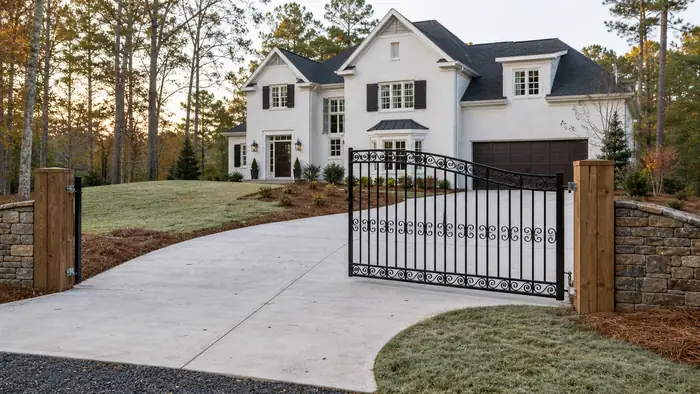
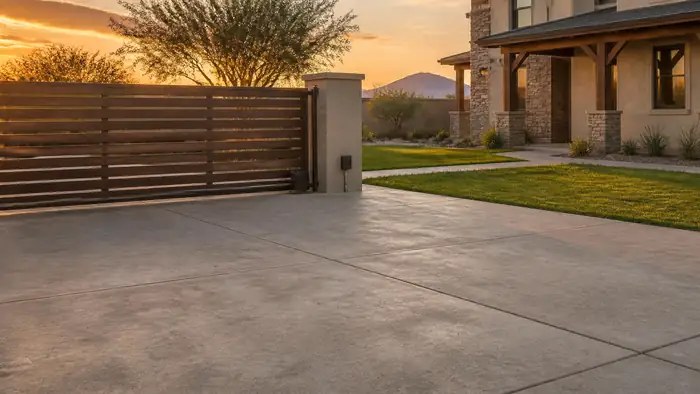
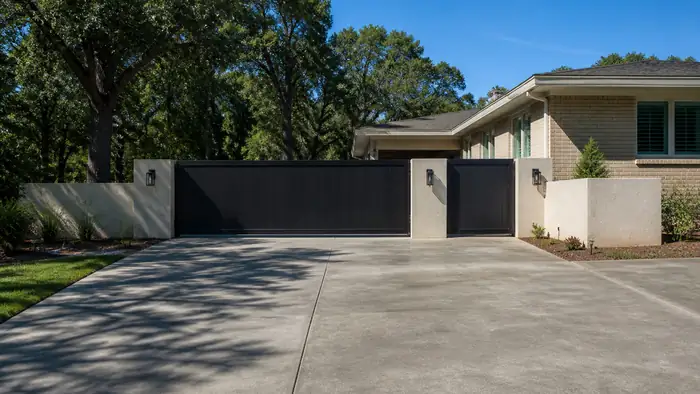
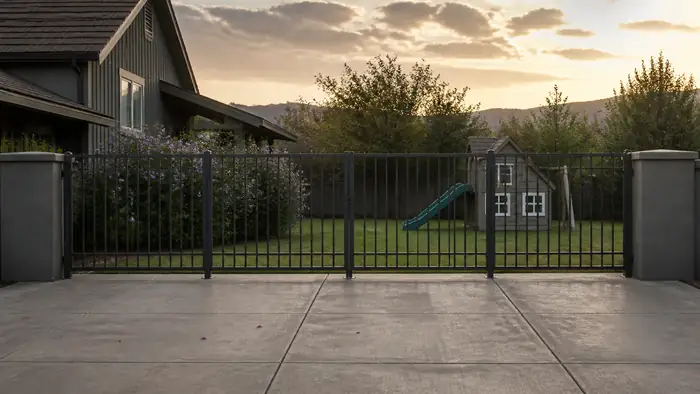
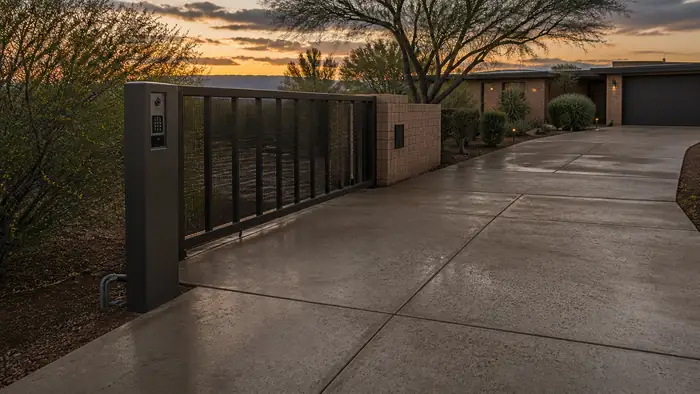
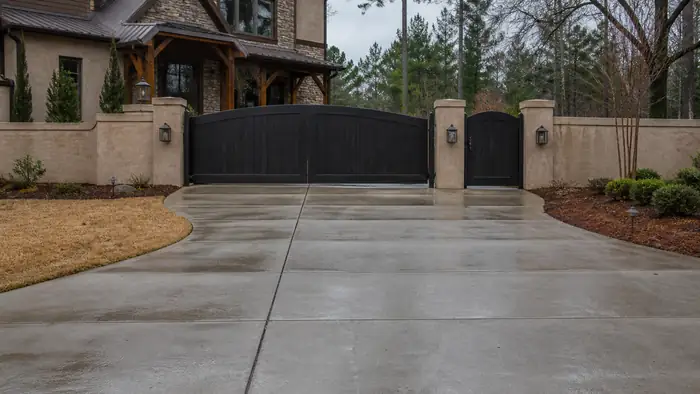
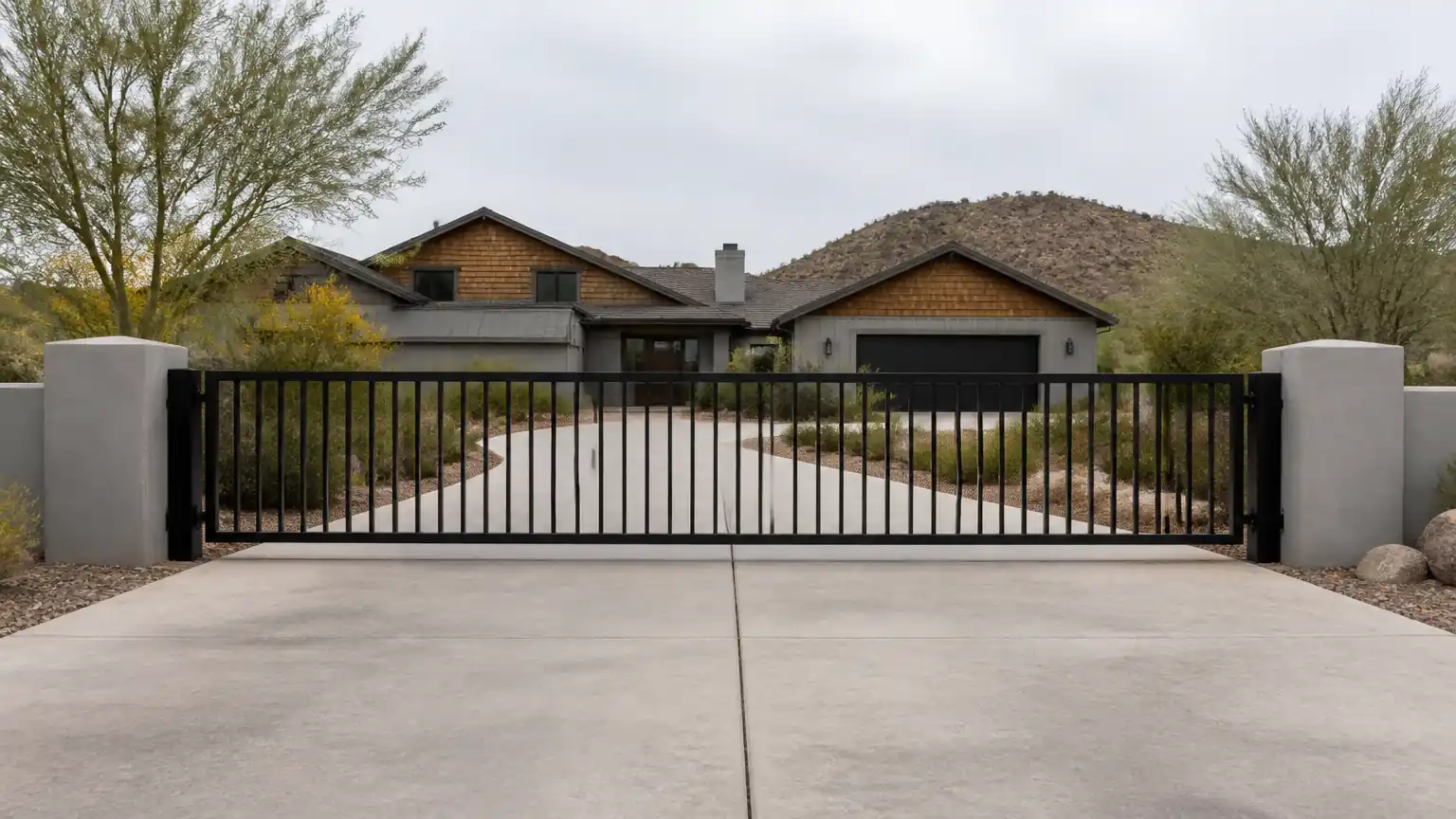
A finished wrought-iron driveway gate closed across a home entrance between two matching posts. at a grey split-level home in Scottsdale, AZ.

Scottsdale Premier Electric Gates: Residential & Commercial automatic gate installations, driveway gate installations, sliding gate installations & electric gate repairs

We build and install electric gates for homes and businesses across Scottsdale: swing and sliding driveway gates, pedestrian entry gates, and the steel and iron fencing that ties them together. Every gate is custom. We measure the opening, watch how the property gets used day to day, and design the gate and its automation systems around that, not around a catalogue size. Residential or commercial, the goal is the same. The entry opens when it should and stays shut when it should.

Ground decides a lot of what we do. Maricopa County has steep, hilly stretches (1,206 feet of local relief within a few miles), and it changes from one block to the next. A driveway that looks flat can fall away enough to bind a swing gate halfway through its arc. So we grade and test every site on its own before a single post goes in. Then we choose the hinges, track and operator to suit what we actually find there.

Plenty of the gates we're called to sit on homes built around 1990, the median year here, and the hardware has seen decades of daily use. Worn gear drives, sagging leaves and safety sensors that no longer read what's in front of them are the usual faults. We repair and maintain existing systems as readily as we install new ones. Call for a free estimate and tell us what your gate is doing.

Call +1 623-224-2315

Get Free Estimates

Our Warranty and Guarantee

The best assurance on an electric gate is the work you can see and test before we pack up. A gate is a moving system: a steel or iron leaf, hinges or rollers, posts set in the ground, an operator, and the controls that decide who gets access. When each part is sized for the others, the gate runs quietly for a long time. When one is undersized, the rest pay for it. Every installation we do is built around that balance.

Before the post holes go in, we look at how the ground sits, and every site is graded and tested on its own before work starts. A driveway gate that swings across a slope needs different hinges and a different operator than one sitting on flat concrete. We set the posts, hang the gate, wire the electric operator, then run it open and closed until it travels true every time.

Most gate trouble traces back to a short list. Posts that shift. A leaf that sags and drags on the operator. Safety sensors mounted where they miss a car or a child. Keypads and remotes wired so the security of the whole system rests on one weak point. On older homes, we also find gates that were never meant to carry an operator at all. We check for each of these on our own work before we call it finished.

Getting it right costs time more than anything else. It means a careful read of the grade, heavier hardware where the weight calls for it, and a full test of the safety reversal and every access point before the job is signed off. We show you the manual release, how the controls behave, and what normal operation sounds like, so you know the difference when something changes. That understanding keeps a gate working longer than any shortcut. Call us for a free estimate.

Our Metal Gates & Fences Process

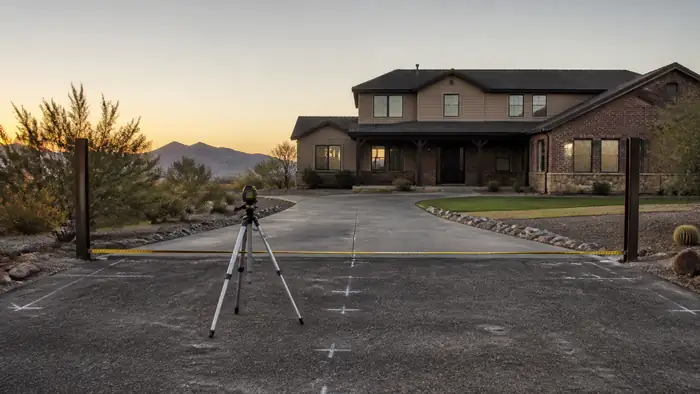
A technician measures the driveway opening at a home before gate work begins. at a brick-and-siding two-story home in Scottsdale, AZ.

Step 1: Site Assessment

We walk the property with a tape, a level and a notebook. The drive tells us most of what matters: its slope, where water runs off it, and how far a leaf can swing before it meets a planter or the curb. We check grade at every post location rather than guessing. We also trace the electric panel and find a clean route to bring power out.
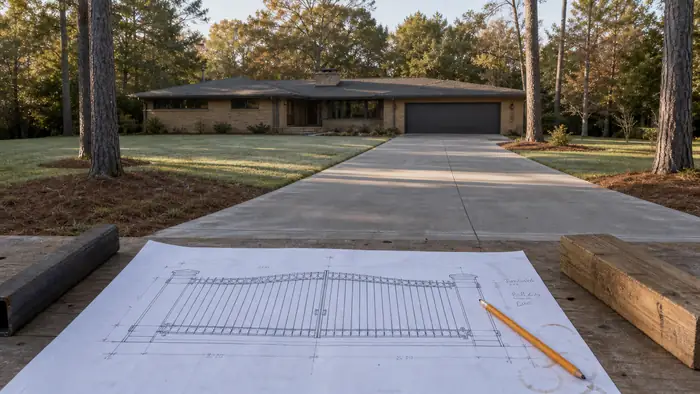
A shop drawing for a residential gate is reviewed before cutting begins. at a buff-brick ranch home in Scottsdale, AZ, in early morning light.

Step 2: Design & Fabrication

Every gate starts as a drawing sized to your opening, then gets built from steel square tube or solid iron bar in our shop. We choose wall thickness for the leaf's width and weight, because a light frame on a wide opening sags over time. Diagonal bracing or a hidden truss keeps it square. Welds are ground smooth, and the finished piece is galvanized or coated in zinc-rich primer before powder coat, so rust has no easy start at the joints.

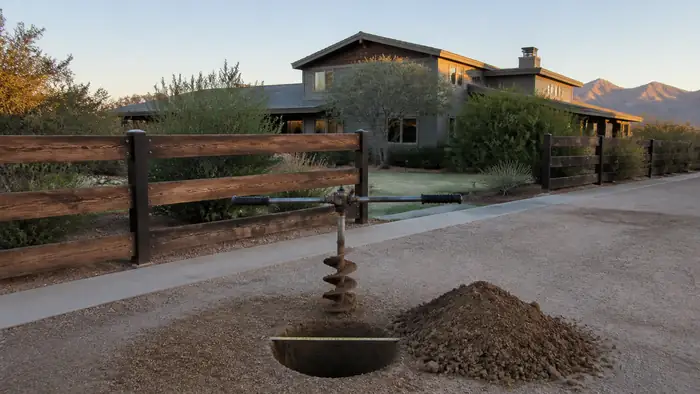
A mechanical auger bores a post hole at a residential gate site. at a grey split-level home in Scottsdale, AZ, in early morning light.

Step 3: Foundation & Footings

Posts are where most gates fail, so we spend real time below grade. Each hole goes well past what the leaf needs, with a rebar cage set inside and concrete poured around a heavy-wall steel post. On a slope, footing depth changes post to post to keep the hinge line true. Slide gates get a continuous concrete pad for the track and operator. A post that shifts slightly pulls the gate out of line and strains the motor. We handle the permit before digging.

A crew hangs a wrought iron gate leaf onto its hinges at a home. at a painted-white-brick two-story home in Scottsdale, AZ, in early morning light.

Step 4: Installation

Hanging the leaf is slow, careful work. Swing gates go up on heavy ball-bearing hinges, adjusted until the leaf holds still anywhere in its arc with no motor attached. Sliding gates ride V-groove wheels on an embedded track, or run cantilevered on rollers so nothing crosses the drive. We set stops and a latch, check clearance at the low point of the grade, and push the gate by hand. If it drags manually, a motor only hides the problem for a while.

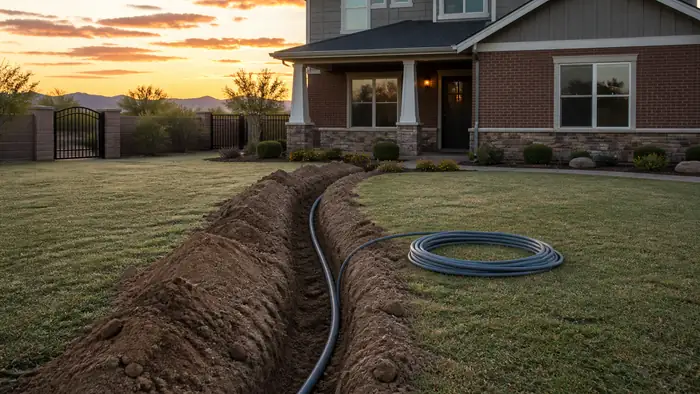
Conduit is laid in a trench from the house to a gate operator. at a brick-and-siding two-story home in Scottsdale, AZ, in early morning light.

Step 5: Automation & Wiring

Power runs from the panel through buried conduit to a dedicated circuit at the operator. We match the drive to the gate: an arm or linear actuator for swing leaves, a pad-mounted operator with a steel rack for slides. Access control comes next, whether that means a keypad, remote transmitters, a phone-based entry system, or a call box for commercial property. Low-voltage runs stay apart from line voltage, and every splice sits in a sealed box. Battery backup keeps security working through an outage.

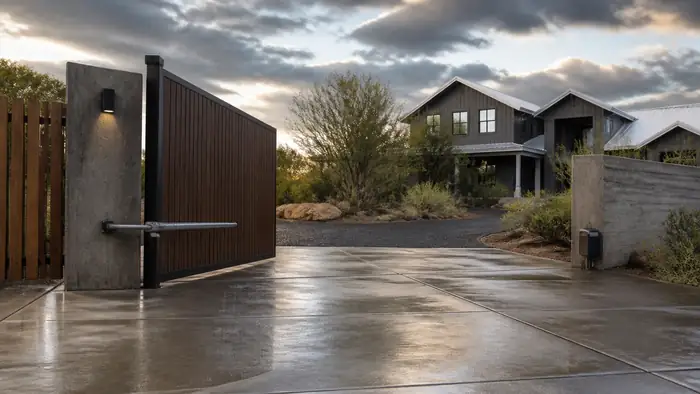
A technician tests a remote control while a residential gate cycles. at a charcoal farmhouse-modern home in Scottsdale, AZ, after a rain shower.

Step 6: Testing

Before anyone else touches it, we cycle the gate open and closed many times and watch the operation from both sides. Photo eyes are aligned across the opening so a car or person in the path stops the close and reverses it. Contact edges get pressed by hand to confirm the same response. We set force and speed limits so an obstruction meets resistance, not a shove. Travel limits are tuned until the leaf lands on its stop cleanly, without slamming or coasting short.

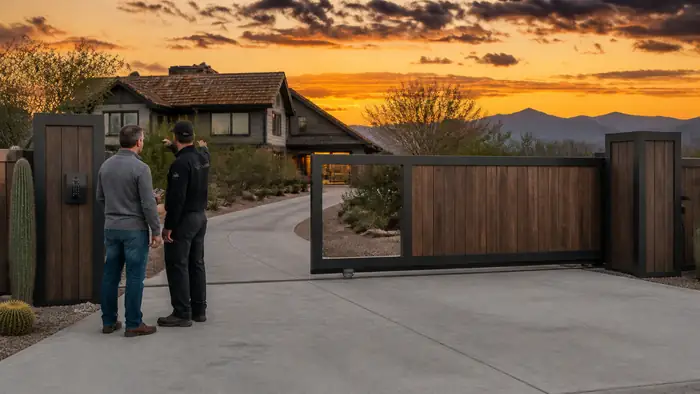
A technician demonstrates the finished gate's operation to the homeowner. at a grey split-level home in Scottsdale, AZ, in early morning light.

Step 7: Final Walkthrough

At the end we walk the gate with you, from open to closed. Every remote gets paired, the keypad code is set the way you want it, and we show you the manual release on your own gate, not a diagram. We point out the photo eyes and what blocks them, where the disconnect sits, and which parts want occasional lubrication. The site is cleaned up: spoil hauled off, trenches backfilled and tamped. You leave knowing how the system runs and what normal sounds like.

What Metal Gates & Fences Costs in Scottsdale

The price of a gate job comes down to a handful of choices, and most of them are made before anyone digs a post hole. Size and material come first: a wide steel driveway gate weighs far more than a pedestrian iron gate, and that weight decides the operator, the hinges and the footings. Swing or slide matters too. So does the ground. A sloped driveway can rule out a simple swing gate, which is why we look at every site on its own before we put a number on anything.

Electric gates add a second layer of cost that is easy to overlook. The operator is only part of it. Power has to reach the gate, which can mean trenching from the house or the panel. Then comes the control side: keypads, remotes, phone access, intercoms, and the safety sensors that stop a gate from closing on a car or a child. A commercial system that cycles all day needs a heavier operator than a residential gate that opens a few times a day, and it should be priced that way.

Line up competing bids by what each one actually includes, not by the total at the bottom. Check whether the operator is rated for the weight and length of the gate, whether the electrical work and trenching are in the price or left for you to arrange, and whether the permit is handled. Ask how the posts are set. Look at the finish on the steel, because bare metal and a proper coating age very differently. A lower number that leaves out any of these is a smaller job, not a better deal.

Our Services

automatic gate installation completed by a local contractor at a stacked-stone and stucco home in Scottsdale, AZ, in late afternoon light.

Automatic Gate Installation

The gate itself is the easy part. What makes an automatic system last is the footing under the operator, the conduit run back to power, and safety devices set so the leaf stops and reverses on contact. We pour concrete pads, trench and sleeve the wiring, and mount photo eyes and edge sensors before the operator ever moves the gate. On every gate installation we handle the permit, then tune force and travel limits by hand until it opens and closes without drifting or slamming.

driveway gate installation completed by a local contractor at a buff-brick ranch home in Scottsdale, AZ, in clear late-morning sun.

Driveway Gate Installation

Most driveway gates fail at the posts, not the leaves. A heavy steel or iron leaf hung on a shallow post will sag, bind at the latch, and eventually drag across the pavement. We size posts to the weight of the gate, set them deep in concrete, and check plumb as it cures. Grade matters too, so we grade and test every driveway on its own before a post goes in.

sliding gate installation completed by a local contractor at a charcoal farmhouse-modern home in Scottsdale, AZ, under bright midday cloud.

Sliding Gate Installation

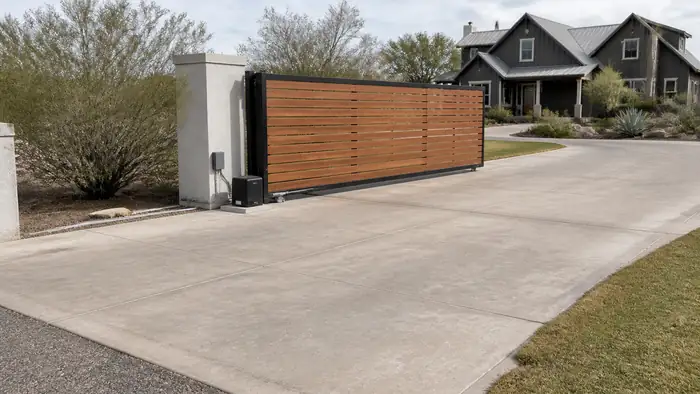
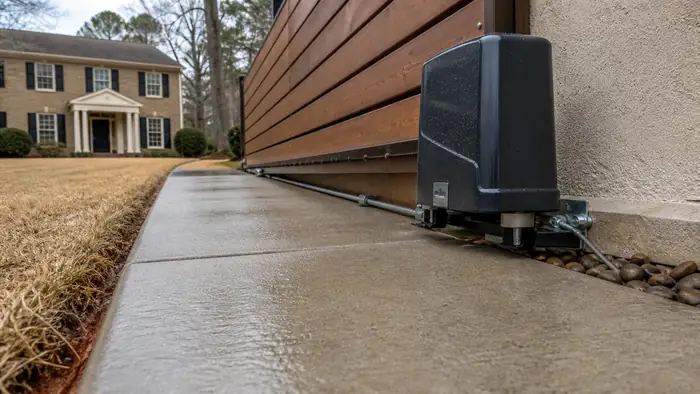
Where a driveway climbs or there is no room for a leaf to swing, a slide gate is usually the better answer. We run it on a V-groove track set in a continuous concrete beam, or cantilever it on rollers so nothing sits in the drive at all. Track that settles or packs with gravel is what stops most slide gates. We pour it level, keep the channel clean, and fit guide rollers at the top so the gate stays upright in wind.

electric gate repair completed by a local contractor at a grey split-level home in Scottsdale, AZ, in early morning light.

Electric Gate Repair

Call us when the gate hums but won't move, stops halfway, reverses for no reason, or the remote works one day and not the next. Those symptoms usually trace back to a short list: a burned-out capacitor, a stripped drive gear, a photo eye knocked out of line, or low-voltage wiring corroded where it enters the ground. We test the circuit before we replace anything. That way the part we change is the part that failed, not a guess.

A keypad and intercom stand mounted beside the driveway gate. at a buff-brick ranch home in Scottsdale, AZ, after a rain shower.

Access Control Installation

Keypads, card readers, intercoms and phone-app entry all tie into the same gate operator, and each one is only as secure as its wiring and placement. We mount keypads on a gooseneck post a driver can reach without leaving the car. Cable runs in conduit so it can't be cut from outside the line. Codes are set up so a lost card or an old contractor's code can be shut off without touching anyone else's. Commercial properties can also log who comes through and when.

automatic gate repair completed by a local contractor at a tan-brick colonial in Scottsdale, AZ, after a rain shower.

Automatic Gate Repair

Automatic gates wear from the moving parts outward. Hinges and rollers go dry, chains stretch, limit switches drift, and the gate starts stopping short or overrunning its mark. We adjust or replace what has worn, reset force and travel, and test every safety device before we leave. A reversing sensor that has quietly stopped working is the repair that matters most. If the operator is past saving, we say so plainly and fit a new one to the existing gate.

wrought iron gate installation completed by a local contractor at a brick-and-siding two-story home in Scottsdale, AZ, under an overcast sky.

Wrought Iron Gate Installation

True wrought iron is rare now. Most of what's sold under the name is solid or tubular steel worked to look like it, and we tell you which one you're getting. Scrolls, pickets and finials are welded, not bolted, then ground smooth so the joints don't hold water. Before finish, we blast or wire-wheel the metal, prime with zinc, and powder-coat or paint it, because rust starts at a weld seam or a scratch long before it shows on the face.

steel gate installation completed by a local contractor at a painted-white-brick two-story home in Scottsdale, AZ, in early morning light.

Steel Gate Installation

For a gate that has to be strong and stay straight over a long span, steel is what we reach for. Frames are built from heavy-wall square tube, with diagonal bracing or a truss so the leaf doesn't rack, and every joint is fully welded rather than stitched. Infill can be solid plate for privacy, pickets, or perforated panels. On residential entry gates and commercial lots alike, we zinc-prime before powder coat. Bare steel under a chipped finish is where every problem begins.

swing gate installation completed by a local contractor at a stacked-stone and stucco home in Scottsdale, AZ, after a rain shower.

Swing Gate Installation

Wide, level drives with room behind them for the leaves to open are where swing gates belong. We hang single or double leaves on heavy ball-bearing hinges, or on a bottom pivot for the heaviest gates, and fit a drop rod or center stop so a pair closes in line. When automating, we choose between arm operators and underground ones based on how the posts sit and how the gate reads from the street. Swing clearance gets checked first, since a leaf that barely clears will drag as hinges wear.

Places We Serve

  • Scottsdale
  • Tempe
  • Mesa
  • Gilbert
  • Fountain Hills
  • Paradise Valley
  • Guadalupe
  • Chandler

Metal Gates & Fences Questions From Scottsdale Owners

Are corrugated metal fences resistant to weather conditions?

Yes. Corrugated panels are galvanized or coated steel, and the ribs give a thin sheet real stiffness against wind. Rain runs off instead of soaking in, so there is nothing to rot, swell or split the way wood does. The weak points are cut edges and fasteners. We seal every cut and use coated screws. Posts set properly in concrete matter as much as the panel itself.

Are corrugated metal fences low maintenance?

Yes, and that is most of the reason people choose them. There is no staining, no sealing and no boards to replace. Once a year, walk the line and look at the screws, the bottom edge where soil and water meet the metal, and any spot where something has scraped the coating. A dab of matching paint on a scratch keeps rust from starting. A rinse with the hose covers the cleaning.

Can garden gates be customized?

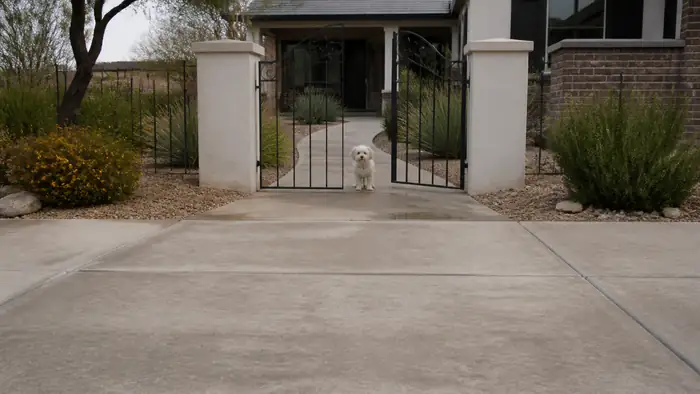
Yes. Every custom garden gate we build is made to the opening it hangs in, so width, height and swing direction come from your property, not a catalogue. From there you choose the frame (steel or wrought iron), the infill (pickets, scrollwork, laser-cut panels, or corrugated sheet to match a fence), the finish color and the hardware. Self-closing hinges, keyed latches and arched tops are all options. Bring a photo of what you like and we draw it up from there.

What types of garden gates work best for homes in Scottsdale, AZ?

Start with the opening, not the style. We measure every opening as it stands today rather than assuming a standard size. For most side yards, a single swing gate in welded steel with a powder-coated finish is the practical choice. Wider openings suit a double gate. We grade and check each site first, and fit rising hinges where the path slopes.

Are garden gates weather-resistant?

Yes, if the metal and the finish are chosen for it. Bare steel rusts. Galvanized steel under a powder coat holds up far longer. Wrought iron needs a good primer and topcoat, and aluminum does not rust at all, though it is lighter and less rigid. Hardware is usually the first thing to fail, so we use stainless or coated hinges and latches. Every horizontal rail should shed water instead of holding it.

Can a malfunctioning gate opener in Scottsdale be repaired, or does it need replacement?

Usually it can be repaired. Most opener problems trace back to a worn gear, a failed capacitor, a tired backup battery, a misaligned safety sensor, or a gate that has started binding and is overloading the motor. We diagnose the whole system, gate included, before touching parts. Replacement makes sense when the operator is undersized for the gate, parts are no longer made, or the control board has failed on an older unit. We tell you plainly which one it is.

Are decorative garden gates durable?

Yes, when the decoration is part of the structure rather than stuck on. Scrolls, finials and panels that are fully welded to the frame stay put. Tack-welded or bolted trim is what rattles loose. We check the frame gauge too, since a heavy ornamental pattern on a light frame will sag at the latch side. Solid steel or iron with a sound finish, braced where the span calls for it, hangs true for years.

Can metal gates be automated?

Yes. Most swing and sliding metal gates can take an electric operator, as long as the frame is square and the hinges or track are sound. We size the motor to the gate's weight and width, then add the access control systems you want at the entry: remotes, a keypad, a phone app or an intercom. Safety is part of every installation, with photo eyes and edge sensors that stop or reverse the gate when something is in its path.

Tap to call +1 623-224-2315