+1 623-224-2315
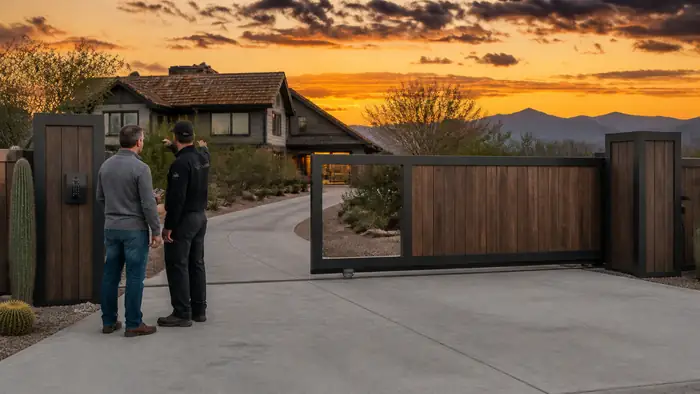
automatic gate motor installation completed by a local contractor at a buff-brick ranch home in Scottsdale, AZ, under an overcast sky.

Automatic Gate Motor Installation in Scottsdale, AZ

An automatic gate motor lets a gate open from a remote, a keypad or a phone instead of by hand. We install the operator, the control board, the safety sensors and the wiring on swing and slide gates of iron or steel. The median Scottsdale home was built in 1990, so we often automate a gate that was hung long before anyone planned for a motor.

Slope decides a lot. Maricopa County is steep and hilly in places, with 1,206 feet of relief within a few miles, and it changes block to block. A gate that swings uphill or sits on a grade needs a stronger motor and different mounting than one on a flat drive. So we test each site on its own before choosing the system. Call for a free estimate.

Call +1 623-224-2315

Get Free Estimates

What Is Included in Automatic Gate Motor Installation

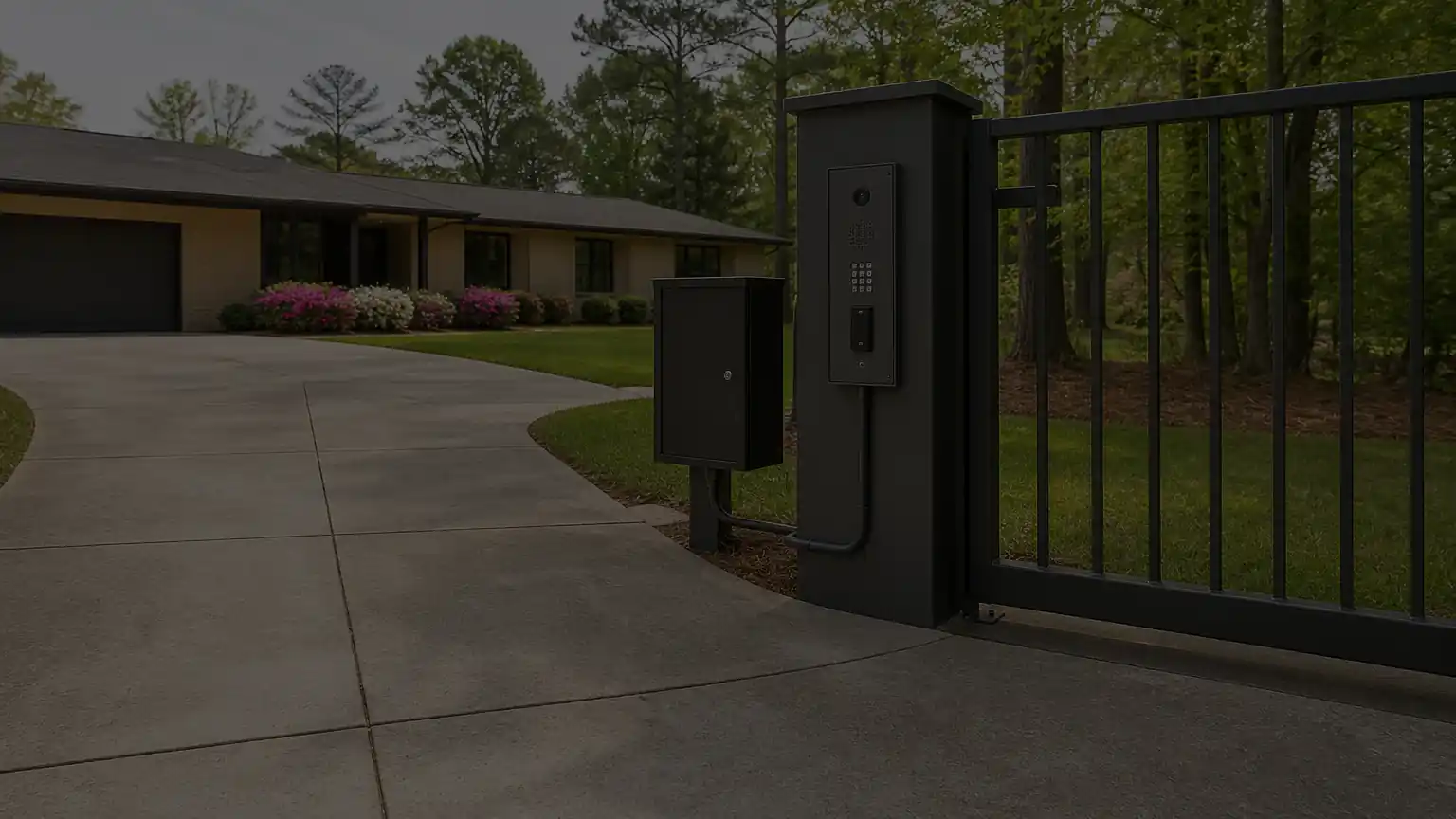
automatic gate installation completed by a local contractor at a stacked-stone and stucco home in Scottsdale, AZ, in late afternoon light.

Automatic Gate Installation

The motor gets the attention, but most of the work sits around it. We mount the operator on a poured concrete pad or a welded steel post, run low-voltage wire through buried conduit, and fit photo eyes and a reversing edge so the gate stops and backs off when something is in its path. Before any motor goes on, we swing the gate by hand. A binding hinge will wear out a new operator fast, and it is cheaper to fix first.
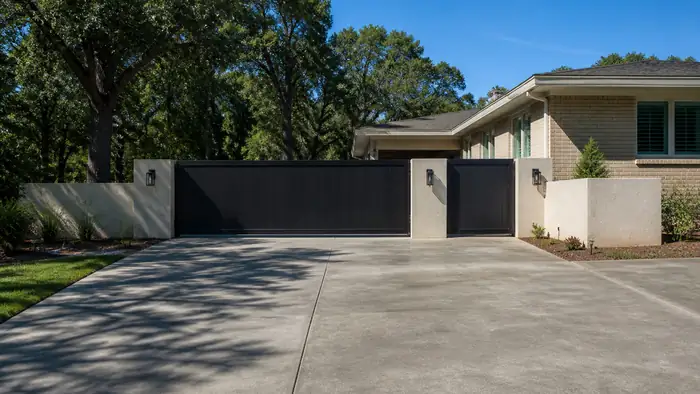
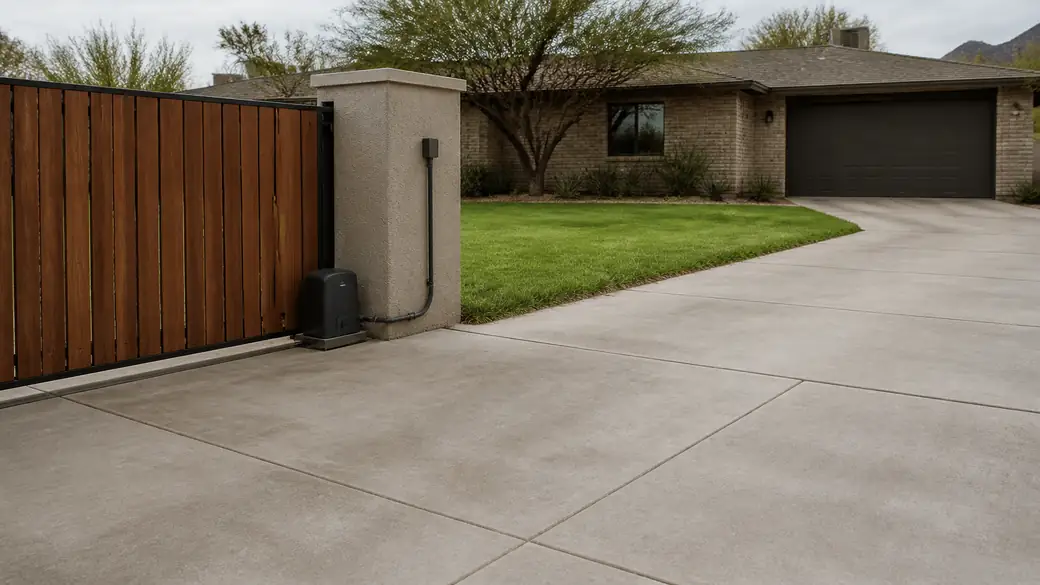
driveway gate installation completed by a local contractor at a buff-brick ranch home in Scottsdale, AZ, in clear late-morning sun.

Driveway Gate Installation

Most driveway gates we hang are steel or wrought iron: square tube frames, solid pickets, welded joints rather than bolted ones, then primed and powder coated. Posts sit in concrete footings sized to the gate's weight and span. Lots here run from flat to steep, and that changes block to block, so every site is graded and tested on its own before we choose a swing or slide layout. A swing gate on a rising drive drags at the far end. We catch that early.

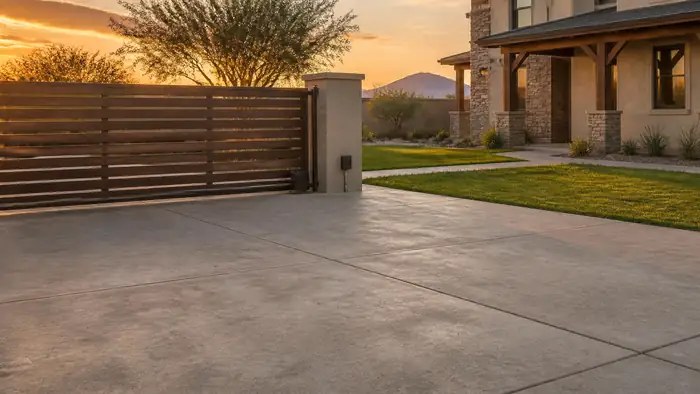
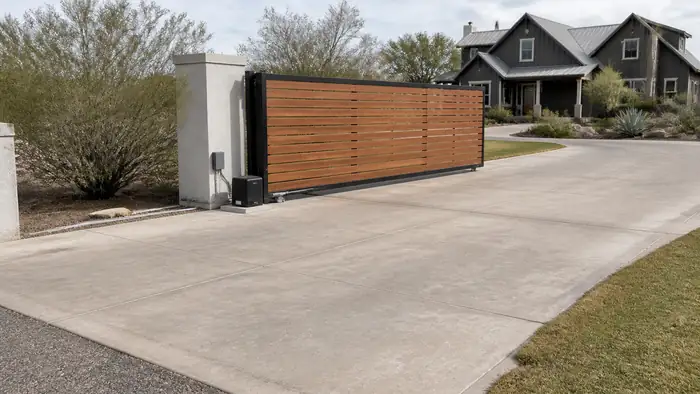
sliding gate installation completed by a local contractor at a charcoal farmhouse-modern home in Scottsdale, AZ, under bright midday cloud.

Sliding Gate Installation

Sliding gates suit drives that are short, sloped, or too tight for a swing. We run them on a steel V-track set in concrete, or cantilever them on roller trucks so nothing touches the ground. The gear rack has to sit true to the pinion. Mount it slightly high and it chatters and chews the drive gear. We set end stops and a catch post, add a safety edge on the leading end, and adjust the operator's force so it stops on contact.

electric gate repair completed by a local contractor at a grey split-level home in Scottsdale, AZ, in early morning light.

Electric Gate Repair

A gate that quits is usually a small fault, not a dead motor. We check the simple things first: a misaligned photo eye, a failed battery backup, a limit switch that has drifted, a hinge worn out of round, a track packed with debris. Around here the median home was built in 1990, and older installs often carry operators without modern reversing sensors, or posts that have shifted. We tell you what failed, what needs fixing now, and what can wait.

Why Scottsdale Chooses Scottsdale Premier Electric Gates

We size the motor to the gate you actually have, not the one in a catalog. Half the homes in Scottsdale date from 1990 or earlier, and a gate that old often carries worn hinges, a leaning post or a frame that has twisted a little. We check the steel and the posts before any motor goes on.

Slope matters too. Ground around Scottsdale can rise 1,206 feet within a few miles, and it changes from one driveway to the next. We grade and test each site on its own, then set the safety sensors and force limits before the gate ever runs by itself. You also learn the manual release before we leave.

How a Automatic Gate Motor Installation Job Runs in Scottsdale

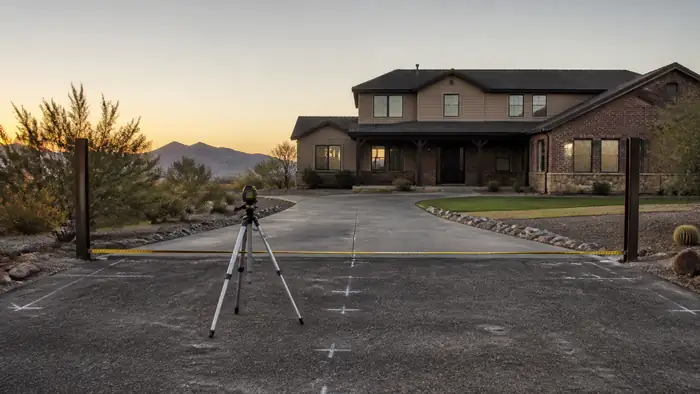
A technician measures the driveway opening at a home before gate work begins. at a brick-and-siding two-story home in Scottsdale, AZ.

Step 1: Site Assessment

We start at the driveway itself. We measure the opening, check how far the drive falls or climbs across the gate's path, and find where power can come from. Parts of Maricopa County are steep, hilly ground, and it changes from block to block, so every site is graded and tested on its own. We also look hard at any existing posts. Many were set to carry a manual gate, not the pull of a motor, and that shapes the rest of the job.

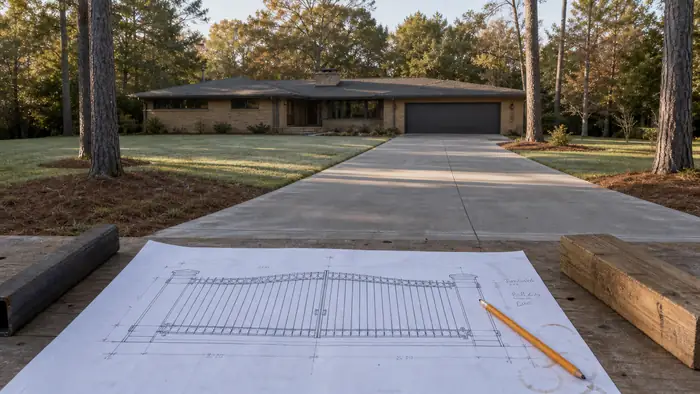
A shop drawing for a residential gate is reviewed before cutting begins. at a buff-brick ranch home in Scottsdale, AZ, in early morning light.

Step 2: Design & Fabrication

Swing or slide comes down to the slope and the room beside the drive. A swing gate on a rising drive will drag unless the hinges are set to climb with it, and a slide gate needs either a level track run or a cantilever frame. We build frames from heavy-wall steel tube with solid bar or iron pickets, fully welded rather than tacked. Every piece is sandblasted, primed and powder coated after welding, so the finish covers the welds instead of stopping short of them.

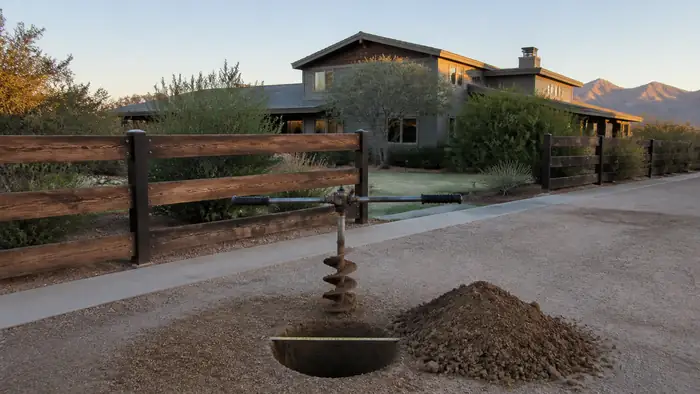
A mechanical auger bores a post hole at a residential gate site. at a grey split-level home in Scottsdale, AZ, in early morning light.

Step 3: Foundation & Footings

Most motor failures we see trace back to the ground, not the motor. A post that leans even slightly pulls the gate out of line, and the operator strains against it every cycle until something gives. We dig footings sized to the gate's weight and leverage, set a rebar cage in each, and pour around posts that are plumbed and braced. Operator pads get the same care. Nothing hangs on new concrete until it has cured properly.

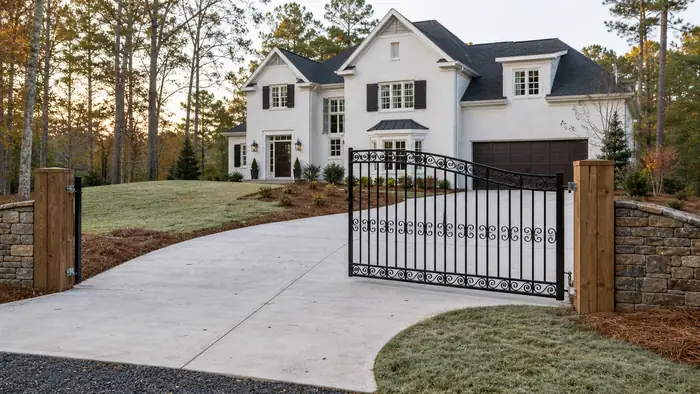
A crew hangs a wrought iron gate leaf onto its hinges at a home. at a painted-white-brick two-story home in Scottsdale, AZ, in early morning light.

Step 4: Installation

Hanging the gate is where small errors get expensive. We set hinges or rollers so the leaf moves freely by hand before any motor touches it: no binding, no drag, no drift when it stops halfway. On a slide gate, the track is anchored and leveled along its full length, and guide rollers are adjusted so the frame cannot rub. A gate that needs force to push by hand will wear out any operator fast. We fix the gate first.

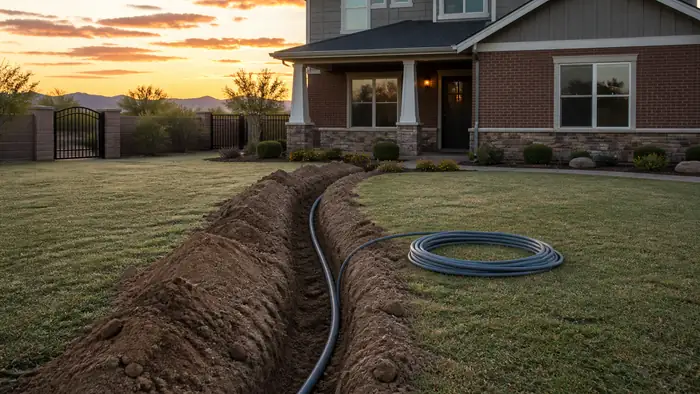
Conduit is laid in a trench from the house to a gate operator. at a brick-and-siding two-story home in Scottsdale, AZ, in early morning light.

Step 5: Automation & Wiring

The operator is sized to the gate's weight and length, with capacity to spare. We run power and low-voltage control through buried conduit, never loose cable along a wall, and make every splice in a sealed box. Then come the access pieces: keypad, remotes, intercom or a phone-based entry system, mounted where a driver can reach them from the car. Photo eyes and safety edges go in now, placed where they actually see a person or vehicle in the gate's path.

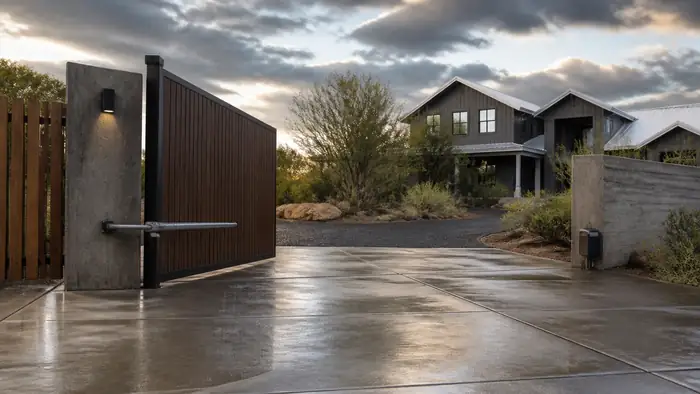
A technician tests a remote control while a residential gate cycles. at a charcoal farmhouse-modern home in Scottsdale, AZ, after a rain shower.

Step 6: Testing

Limits get set first, then reset after the gate has run several cycles and settled in. We test obstruction reversal with something solid in the path, and we check that the photo eyes stop and reverse the gate from every angle a child or car might approach. Then we cut power and confirm the manual release works. Force settings stay as low as the gate allows. A motor set to push hard hides problems until it hurts something.

A technician demonstrates the finished gate's operation to the homeowner. at a grey split-level home in Scottsdale, AZ, in early morning light.

Step 7: Final Walkthrough

Before we leave, you run the gate yourself. We show you the manual release and where its key lives, how to add or remove a remote, and what the operator does if power drops. We also walk through routine maintenance: keeping the track clear, checking hinge and roller wear, and listening for a gate that starts to hesitate or sound different. Those small changes are the early signs, and catching them keeps a repair small.

Questions About Automatic Gate Motor Installation

In Scottsdale, can a faulty gate motor be repaired instead of replaced?

Yes, and often it should be. A gate that stalls, hums without moving, or reverses for no reason usually has a worn capacitor, a failed limit switch, a stripped gear or a control board fault. Each of those parts can be replaced on its own. We test the motor under load before recommending anything. If the drive itself is worn out, we say so plainly and explain why a repair would not hold.

How much does gate motor replacement cost in Scottsdale?

That depends on what the motor has to move. A light residential swing gate and a heavy steel slide gate call for very different operators, and the right one is sized to the gate's weight, length and how often it opens. Wiring, the control board and any safety sensors that need updating all factor in. Anything quoted sight unseen would be a guess. Call for a free estimate and we will price your gate, not a catalog.

How long does gate motor installation take in Scottsdale?

Most of the time goes into what surrounds the motor. On a new installation we set the mounting pad or post bracket, run power and control wiring, fit the arm or rack, then program travel limits and force settings. A level driveway goes faster than a sloped one. Maricopa County has 1206 feet of local relief within a few miles, and it changes block to block. So every site is graded and tested on its own first.

How long does gate motor replacement take in Scottsdale, AZ?

Less than a new install. The gate, the power and usually the wiring are already in place. When the new operator bolts to the existing mount, most replacements are finished the same day we start. Switching brands or moving up to a heavier-duty motor can mean a new pad, new brackets or a rewired control box, and that adds time. Either way, we reprogram the limits and test the safety reversal before we pack up.

How often should a gate motor be serviced in the Scottsdale area?

A yearly visit suits most home gates. Shared entries and commercial properties cycle far more often, so they deserve a closer schedule. Service means lubricating hinges and the drive, checking chain or rack tension, testing photo eyes and edge sensors, confirming auto-reverse, and reading the board for stored fault codes. It is quiet work. Small adjustments now keep a motor from straining against a gate that has slowly drifted out of line.

How long does motor installation take?

Longer for a gate that has never been automated than for one that has. A manual gate may need new hinges, a squared-up frame or a truer hang before any operator can drive it safely, and we fix that first. Putting a motor on a binding gate only wears the motor out. Once the gate swings or rolls freely, the operator goes on, the access controls are wired, and we run the system through full cycles.

Metal Gates & Fences Systems and Materials for Scottsdale

Most driveway gates we automate are steel or iron, and the metal decides the operator. A light steel swing gate runs well on an arm opener mounted to the post. A heavy iron slide gate needs a pad-mounted operator with the torque to start it and stop it clean. We match the motor, control board and safety sensors to the gate you have.

Ground is the other half. Maricopa County terrain is steep in places and changes from one block to the next, so we grade and test every site before we set a pad or a post. A slope that looks minor can pull a swing gate open on its own. The median Scottsdale home was built in 1990, and hinge posts that old often need resetting before they carry a motor.

Get a Free Estimate

Get Free Estimates

Tap to call +1 623-224-2315