+1 623-224-2315
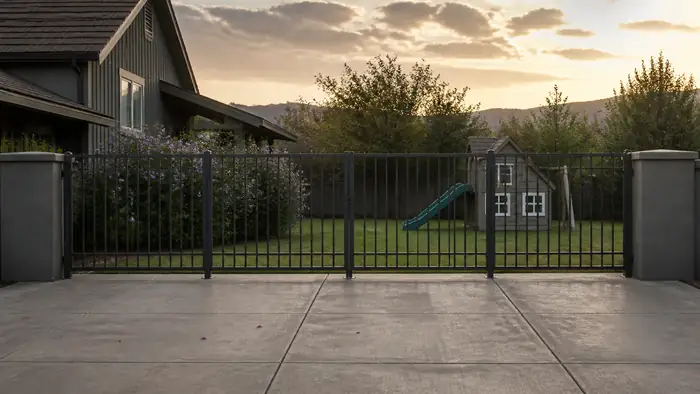
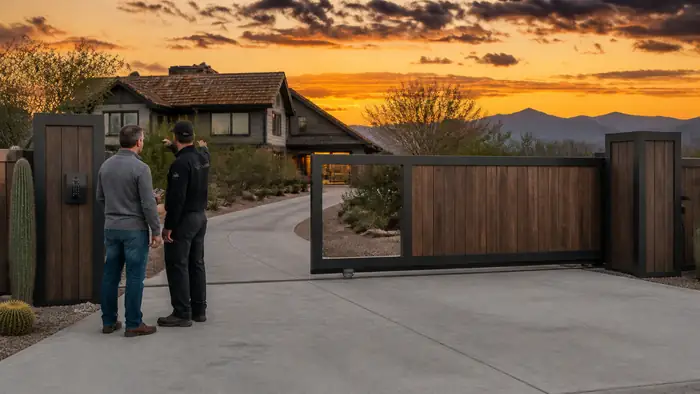
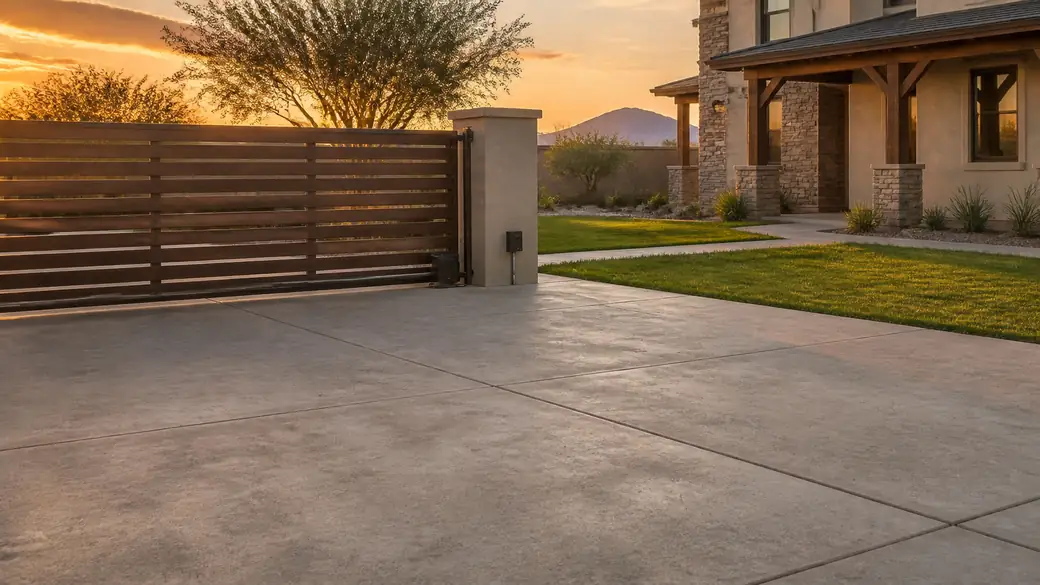
automatic gate installation completed by a local contractor at a stacked-stone and stucco home in Scottsdale, AZ, in late afternoon light.

Automatic Gate Installation in Paradise Valley, Arizona

An automatic gate is a steel or iron gate hung on posts, driven by an electric operator, and tied to a control you choose: a keypad, a remote, a phone app, or a sensor loop in the driveway. We build and install these for residential driveways and commercial entries in Paradise Valley. The gate itself is only half the job. The other half is the system behind it: how it opens, how it stops, and what it does when something is in the way. We treat safety devices like photo eyes and edge sensors as part of the installation, not an add-on.

The work runs in a set order. We walk the driveway first and decide between a swing gate and a slide gate based on the room you have and the grade of the drive. Then we plan the power run to the operator and where the keypad or call box will stand. We handle the permit. Posts go in and cure before anything hangs on them. Once the gate is hung, we wire the operator, set the travel limits and force settings, and test the safety devices until the gate reverses every time it should. Before we leave, we show you the manual release, so you can open the gate by hand if the power is ever out.

Call +1 623-224-2315

Get Free Estimates

What We Do in Paradise Valley

Automatic Gate Installation

We set the posts, hang the gate and wire the operator as one job, so no second crew is left guessing at someone else's work. Posts go into concrete deep enough to carry the leaf without sagging. We size the operator to the gate's real weight and width, not to the cheapest motor that will move it. Photo eyes and entrapment protection are wired in before we call a system finished, and we cycle the gate until it closes square every time.
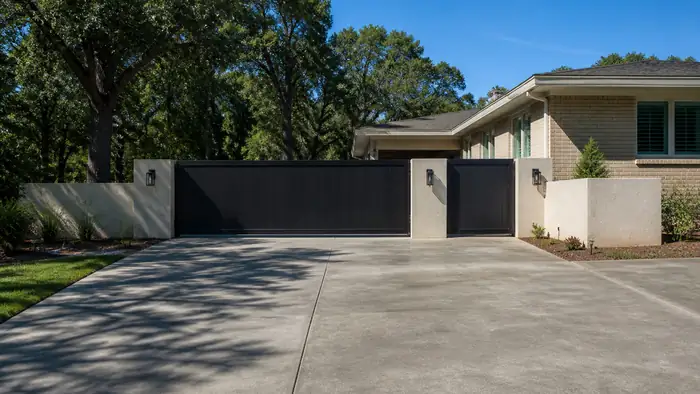
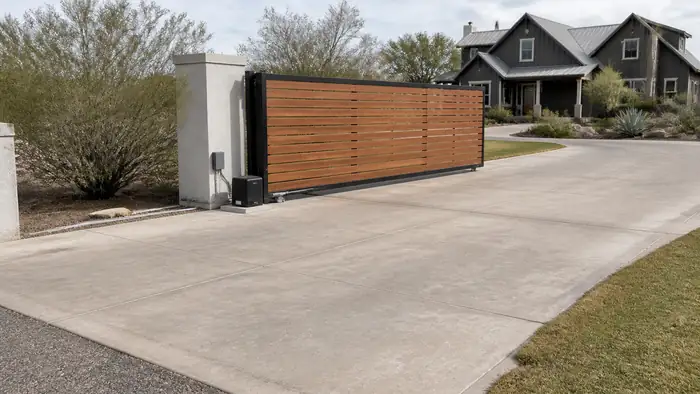
driveway gate installation completed by a local contractor at a buff-brick ranch home in Scottsdale, AZ, in clear late-morning sun.

Driveway Gate Installation

A driveway gate is a heavy piece of steel hanging off two hinges, and most of its problems start there. We build frames from heavy-wall square tube, fully welded rather than tacked, with a diagonal brace worked into the design so the latch end does not drop over time. Hinges are ball-bearing and bolted to posts set in concrete. For finish, we use powder coat over a zinc-rich primer, or hot-dip galvanizing underneath when the property calls for it.

sliding gate installation completed by a local contractor at a charcoal farmhouse-modern home in Scottsdale, AZ, under bright midday cloud.

Sliding Gate Installation

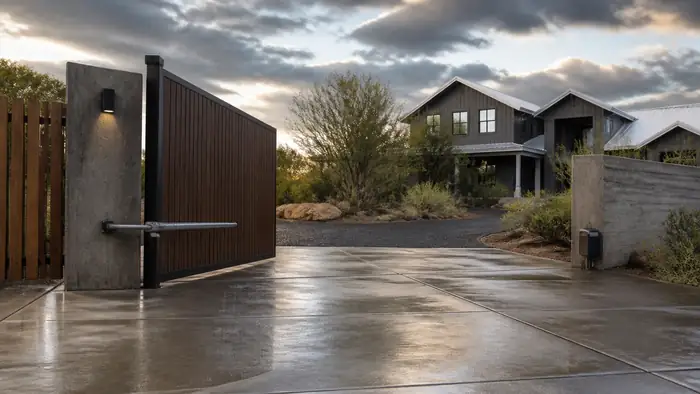
Sliding gates suit driveways that are short, steep or crowded by the house, where a swinging leaf has no room to open. We build them two ways. A track gate rolls on V-groove wheels along a steel rail set into the drive. A cantilever gate rides on rollers mounted to posts beside the opening and never touches the ground, so there is no track to clog. Either way, the operator drives a gear rack welded along the frame, with hard stops at both ends.

electric gate repair completed by a local contractor at a grey split-level home in Scottsdale, AZ, in early morning light.

Electric Gate Repair

Gates that quit working tend to fail in the same few places. Hinges wear and let the leaf drop until it drags. Photo eyes drift out of line and the gate refuses to close. Limit switches slip, backup batteries die, and control boards take damage from power surges. We find the actual cause before replacing anything. If the operator is sound, we repair it. If the gate has sagged, we straighten the frame, because a new motor will not fix a crooked leaf.

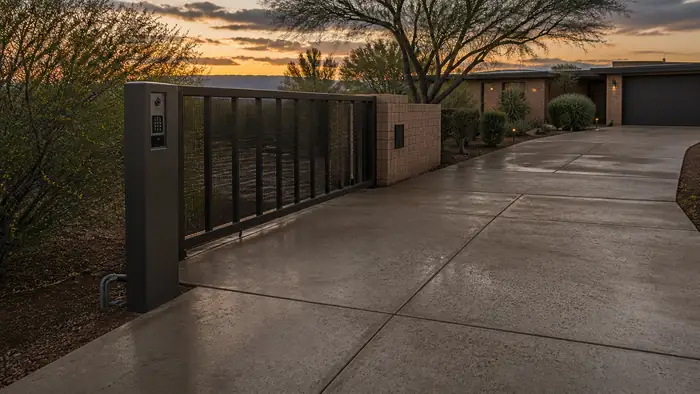
A keypad and intercom stand mounted beside the driveway gate. at a buff-brick ranch home in Scottsdale, AZ, after a rain shower.

Access Control Installation

Access control decides who gets through the gate and how. We install keypads, intercoms that ring through to your phone, remote transmitters, and card or fob readers for properties with staff or regular deliveries. On the way out, a vehicle loop cut into the driveway opens the gate by itself, so nobody needs a remote to leave. Entry hardware goes on a gooseneck post at a height a driver can reach from the car. Then we program every code and remote with you on site.

Design and Consultation Process Made for Scottsdale

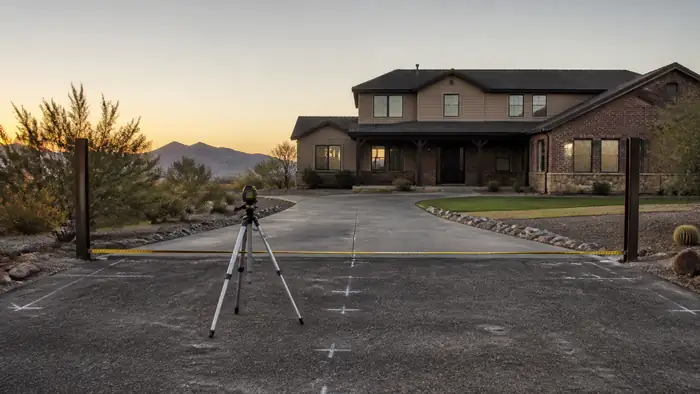
A technician measures the driveway opening at a home before gate work begins. at a brick-and-siding two-story home in Scottsdale, AZ.

Step 1: Site Assessment

We start at the opening itself. We measure the span, check the grade across the driveway, and work out which way a gate can swing or slide without striking a car, a wall or a planter. Swing gates need a clear arc on the high side. Slide gates need a straight run beside the opening at least as long as the gate. We look for power near the operator location and anything buried where a footing has to go. If the work needs a permit, we handle the permit.

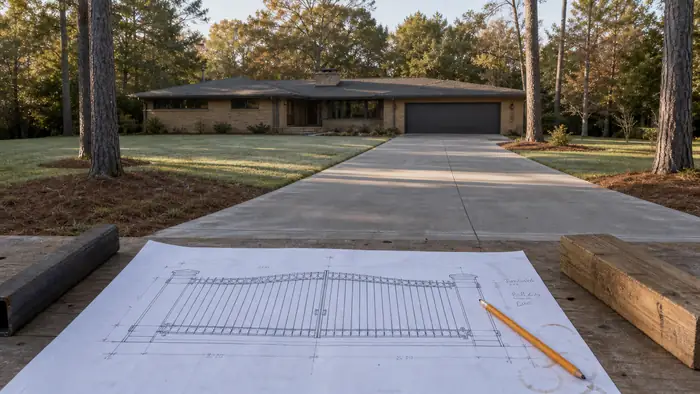
A shop drawing for a residential gate is reviewed before cutting begins. at a buff-brick ranch home in Scottsdale, AZ, in early morning light.

Step 2: Design & Fabrication

Drawings come next, with the frame, picket spacing and hardware laid out to scale. Most driveway gates we build use square steel tube for the frame, with a diagonal brace or a truss along the top rail so the leaf does not sag at the latch end. Welds get ground clean. The finished frame is either hot-dip galvanized or blasted and coated in zinc-rich primer, then powder coated. Skipping that prep is why cheap gates rust from the weld seams outward.

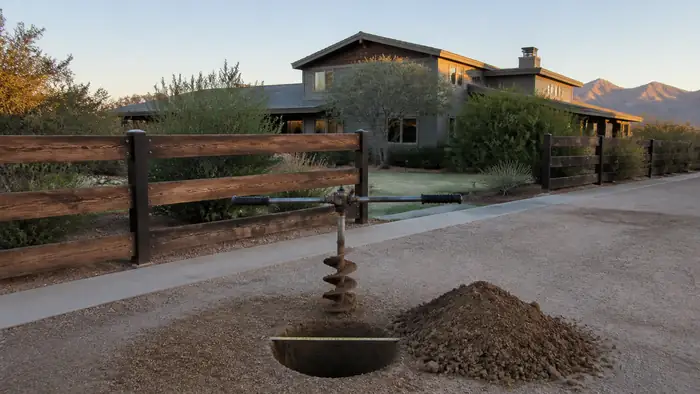
A mechanical auger bores a post hole at a residential gate site. at a grey split-level home in Scottsdale, AZ, in early morning light.

Step 3: Foundation & Footings

A gate is only as straight as its posts. A hinge post carries the whole leaf as a lever, so we size each concrete footing to the weight and width of that gate rather than a generic chart. Slide gates get a continuous footing or a track pad that will not shift. Posts go in plumb, braced, and we let the concrete cure before any weight hangs on them. Hanging a heavy iron leaf on green concrete is how posts start to lean.

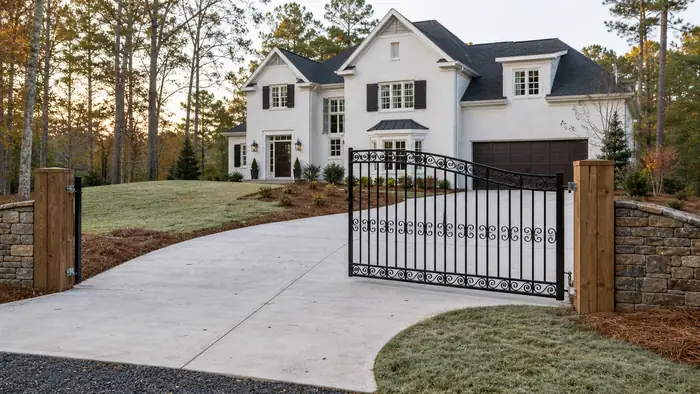
A crew hangs a wrought iron gate leaf onto its hinges at a home. at a painted-white-brick two-story home in Scottsdale, AZ, in early morning light.

Step 4: Installation

Hanging the leaves is slow, careful work. We fit heavy-duty ball-bearing hinges, then shim and adjust until the gate swings level and closes onto its stop without being forced. On a slide gate, we level the track, set the guide rollers so the gate stays upright through its full travel, and fit the end catch. Latches, drop rods and stops go on now too. A gate that binds when pushed by hand will burn out an operator, so it has to move freely first.

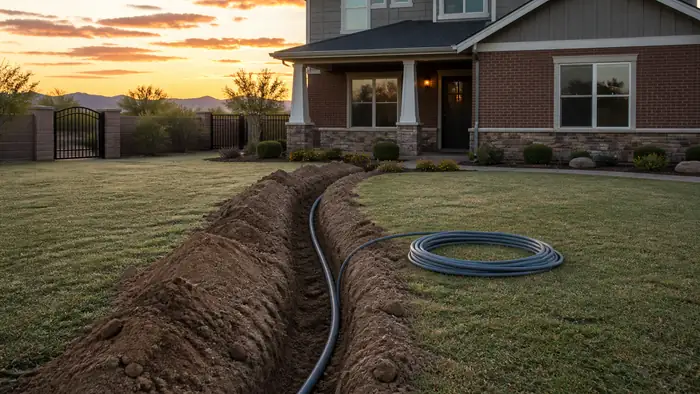
Conduit is laid in a trench from the house to a gate operator. at a brick-and-siding two-story home in Scottsdale, AZ, in early morning light.

Step 5: Automation & Wiring

Operator choice depends on gate weight, leaf length and how often the entry cycles in a day. We match a swing or slide operator to those, not the other way round. Line-voltage and low-voltage runs go in separate conduit to the operator pad. Then come the access controls you picked: keypad, remote receiver, intercom or phone app. Photo eyes and contact edges go in so the gate reverses when something is in its path. Battery backup keeps the system running through an outage.

A technician tests a remote control while a residential gate cycles. at a charcoal farmhouse-modern home in Scottsdale, AZ, after a rain shower.

Step 6: Testing

Every safety device gets tested by tripping it, not by assuming it works. We break the photo eye beam mid-cycle, press each contact edge, and confirm the gate stops and reverses. Force and travel limits get set on the operator, along with the auto-close timer. Then the gate runs through repeated full cycles while we watch for drift, noise or a hinge that starts to bind. Manual release gets checked as well, since you need to open the gate by hand when the power is off.

A technician demonstrates the finished gate's operation to the homeowner. at a grey split-level home in Scottsdale, AZ, in early morning light.

Step 7: Final Walkthrough

Before we leave, you run the gate yourself. We show you the manual release, how to add remotes and change keypad codes, and where the operator's reset sits. You keep the documentation for the operator, the finish and the access control hardware. We point out the few maintenance jobs that matter: keeping the track clear, lubricating hinges and chain, and checking that the photo eyes stay aligned. If a pedestrian gate or a second entry is on your mind, this is a good time to plan it.

What Decides the Price of Metal Gates & Fences in Paradise Valley

Most of what moves the number on a gate job is already sitting on your property. Before we quote, we walk the gate line, look at what is in the ground, and measure how far power has to travel to reach the operator. These are the things we check on a Paradise Valley driveway, and you can check most of them yourself first.

What changes the priceWhich wayWhy
Existing steel posts and footingscosts less if soundPosts that stand plumb in solid concrete can often carry a new gate, which saves digging and cure time.
Old fence, gate or concrete that has to come outcosts moreRemoval, haul-off and breaking out old footings all happen before any new steel goes in.
Truck access to the gate linecosts more when tightIf a truck and auger cannot reach the work, holes get dug and concrete gets mixed by hand.
Gate width and leaf weightcosts more as they growA wider or heavier leaf needs a thicker frame, stronger hinges or rollers, and a bigger operator to move it.
Distance from the electrical panelcosts more the farther it isElectric gates need power at the operator, and every foot of trench and conduit is labor.
Slope across the drivewaycosts moreGrade can rule out a simple swing gate or call for a slide gate on a leveled track.
How water moves at the gate linecosts more if it poolsStanding water over a track or operator pad means grading or a drain before installation.
Sprinkler lines and buried utilitiescosts moreFootings and trenches have to route around them, and some lines need moving first.

When you compare bids, line them up item by item. Check that each one names the steel gauge and post size, the operator model and its duty rating, who runs the power, whether removal and haul-off are included, and which safety devices (photo eyes, safety edges) come with the automation. A lower number that leaves one of these out is quoting a different job.

Frequently Asked Questions About Metal Gates & Fences in Paradise Valley

What finish options are available for a backyard metal gate?

Powder coat is the most common choice, and the one we recommend for most backyard gates. It bakes onto the steel as a hard, even shell and comes in a wide range of colors, from flat black to bronze and textured finishes. On steel, hot-dip galvanizing under the powder coat adds a second layer of protection. We also do painted finishes, and sealed bare metal for homeowners who want the raw look of iron.

Does anti-rust coating work on all types of metal gate?

No. It does its best work on steel and wrought iron, the metals that actually rust. Aluminum does not rust the way steel does, so it needs its own surface prep and a primer made for it rather than a rust inhibitor. Galvanized steel needs an etching primer, or the paint will lift off in sheets. We match the coating to the metal, and on an older gate we find out what it is made of before we treat it.

Which automation brands do you install and service in Paradise Valley?

We choose the operator around the gate, not the other way round. Swing or slide, weight, length, how often it cycles in a day and whether it needs battery backup all decide which system fits. Photo eyes and reversing edges go on every automated gate we install. If you already have an operator in Paradise Valley, read us the make and model off its label when you call, so we know what we are looking at.

Do security grilles and metal barriers affect emergency egress from buildings?

Yes, they can, which is why we design them not to. A grille over a bedroom window or an exit door has to open from the inside quickly, without a key, a tool or any special knowledge. We fit quick-release latches on the inside of those grilles and keep them clear of the door hardware. Where a barrier sits on an exit route, we handle the permit and build to what the inspection requires.

What types of commercial gates do you install in Paradise Valley, AZ?

Most of our commercial work is sliding and cantilever gates for parking areas, service yards and gated entries, plus swing gates for foot traffic. These run on heavier operators built for constant cycling, tied to keypads, card readers, remotes or a phone entry system. We also build pedestrian gates with panic hardware and security fencing in steel or iron to match. Every commercial gate gets the safety sensors that let it stop and reverse.

What types of metal and electric gates are available for residential properties in Paradise Valley, AZ?

Swing gates, single or double, are the classic choice where a driveway has room for the leaves to open inward. Sliding gates suit a short drive or one with little clearance. Both come in wrought iron, steel or aluminum, and any of them can be automated with an electric operator, keypad, remote or intercom. On a Scottsdale property, we also build pedestrian gates, pool gates and perimeter fencing so the entry and the fence line read as one design.

Front Yard Gate Materials and Construction Features for Scottsdale Properties

Most front yard gates we build are steel or wrought iron, and the choice comes down to weight, look and how the gate will open. Steel tube gives a clean, modern line and holds its shape across a wide driveway. Iron suits scrollwork, pickets and custom patterns that match the house. Aluminum is lighter and does not rust, so it works well on walk gates and on swing gates where a lighter leaf helps the operator.

Construction is where a gate earns its keep. We weld frames solid rather than bolting them, set posts in concrete deep enough to carry the leaf without sagging, and size hinges for the full weight plus the pull of an electric operator. Every piece gets primer and a powder coat or paint before it goes up. For automation, we plan the operator mount, wiring run and safety sensors into the design from the start, so nothing gets tacked on later.

The failures we see on existing property gates come down to a handful of things. A post leans and the gate drags. A hinge wears out because it was sized for a manual gate, then an opener was added. Bare welds rust through under the paint. Photo eyes get skipped, which leaves the gate closing on whatever is in its path. Getting those details right at installation takes less work than fixing them later, and the entry keeps working as it should.

Get a Free Estimate

Get Free Estimates

Tap to call +1 623-224-2315