+1 623-224-2315
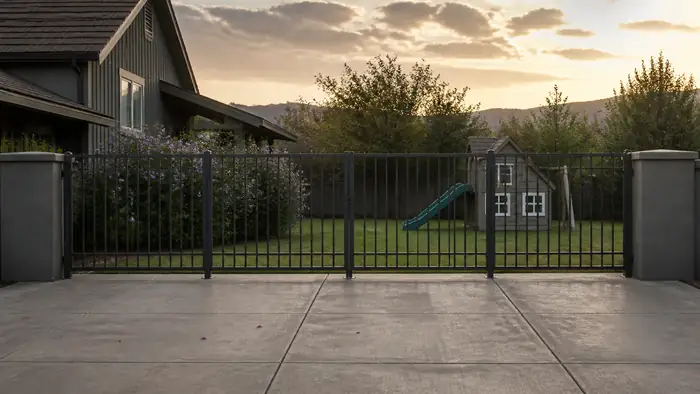
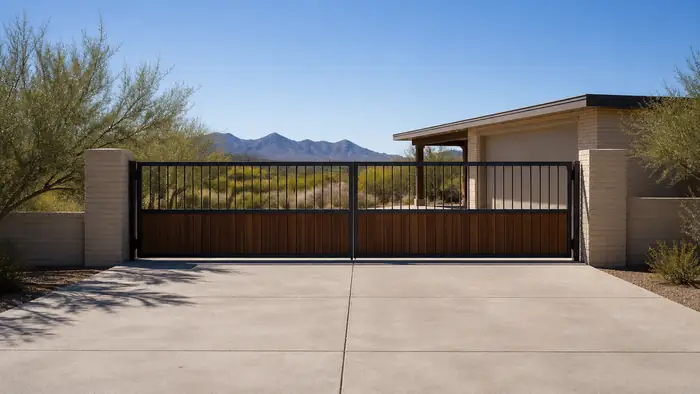
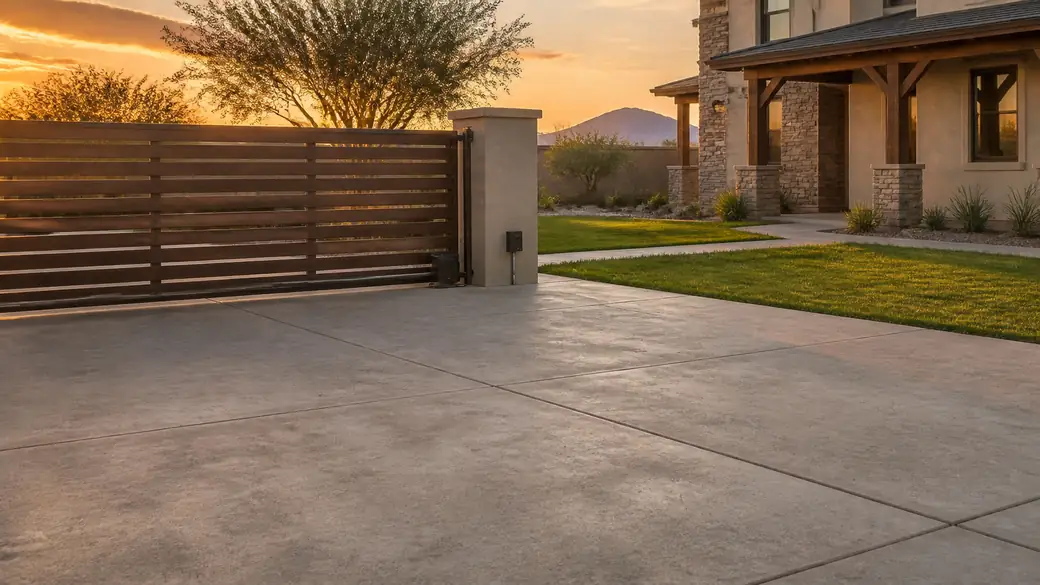
automatic gate installation completed by a local contractor at a stacked-stone and stucco home in Scottsdale, AZ, in late afternoon light.

Automatic Gate Installation in Gilbert, Arizona

An automatic gate is two things that have to agree with each other: a steel or iron gate that hangs true, and an electric operator that moves it the same way every time. We build and install both for homes and commercial properties in Gilbert. That means swing gates across a driveway, slide gates where there is no room to swing, and pedestrian gates on the same access control. We wire the operator, set the safety sensors so the gate stops and reverses when something is in its path, and tie entry into keypads, remotes or a phone app.

Most of the work happens before the gate goes up. We look at the opening, the slope of the drive, where power can reach, and how the gate will clear cars, walls and landscaping when it moves. Posts and footings get set first so the frame does not sag onto the operator later. Then the gate is hung, the motor mounted, and the limits adjusted until it opens and closes smoothly without straining. We handle the permit. Before we leave, we run the gate through its full operation with you and show you the manual release. Call for a free estimate.

Call +1 623-224-2315

Get Free Estimates

What We Do in Gilbert

Automatic Gate Installation

We size the operator to the gate, not the other way around. A long steel swing gate needs an arm rated for its weight, mounted on posts set deep in concrete so they take the torque without leaning. Low-voltage wiring runs in buried conduit. Photo eyes and a safety edge make the gate stop and reverse when something is in its path, and we set force and travel limits before we pack up. You also learn the manual release before we leave.
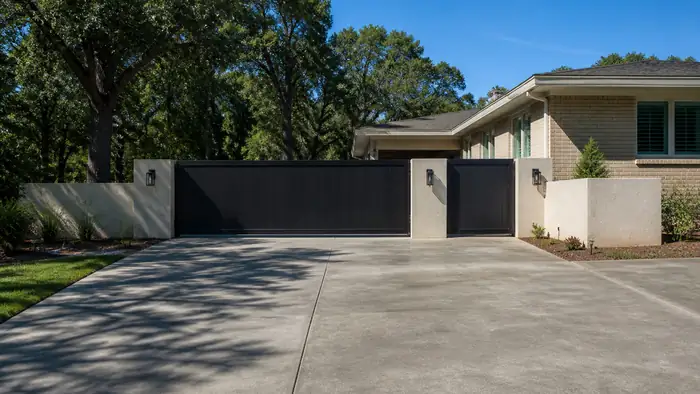
driveway gate installation completed by a local contractor at a buff-brick ranch home in Scottsdale, AZ, in clear late-morning sun.

Driveway Gate Installation

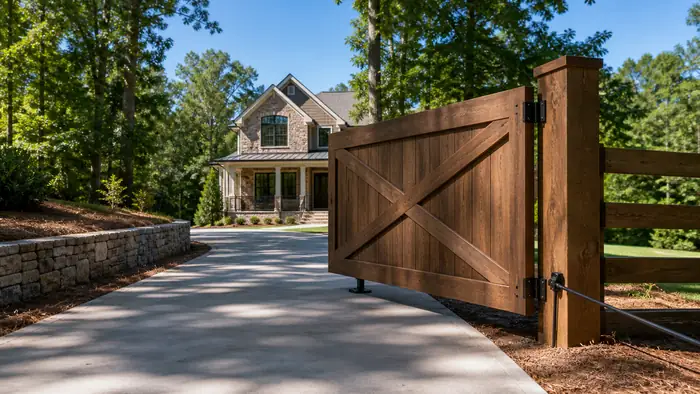
Sag is the most common way a driveway gate fails, and it starts with a frame that was never braced. We build from steel square tube with fully welded joints and add a diagonal brace or truss on wider leaves so the latch end stays level. Hinges are heavy-duty ball-bearing types on posts set in concrete. Every piece is sandblasted, primed and powder coated. We also check the driveway's slope, since a gate that swings uphill needs clearance built in.

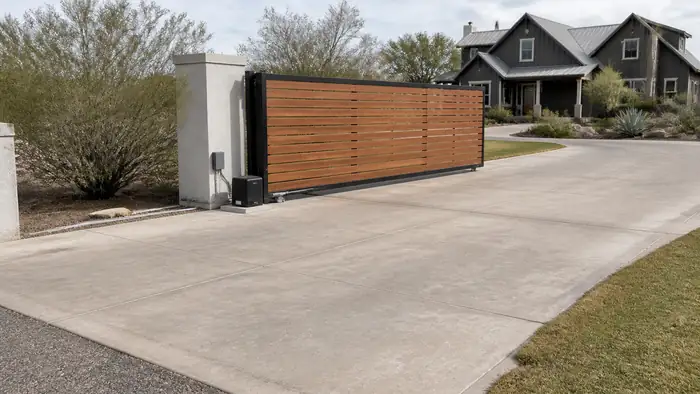
sliding gate installation completed by a local contractor at a charcoal farmhouse-modern home in Scottsdale, AZ, under bright midday cloud.

Sliding Gate Installation

When a driveway is too short or too steep for a swing gate, a slide gate usually solves it. We set a V-groove track in a concrete footing and hang the gate on sealed steel wheels, or build a cantilever gate that rides on rollers and never touches the ground across the opening. Cantilever gates suit gravel and uneven drives. Either way, the operator gets a chain or rack drive matched to the gate's weight, plus top guide rollers to keep it plumb.

electric gate repair completed by a local contractor at a grey split-level home in Scottsdale, AZ, in early morning light.

Electric Gate Repair

Electric gates tend to fail in a few familiar ways: stopping halfway, reversing for no reason, or humming without moving. We check the simple causes first (misaligned photo eyes, a weak backup battery, a limit switch out of adjustment) before we touch the control board. Worn hinges and flat track wheels also burn out motors, because the operator strains against a gate that no longer moves freely. So we fix the hardware along with the electrics, on residential and commercial systems alike.

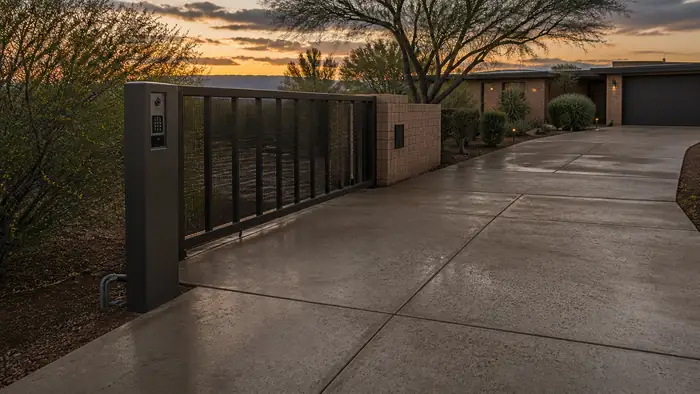
A keypad and intercom stand mounted beside the driveway gate. at a buff-brick ranch home in Scottsdale, AZ, after a rain shower.

Access Control Installation

Opening a gate should be easy for the people you expect and awkward for everyone else. We install keypads, remote transmitters, card readers, video intercoms, and phone-based entry that lets you open the gate for a delivery from wherever you are. Keypad pedestals go where a driver can reach them without leaving the car. On commercial sites we set up individual codes, so one user's access can be shut off without changing everyone's. Exit loops in the drive let cars leave without a button.

Design and Consultation Process Made for Scottsdale

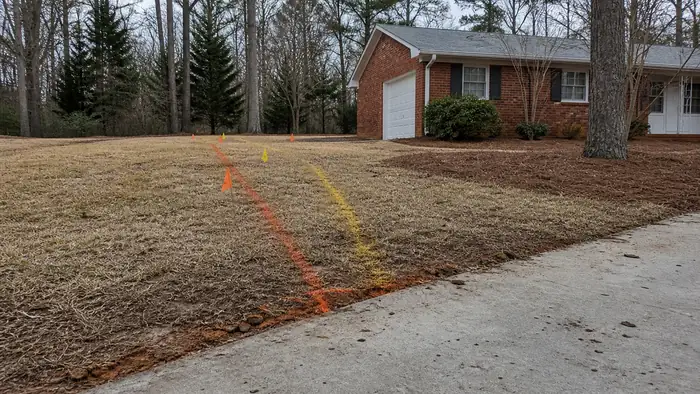
Utility locate flags mark the ground before post holes are dug at a house. at a red-brick ranch home in Scottsdale, AZ, after a rain shower.

Step 1: Site Assessment

We start on your property with a tape, a level and a notebook. We measure the opening, check the grade across the driveway, and work out whether a swing gate has room to clear or a slide gate has enough run-back space along the fence line. We find where power can reach the operator, where sprinkler lines and utilities run, and how cars and deliveries actually approach. Those answers shape the design, residential or commercial, before any steel gets ordered.

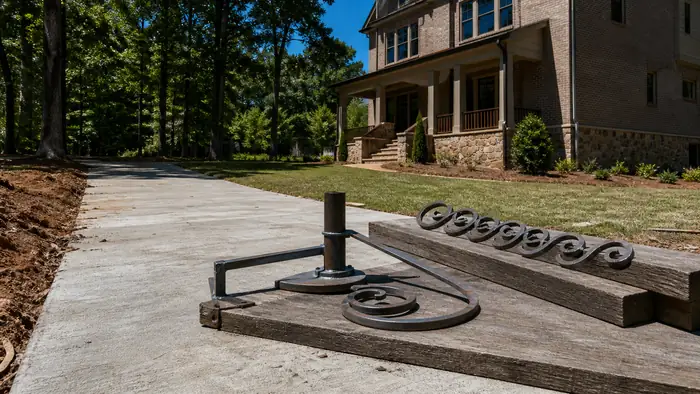
A metalworker forms decorative scrollwork for an ornamental gate. at a brick-and-siding two-story home in Scottsdale, AZ, in clear late-morning sun.

Step 2: Design & Fabrication

Drawings come next, sized to the opening we measured rather than to a stock panel. Frames are heavy-wall square steel tube with solid bar pickets, welded at every joint instead of screwed together. Wide swing leaves get a diagonal brace or a truss so they do not sag at the latch end over time. Once you approve the layout, picket spacing and top detail, we fabricate the custom gate, grind the welds smooth, and finish it with zinc-rich primer under powder coat.

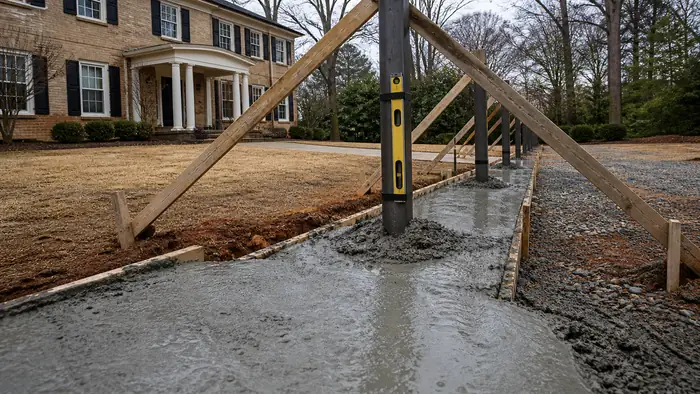
Concrete is poured around a braced gate post at a house. at a tan-brick colonial in Scottsdale, AZ, after a rain shower.

Step 3: Foundation & Footings

Most gate problems start in the ground. A post set in a shallow footing leans under the weight of a steel leaf, the latch stops lining up, and the operator strains on every cycle. We dig piers sized to the gate's weight and length, set the posts plumb in concrete, and let it cure before hanging anything. Slide gates get a continuous concrete track or a cantilever footing, and the operator gets its own level pad, set clear of standing water.

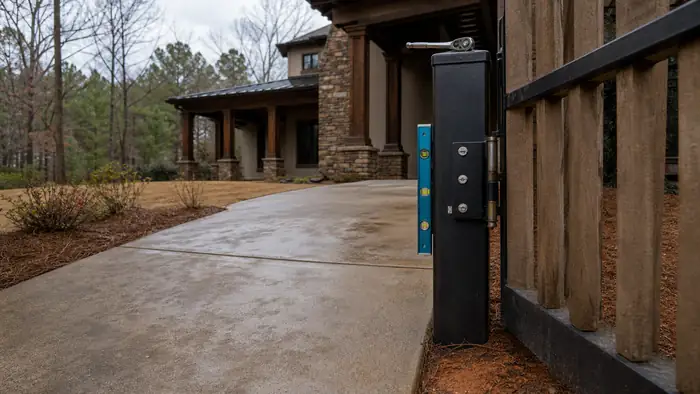
An installer shims a hinge plate to plumb a residential gate post. at a stacked-stone and stucco home in Scottsdale, AZ, after a rain shower.

Step 4: Installation

With the concrete cured, we hang the gate on heavy ball-bearing hinges or set it on its rollers and guide wheels. Each leaf is adjusted to swing level through its full travel and close flush against the stop without being forced. We fit latches, drop rods and positive stops, then check that the gate clears the driveway at every point of its arc. A gate that moves freely by hand is the only kind worth automating, so we do not rush this part.

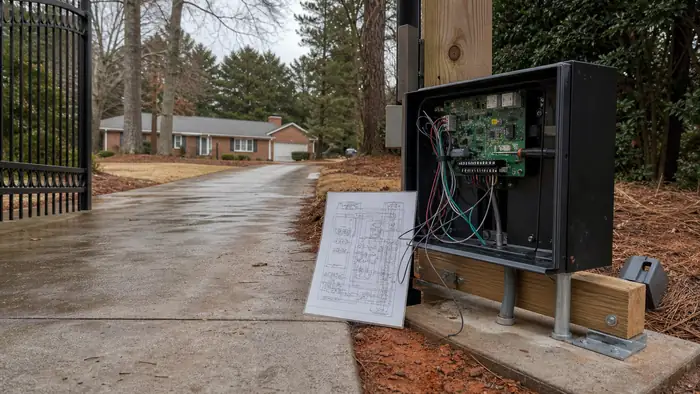
A technician wires a gate operator's control board at a residential post. at a red-brick ranch home in Scottsdale, AZ, after a rain shower.

Step 5: Automation & Wiring

Operator choice follows the gate: articulated or linear arms for swing leaves, a rack-and-pinion drive for sliders, each sized to the weight it moves. We run power and low-voltage control wiring in buried conduit and seal every box against dust and insects. Then we connect the access control you picked, whether that is a keypad, remote transmitters, a phone-based entry system or an intercom at the call box. Battery backup keeps the gate usable when the power drops.

A technician tests a photo-eye's obstruction response on a residential gate. at a brick-and-siding two-story home in Scottsdale, AZ.

Step 6: Testing

Safety devices get as much attention as the motor. We mount photo eyes across the opening and contact edges on the leading faces, then set the operator's force and reversing so the gate stops and backs off when it meets an obstruction. We run it through dozens of full cycles, watching for binding, drift, or a limit switch that stops short. Anything that looks marginal gets adjusted now, not after it starts causing trouble at your entry.

A technician hands over the manual and spare remotes to a homeowner. at a buff-brick ranch home in Scottsdale, AZ, in clear late-morning sun.

Step 7: Final Walkthrough

You operate the gate yourself before we leave. We show you how to open it by hand with the manual release, how to add or remove remotes and codes, and where the breaker for the operator sits. We point out the few maintenance items that matter: keeping the track clear, greasing the hinges, and wiping the photo eye lenses. If anything about the operation or the access control is not how you want it, we sort it out while we are still on the property.

Frequently Asked Questions About Metal Gates & Fences in Gilbert

What gate material works best for Gilbert weather?

For most driveway and entry gates, we build in powder-coated steel. It holds its shape across a long span, carries the load of an operator arm, and the coating protects the metal underneath. Aluminum is lighter and never rusts, so it suits pool gates and pedestrian gates. Wrought iron looks right on some homes but asks for more upkeep. We look at where the gate sits and what hits it (sprinklers, full sun, pool water) and choose from there.

How does the permitting process work for gate installations in Gilbert, AZ?

We handle the permit. Before any work starts, we draw up the gate, the posts and the electrical run, then submit the plans for approval. If your neighborhood has an HOA, their sign-off usually comes first, and we can prepare drawings and finish samples for that review as well. Once the permit is approved, we schedule the installation. You don't fill out forms or chase paperwork. That part is ours.

Can metal gates include decorative elements?

Yes. Steel and iron take scrollwork, finials, collars, laser-cut panels, and house numbers or an initial worked into the frame. We can match a pattern from your front door, your railings, or a gate you walked past somewhere in Gilbert and couldn't stop thinking about. Added weight matters on an automatic gate, so we size the operator for the finished gate, not the bare frame. Good design has to open and close well too.

Are patio gates weather-resistant?

Yes, when they are built and finished properly. We use aluminum or galvanized steel with a powder-coat finish, stainless hardware, and sealed welds so water has nowhere to sit. Hinges and latches wear out before the frame does. That's why we choose ones you can replace without cutting anything. A patio gate still needs a little attention: rinse off dust, check the latch now and then, and touch up any chip before it spreads.

What types of automatic gates are available in Gilbert?

Swing gates and sliding gates cover most homes. A swing gate opens on hinges and needs clear room through its arc. Sliding gates run on a track or on cantilever rollers, which suits short or sloped driveways. For commercial property, we also install barrier arms and heavy-duty slide systems. Every automatic gate we put in has safety equipment built in: photo eyes, reversing sensors and a manual release, so the gate backs off when something is in its path.

How much does it cost to install a keypad entry system on my gate in Gilbert?

It depends on what is already there. If your gate has a working operator, adding a keypad is a smaller job: setting a post, running low-voltage wire or pairing a wireless unit, then programming codes. If the gate is manual, the operator and the power run become the bigger part of the work. Keypads themselves range from simple code entry to units with phone apps and guest codes. The real number comes from seeing the gate, so call for a free estimate.

Front Yard Gate Materials and Construction Features for Scottsdale Properties

Most front yard gates we build on Scottsdale properties are steel or wrought iron, and the choice comes down to weight, look and how the gate will open. Steel tube frames stay rigid across a wide driveway opening. Iron takes scrollwork and custom detail better, though it is heavier and asks more of the hinges and the operator. We also build in aluminum where a lighter swing gate makes sense. Every gate gets a powder coat finish over clean, prepped metal.

Construction starts with the posts. We set them in concrete deep enough to carry the full weight of the gate once it is moving several times a day. Frames are welded, not bolted, and we grind and seal every joint before coating. For electric gates, we mount the operator to the post or a dedicated pad, then wire the control system, keypad or remote access, and the safety sensors. The installation is finished when the gate opens and closes cleanly on its own.

Problems with automatic gates usually trace back to the build, not the motor. A frame that flexes or a post that shifts puts load on an operator that was never sized for it, and the gate starts to drag or stop short. We match the operator to the actual weight and length of the gate, and we adjust the travel limits and sensors on site. Getting that right up front is what keeps maintenance simple later.

Get a Free Estimate

Get Free Estimates

Tap to call +1 623-224-2315