+1 623-224-2315
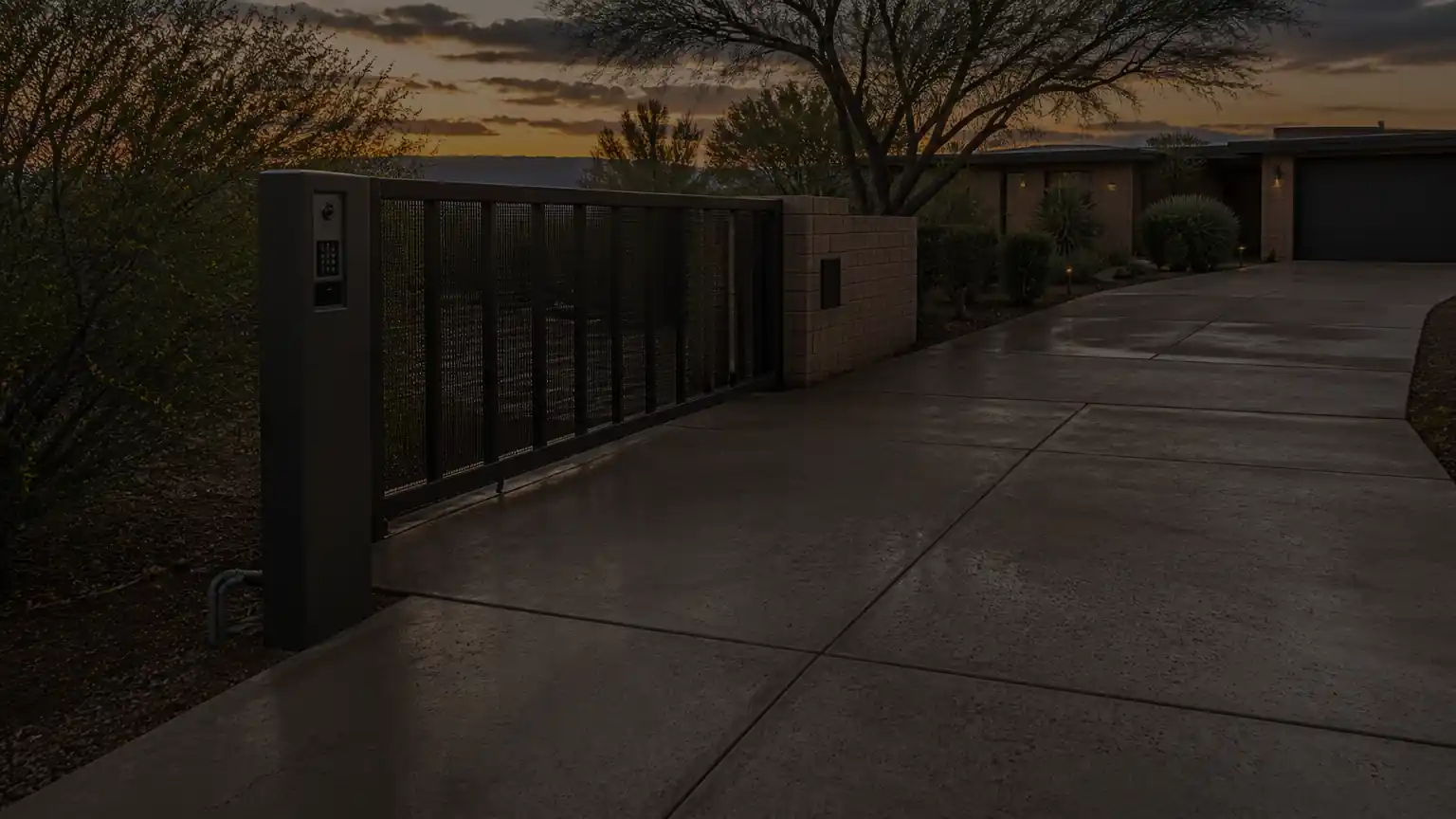
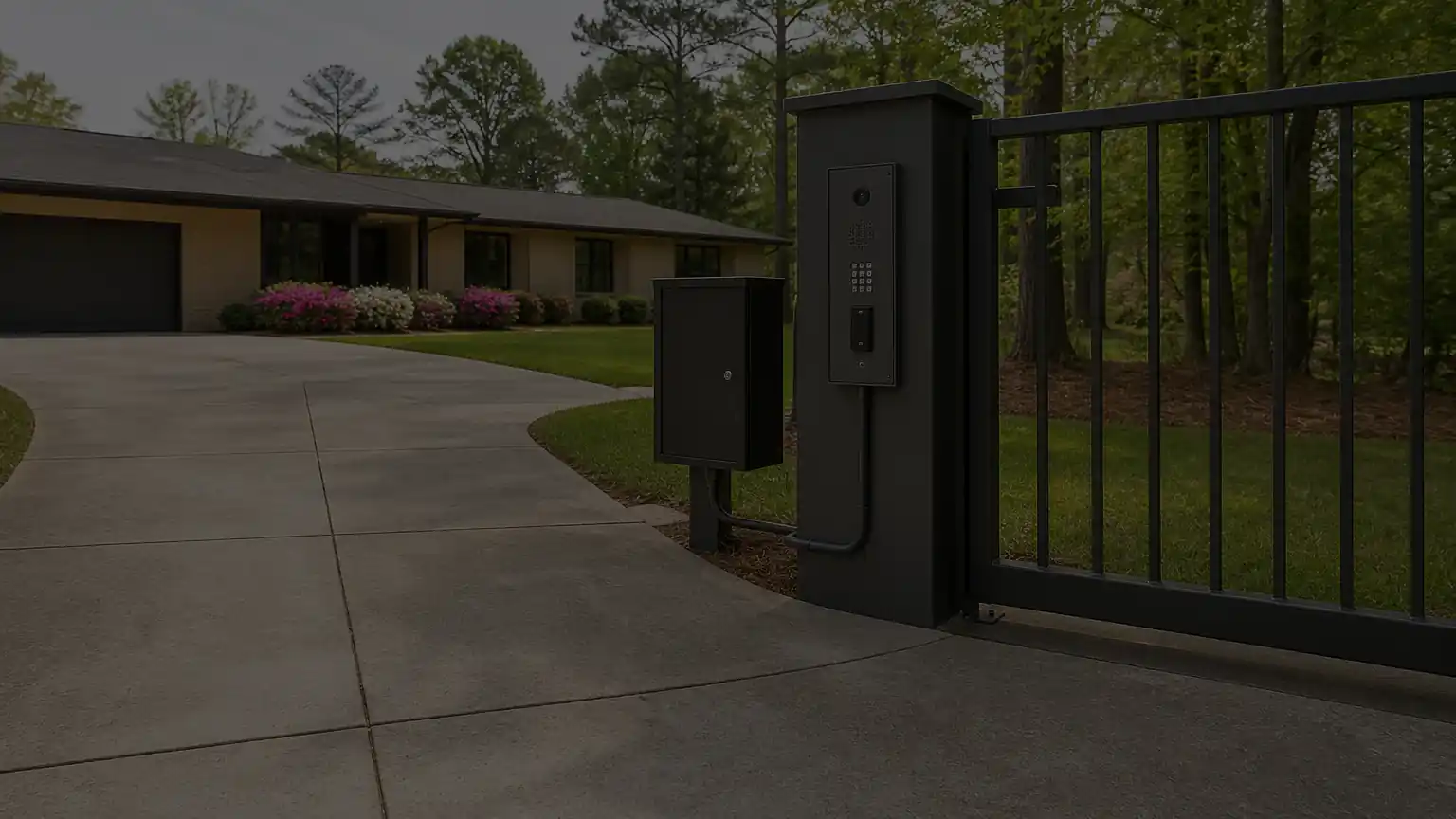
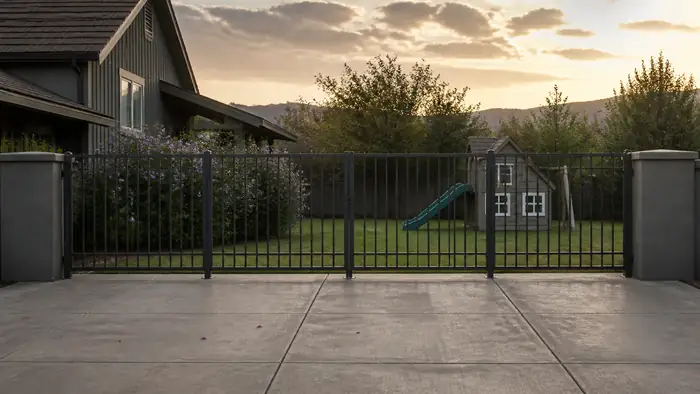
sliding gate installation completed by a local contractor at a charcoal farmhouse-modern home in Scottsdale, AZ, under bright midday cloud.

Sliding Gate Installation in Scottsdale, AZ

A sliding gate runs sideways along a track instead of swinging open, so it needs no clear arc of driveway in front of it. We build them in steel or iron, fit the electric operator, and set up access control for residential and commercial property across Scottsdale. On older homes, we check the existing posts and walls before anything gets mounted to them.

Ground matters more than the gate itself. Maricopa County is steep, hilly terrain, with 1,206 feet of local relief within a few miles, and it changes from block to block. A sliding gate only runs true on a level track, so we grade and test every site on its own before work starts. Call for a free estimate.

Call +1 623-224-2315

Get Free Estimates

What Is Included in Sliding Gate Installation

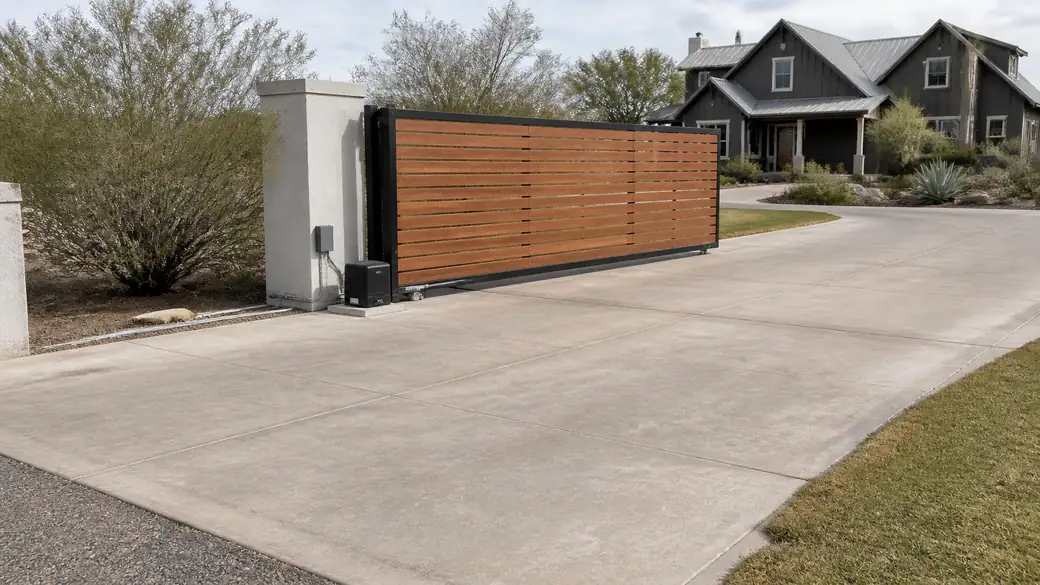
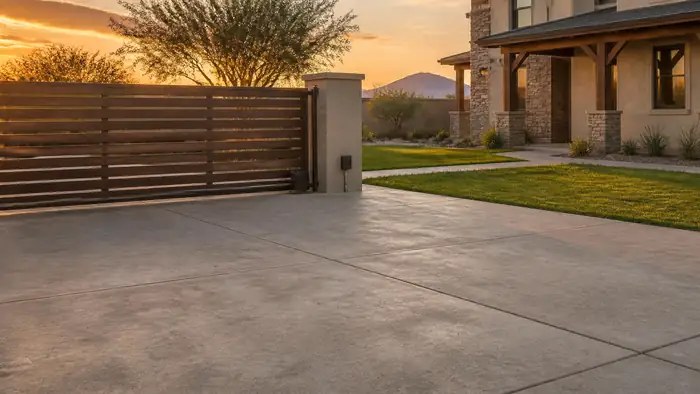
automatic gate installation completed by a local contractor at a stacked-stone and stucco home in Scottsdale, AZ, in late afternoon light.

Automatic Gate Installation

An automatic gate is the gate, the operator that moves it, and the controls that decide when, all working as one system. We set the operator on a poured concrete pad, run low-voltage wiring through conduit, and connect the access control you choose: keypad, remote, intercom or phone app. Photo eyes and a safety edge go on every system, so the gate stops and reverses when something is in its path. Skipped safety wiring is where most trouble starts.
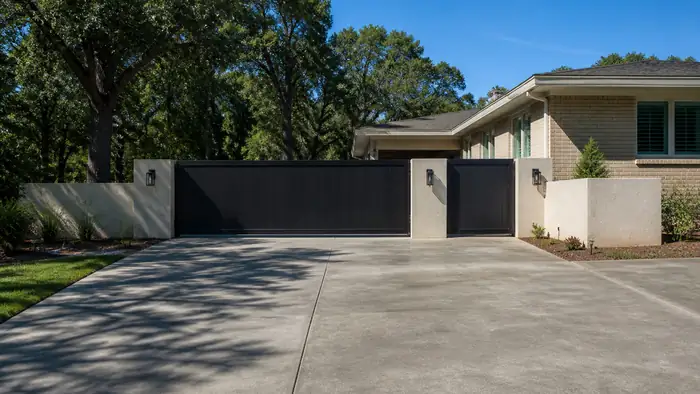
driveway gate installation completed by a local contractor at a buff-brick ranch home in Scottsdale, AZ, in clear late-morning sun.

Driveway Gate Installation

Driveways rarely sit flat, and here the grade can change from one block to the next. We measure the slope before anything is ordered, because it decides whether a swing gate will clear the pavement or a slider is the better fit. Posts go into concrete footings sized to the gate's weight. The opening stays wide enough for a truck to turn in without scraping. Steel frames get a galvanized base under the powder coat, so rust has nowhere to start.

Sliding Gate Installation

A slider either rolls on V-groove wheels along a steel track set in a concrete grade beam, or hangs cantilevered on sealed rollers with no track at all. Track gates live or die on the track: it has to run dead level and straight, or the wheels bind and the operator strains. On cantilever gates we extend the frame past the opening for counterbalance. Guide rollers hold the top steady, and positive stops at both ends keep the gate from overrunning.

electric gate repair completed by a local contractor at a grey split-level home in Scottsdale, AZ, in early morning light.

Electric Gate Repair

Most failures are small and findable. We check the simple causes first: a tripped breaker, a dead remote battery, a photo eye knocked out of line. Then the mechanical side: worn wheels, a bent track, dry hinges, a chain gone slack. On the operator we test the limit switches, the control board, the capacitor and the motor under load. When a part is past saving, we say so plainly and quote the replacement before any work goes ahead.

Why Scottsdale Chooses Scottsdale Premier Electric Gates

A sliding gate is only as good as the track it rides on and the operator that drives it. We design both around the property in front of us, not a catalog drawing. With the median home here built in 1990, that means fitting new steel and automation to driveways and walls with some years on them.

Ground matters too. The land around here is steep and hilly in places, with 1,206 feet of local relief within a few miles, and it shifts from one block to the next. So every site gets graded and tested on its own before we set a post. A level track keeps a heavy iron gate running straight and quiet.

How a Sliding Gate Installation Job Runs in Scottsdale

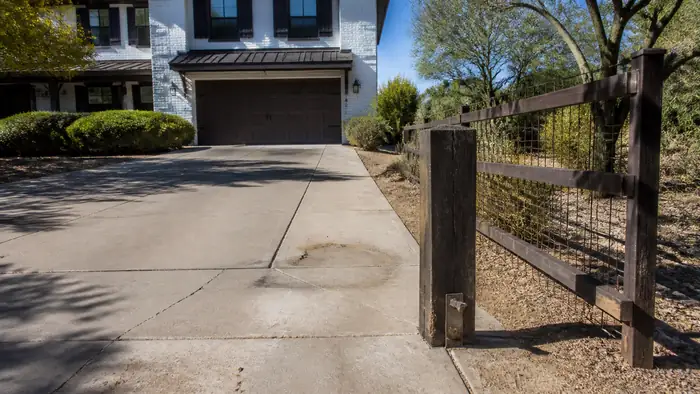
A technician photographs the existing entrance before design work starts. at a painted-white-brick two-story home in Scottsdale, AZ.

Step 1: Site Assessment

We start at the driveway with a tape and a level. A sliding gate needs a clear run beside the opening at least as long as the gate itself, so we look for anything sitting in that path: a wall return, a planter, a meter box, a sprinkler valve. Maricopa County has 1206 feet of local relief within a few miles, and grade changes from block to block. So we measure the slope across your drive and find where power will come from.

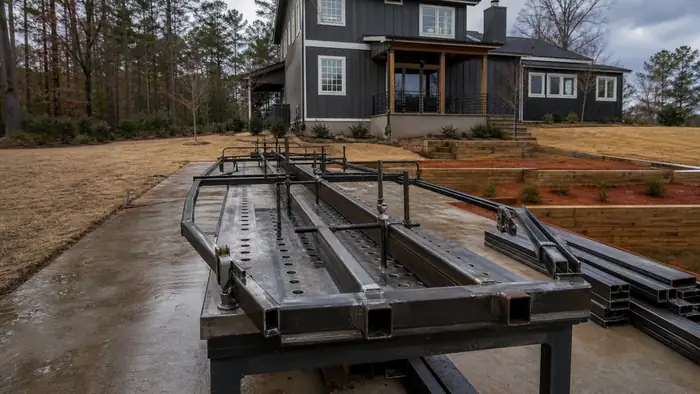
A welder builds a residential gate frame in the fabrication shop. at a charcoal farmhouse-modern home in Scottsdale, AZ, after a rain shower.

Step 2: Design & Fabrication

Drawings come next, with the gate sized to the opening plus the overlap it needs to close fully. Most residential sliders we build use a welded steel square-tube frame with pickets or panels, cross-bracing to keep the frame from racking, and either a V-groove track or a cantilever setup depending on the site. Iron scrollwork goes on once the frame is true. Every piece is cleaned, primed and powder coated before it leaves the shop. Bare welds are where rust starts.

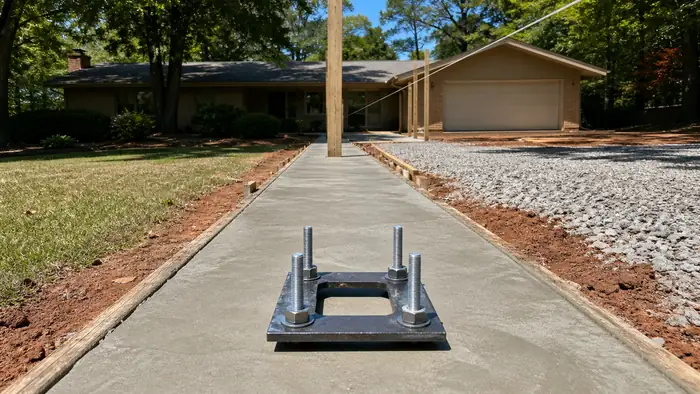
Anchor bolts are set into a fresh concrete footing for a gate post. at a buff-brick ranch home in Scottsdale, AZ, in clear late-morning sun.

Step 3: Foundation & Footings

Footings decide whether a gate still rolls straight years from now. The operator pad, the post footings and, on cantilever gates, the roller posts all sit in concrete with rebar tied in. We set anchor bolts with a template so the operator lines up, and the concrete cures before anything bolts to it. On a sloped drive we cut the track bed level rather than let the gate fight gravity. Many homes here date to around 1990, so existing slabs get checked, not trusted.

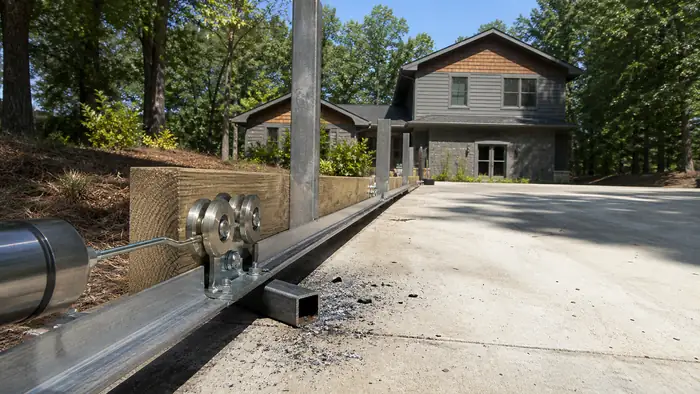
An installer fits rollers onto a residential sliding gate's rail. at a grey split-level home in Scottsdale, AZ, in clear late-morning sun.

Step 4: Installation

With the concrete cured, the gate goes on. We set the V-groove track into the slab or bolt the cantilever carriages to their posts, then hang the gate and plumb it. Guide rollers at the top keep it from leaning in wind. The receiver post gets a catch the gate seats into cleanly. Most trouble we find on older installs traces back to this step: a track out of level, a bent roller, a gate that drags until it burns out its motor.

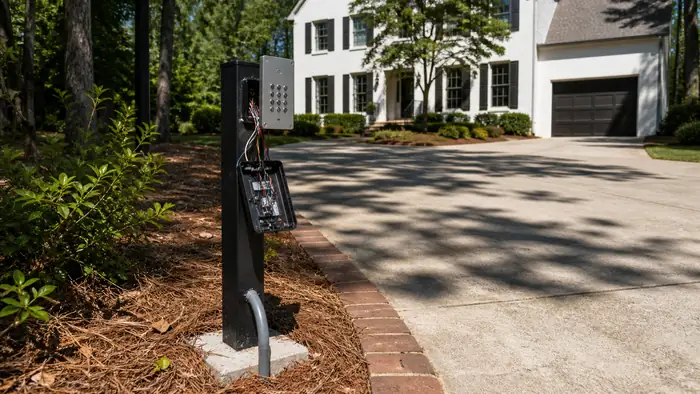
A technician mounts and wires a keypad post at a driveway entrance. at a painted-white-brick two-story home in Scottsdale, AZ, in clear late-morning sun.

Step 5: Automation & Wiring

Electric gates are only as reliable as the wiring behind them. We run power in conduit from a dedicated circuit, mount the operator on its pad, and set the drive rack along the gate so the gear meshes without binding. Then come the access controls you chose: keypad, remote transmitters, a phone-based entry system, or a vehicle loop in the drive that opens the gate on the way out. We handle the permit for the electrical work. Battery backup keeps the gate running through an outage.

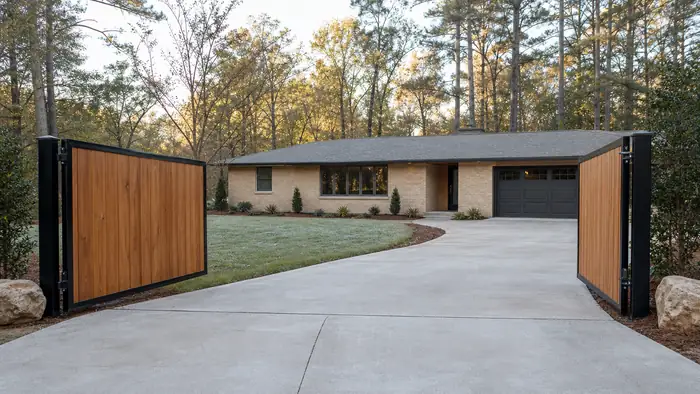
A technician manually cycles a residential swing gate to check clearance. at a buff-brick ranch home in Scottsdale, AZ, in early morning light.

Step 6: Testing

Safety testing is never a single pass. We set the open and close limits, then adjust the force so the gate stops and reverses when it meets resistance. We check the photo eyes by walking through the beam and the edge sensors by pushing on the leading edge. After that the gate runs cycle after cycle while we watch for drifting limits, noisy rollers, or a motor straining on the slope. Anything that is off gets corrected before we pack up.

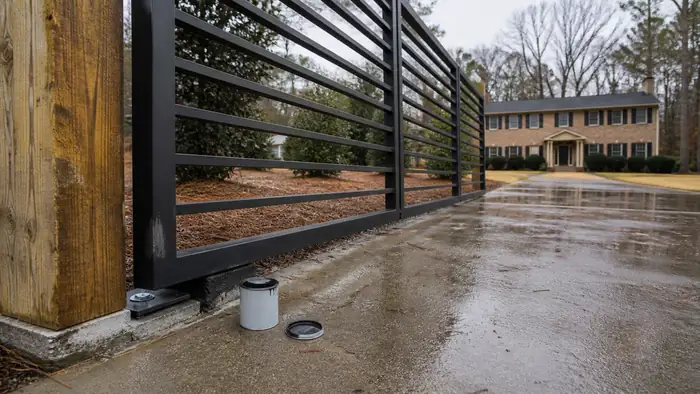
A technician applies touch-up paint to a finished residential gate. at a tan-brick colonial in Scottsdale, AZ, after a rain shower.

Step 7: Final Walkthrough

Before we leave, you run the gate yourself. We show you each remote and keypad code, how to add or remove users, and where the manual release is so you can open the gate by hand during an outage or a motor fault. We point out the photo eyes and why nothing should block them. You also get the operator manual and a short maintenance list: keep the track clear of gravel and debris, and pay attention if the gate starts to slow or grind.

Sliding Gate Installation Pricing in Scottsdale, AZ

Two driveways of the same width can need very different sliding gates, because most of the cost sits in the ground and the run beside the opening, not in the gate panel. Here is what moves the number. Nearly all of it you can check yourself from the end of your driveway.

What changes the priceWhich wayWhy
An old gate, posts or operator still in placecosts moreOld posts come out with their concrete, and the holes get filled and compacted before new footings go in.
Slope across the openingcosts moreA sliding gate needs a level run. On a grade we cut or build up the ground so the gate travels straight and stays put.
Clear space beside the openingcosts lessThe gate slides back its full width plus some. Walls, trees, planters or a pool fence in that path have to move or be worked around.
Pavers or stamped concrete across the drivewaycosts moreFootings and a track mean cutting the surface, then patching it so it matches.
Power already at the gate postcosts lessWith no power there, we trench a line from the panel, and a longer run means more digging.
Water that runs across the drivewaycosts moreA track that sits in runoff fills with grit. A channel drain or a raised track keeps it clear.
A truck that can back up to the openingcosts lessConcrete and a steel panel carried in by hand take more time and more people.
Keypad, intercom or phone entrycosts moreEach access control device adds wiring, a mounting post and setup on the operator.

When bids come in, line them up on the same points: track or cantilever, the steel size of the frame, how deep the footings go, how power reaches the operator, and which safety devices are included. A lower bid that leaves out the photo eyes, the concrete or the trenching is not a cheaper gate. It is a different gate.

Metal Gates & Fences Systems and Materials for Scottsdale

Most of the sliding gates we build start as a welded steel frame, filled with iron pickets, flat bar or solid panels. Steel spans a wide driveway without sagging. We finish each frame before it goes up and match the fence runs on either side, so the entry reads as one piece of work.

On level ground, a track gate running on a V-groove rail is the simple answer. Where the drive slopes, a cantilever gate hangs from rollers beside the opening and clears the grade. Ground here changes from one block to the next, so we grade and test each site before choosing. Every electric gate gets safety sensors, and access control can be a keypad, remote or phone.

Get a Free Estimate

Get Free Estimates

Tap to call +1 623-224-2315