+1 623-224-2315
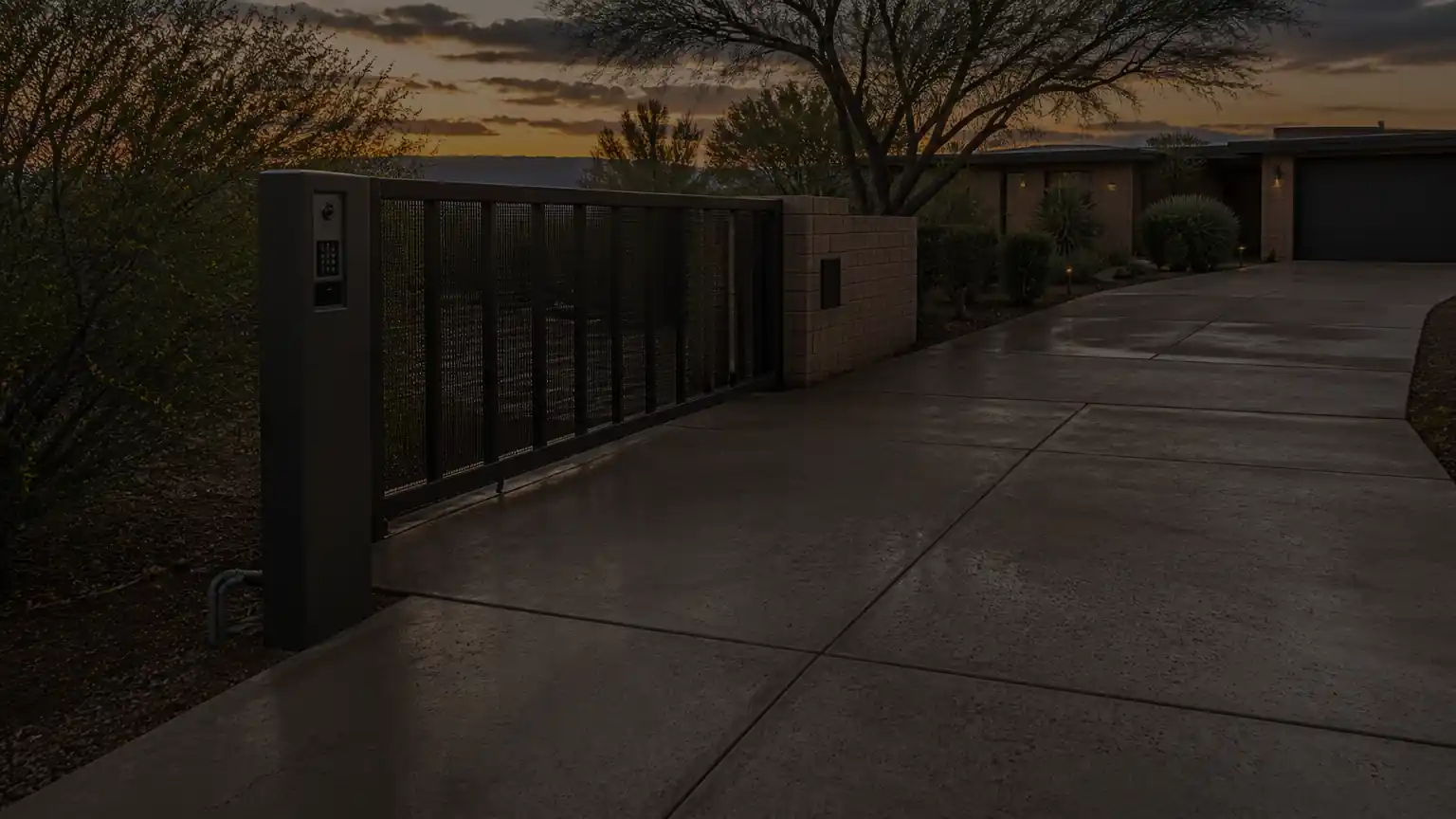
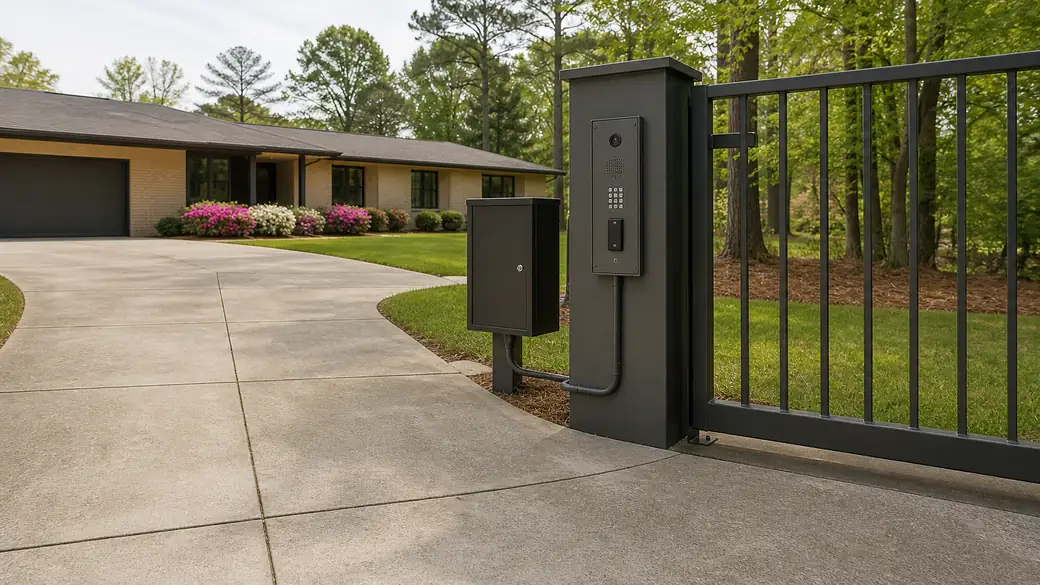
A card reader and intercom are tied into the gate's existing operator box. at a buff-brick ranch home in Scottsdale, AZ, under bright midday cloud.

Access Control System Integration in Scottsdale, AZ

Access control integration means your electric gate answers to more than a remote. We tie the gate operator to a keypad, an intercom, a card reader or a phone app, so the right people get in and everyone else waits at the entry. On most residential jobs, that means one system running the driveway gate, the pedestrian gate and anything else with a lock.

The trouble usually sits where old meets new. The median home in Scottsdale was built in 1990, and a gate from that era may run on an operator that was never meant to talk to a reader or an app. We check the operator, the wiring and the safety sensors before adding anything. Sometimes the answer is a new control board. Sometimes it is the whole operator.

Call +1 623-224-2315

Get Free Estimates

What Is Included in Access Control System Integration

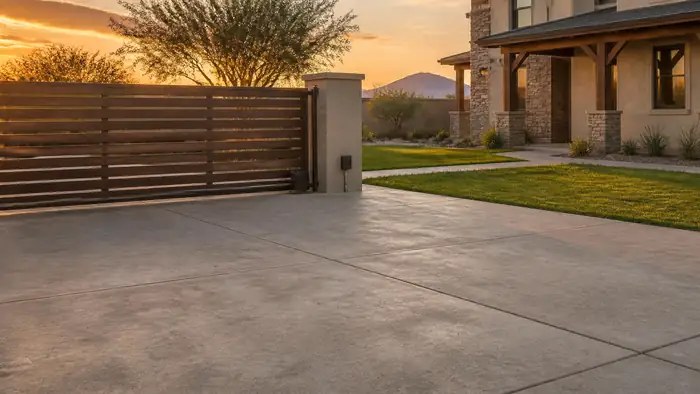
automatic gate installation completed by a local contractor at a stacked-stone and stucco home in Scottsdale, AZ, in late afternoon light.

Automatic Gate Installation

An automatic gate is three things working together: the gate, the operator that moves it, and the access control that tells it when. We size the operator to the gate's real weight and length, not the brochure figure. Posts go into concrete footings, wiring runs in conduit, and we fit photo eyes and contact edges so the gate stops and reverses on anything in its path. Keypads, remotes, phone entry and card readers all tie into one controller.
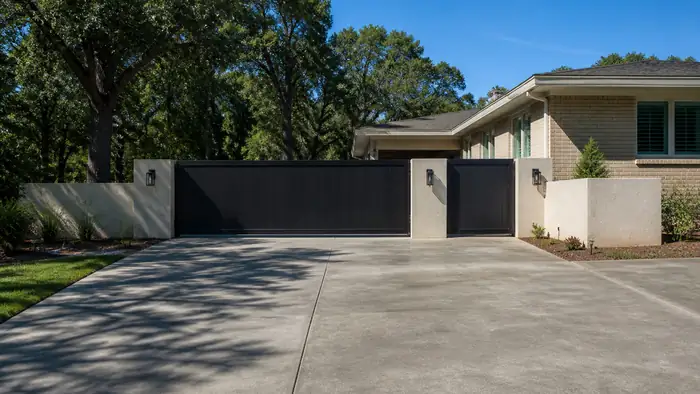
driveway gate installation completed by a local contractor at a buff-brick ranch home in Scottsdale, AZ, in clear late-morning sun.

Driveway Gate Installation

The slope of the driveway shapes the design as much as the style does. A swing gate on a drive that climbs toward the house drags mid-arc unless the leaves are raked or split. Terrain here runs steep and hilly in places and changes block to block, so we grade and test every site before a post goes in. Frames are welded heavy-wall steel tube, hot-dip galvanized and powder coated, with iron or picket detailing to suit the property.

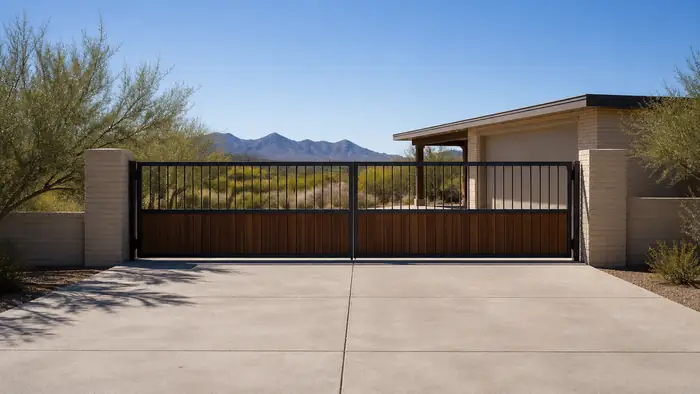
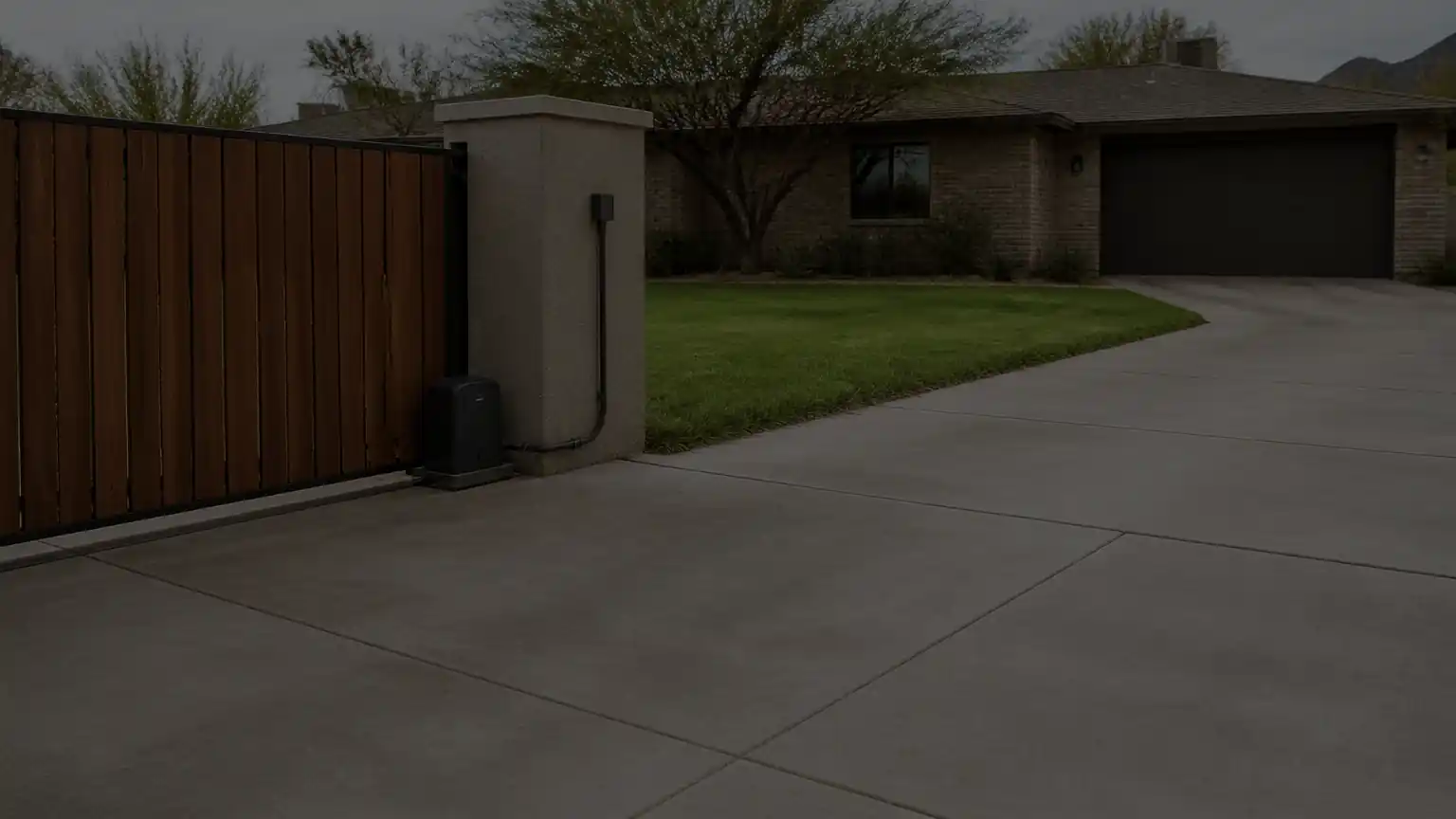
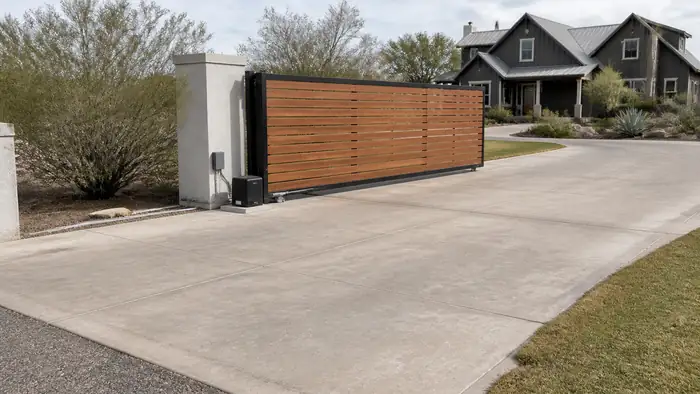
sliding gate installation completed by a local contractor at a charcoal farmhouse-modern home in Scottsdale, AZ, under bright midday cloud.

Sliding Gate Installation

Where a swing has no room, a sliding gate runs along the fence line instead. On a flat drive we use V-groove wheels on an embedded steel track. On a slope, or where gravel and leaves collect, we build a cantilever gate that rides on sealed rollers and never touches the ground, because a buried track fills and binds. Either type needs clear run-back beside the opening. We fit a rack-and-pinion operator, positive stops at both ends and a guide post that keeps the leaf plumb.

electric gate repair completed by a local contractor at a grey split-level home in Scottsdale, AZ, in early morning light.

Electric Gate Repair

Electric gates usually fail in a few familiar ways. Photo eyes get knocked out of line, a sagging hinge post lets the leaf drag, operator gears strip, a backup battery dies, or a control board takes a power surge. We test the gate by hand first: if it will not move freely with the operator released, no new motor will fix it. Then we check limits, force settings and safety reversal before it goes back into service.

Why Scottsdale Chooses Scottsdale Premier Electric Gates

Access control rarely starts from bare ground. The median home in Scottsdale was built in 1990, so plenty of entries still hang on posts, hinges and wiring that predate keypads, phone apps and camera intercoms. We check what is already standing, and we reuse the steel that is sound before suggesting anything new.

Slope matters too. Maricopa County has 1,206 feet of local relief within a few miles, and a driveway that falls even slightly changes how a gate swings, where the operator mounts and what a safety sensor sees. We grade and test every site on its own before any work starts. Call us for a free estimate.

How a Access Control System Integration Job Runs in Scottsdale

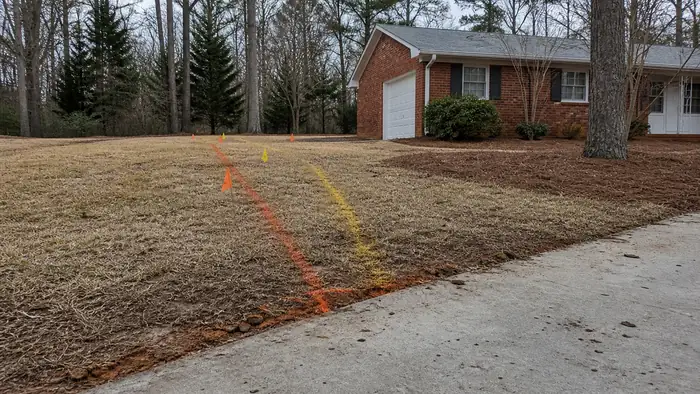
Utility locate flags mark the ground before post holes are dug at a house. at a red-brick ranch home in Scottsdale, AZ, after a rain shower.

Step 1: Site Assessment

We start on the property itself, with a tape, a level and the opening you want to control. We check the grade across the drive, because Maricopa County has steep, hilly terrain, though it varies from block to block. Every site is graded and tested on its own before work starts. We note where power can come from, where the keypad or reader post should stand, and how much room a swing or slide gate needs to clear.

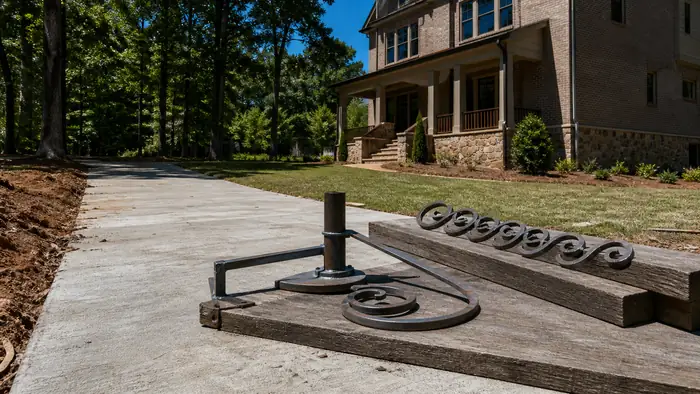
A metalworker forms decorative scrollwork for an ornamental gate. at a brick-and-siding two-story home in Scottsdale, AZ, in clear late-morning sun.

Step 2: Design & Fabrication

Drawings come next: gate style, operator type, and the access devices you want, whether that means a keypad, card reader, remotes or phone-based entry. Frames are welded from heavy-wall steel tube, with pickets set through punched rails rather than tacked on the face. Welds are ground smooth, then the panels get a zinc-rich primer and a powder coat. Much of the housing here dates from around 1990, so we often match existing iron railings.

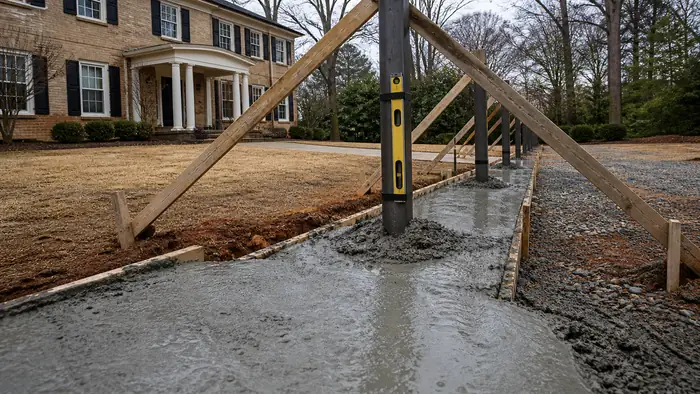
Concrete is poured around a braced gate post at a house. at a tan-brick colonial in Scottsdale, AZ, after a rain shower.

Step 3: Foundation & Footings

Footings decide whether a gate still latches cleanly years from now. Hinge posts on a swing gate carry the whole leaf as a lever, so they go in deep, belled at the bottom, with rebar cages tied before the pour. Slide gates need a continuous concrete track or a cantilever pad sized to the gate. The usual failure is a shallow post that leans a little at a time until the latch misses. We handle the permit before we dig.

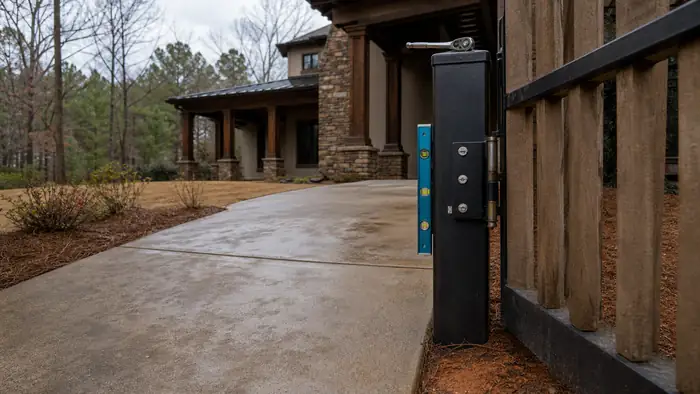
An installer shims a hinge plate to plumb a residential gate post. at a stacked-stone and stucco home in Scottsdale, AZ, after a rain shower.

Step 4: Installation

With the concrete cured, we hang the gate. Hinges are heavy-duty ball-bearing or adjustable barrel types, welded or through-bolted to the post, never lagged into masonry alone. We set the leaves plumb, check the swing arc against the grade, and fit positive stops so the operator is not what holds the gate open. Slide gates get their rollers and guide wheels aligned by hand. A gate that binds, even slightly, will burn out a motor early.

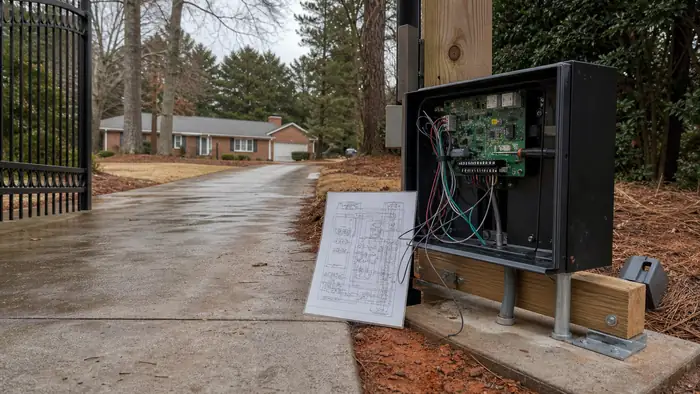
A technician wires a gate operator's control board at a residential post. at a red-brick ranch home in Scottsdale, AZ, after a rain shower.

Step 5: Automation & Wiring

Operators go on only after the gate moves freely by hand. We run low-voltage and line-voltage wiring in separate conduit, trenched to the reader post, keypad and any intercom. Loop detectors are cut into the drive for free exit and safety reversing, and photo eyes cover the travel path. Access control ties in here: codes, card credentials, remotes, or an app for opening from your phone. We add battery backup so the gate still opens when utility power drops.

A technician tests a photo-eye's obstruction response on a residential gate. at a brick-and-siding two-story home in Scottsdale, AZ.

Step 6: Testing

Testing is where shortcuts show up, so we take our time. We cycle the gate repeatedly and watch the current draw on the operator. Force and reverse sensitivity get set, then we put an object in the path to confirm the gate stops and backs off. Every credential gets tried: each code, each card, each remote. We check the exit loop with an actual vehicle. Then we confirm the gate closes on its own timer.

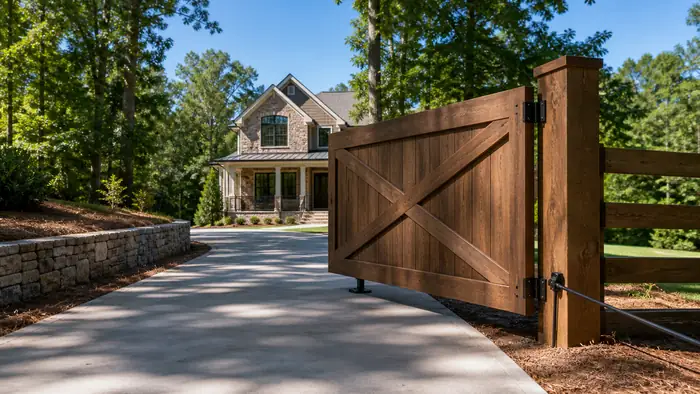
A technician hands over the manual and spare remotes to a homeowner. at a buff-brick ranch home in Scottsdale, AZ, in clear late-morning sun.

Step 7: Final Walkthrough

Before we leave, we walk you through the system at the gate itself. You learn how to add and delete codes, how to release the operator and push the gate open by hand, and where the breaker and backup battery sit. We hand over the manuals, the wiring layout and the programming details. We also show you the simple maintenance that keeps an electric gate running: clearing the track, checking hinge bolts, and keeping the photo eyes clean.

Access Control System Integration Pricing in Scottsdale, AZ

Integration is priced by what your gate already has and what it is missing. Most of the work sits in getting power and signal from the house to the operator, then making that operator talk to the keypad, intercom or phone app you want. You can check nearly every item below with a walk down your driveway.

What changes the priceWhich wayWhy
Conduit already runs from the house to the gate postcosts lessWe pull new cable through it instead of trenching a fresh run.
Pavers or stamped concrete between house and gatecosts moreEach crossing gets saw-cut, patched and matched, which is slower than trenching through soil or gravel.
Operator is recent and has open accessory terminalscosts lessA keypad or receiver wires straight in. An older control board may need replacing first.
Gate drags, sags or binds when swung by handcosts moreHinges, rollers or posts get repaired before automation, or the motor wears out and the safety reversal misreads.
Drive slopes at the gate openingcosts moreA swing gate on a grade needs different arm geometry, sometimes a slide gate, and sensors set for the pitch.
Weak Wi-Fi or cell signal at the gatecosts moreApp control and video intercoms need a steady link, so we run data cable or add a bridge.
Water pools across the drive near the gatecosts moreBuried vehicle loops and junction boxes need sealing or moving away from standing water.
Pedestrian gate on the same systemcosts moreA second entry means another lock, reader and cable run back to the controller.

When bids land far apart, line them up item by item. Each should name the operator and controller models, say how cable reaches the gate, and include patching whatever gets cut. Photo eyes and reversing edges belong on the list too. A cheaper bid that leaves out the trench repair or the safety devices is not actually cheaper.

Metal Gates & Fences Systems and Materials for Scottsdale

Most gates we automate are welded steel or wrought iron, hung on posts sized for the weight they carry. The operator comes next: swing or slide, matched to the gate and to how often it cycles in a day. Keypads, card readers, video intercoms and remotes all wire back to one controller, with photo eyes at the opening for safety.

Slope changes the plan. The ground here holds 1,206 feet of local relief within a few miles, and it shifts from block to block, so we grade and test each site before choosing hardware. A steep drive often suits a slide gate better than a swing. With the median home built in 1990, we also check old wiring before tying anything new into it.

Get a Free Estimate

Get Free Estimates

Tap to call +1 623-224-2315