+1 623-224-2315
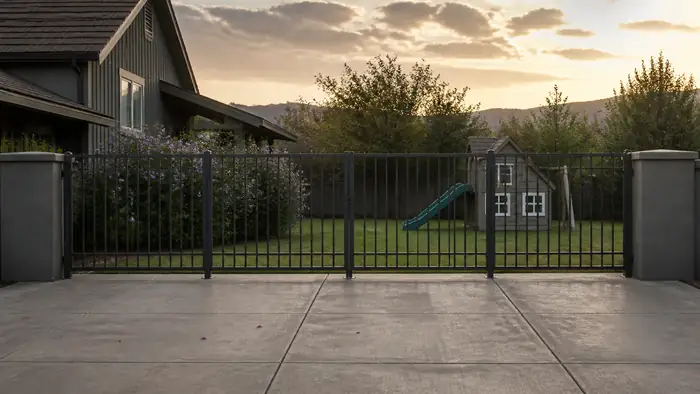
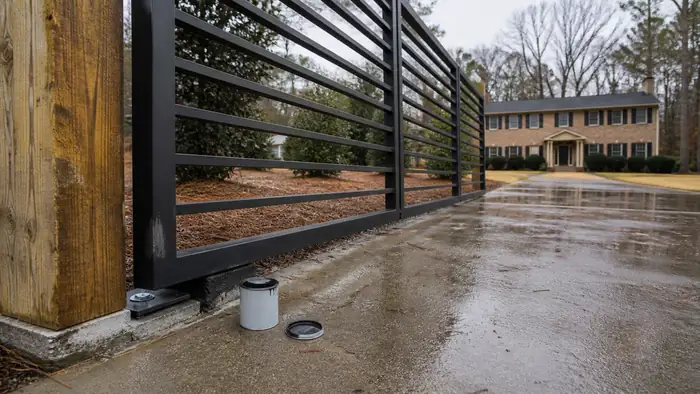
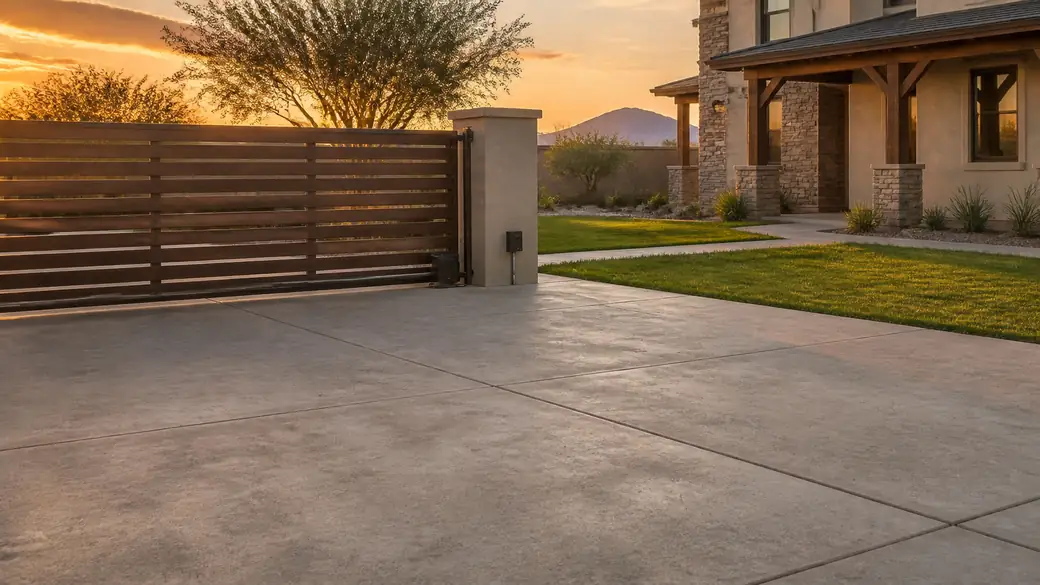
automatic gate installation completed by a local contractor at a stacked-stone and stucco home in Scottsdale, AZ, in late afternoon light.

Automatic Gate Installation in Tempe, Arizona

We build and install automatic gates for homes and commercial property in Tempe: swing and slide gates in steel and iron, the electric operators that move them, and the access control that decides who gets through. Some driveways already have a manual gate worth motorizing. Others have nothing yet. We look at how the opening gets used, how wide it is, and how much room the gate has to travel, then design the system around that. A gate that looks right but binds, drifts or slams is not finished work, so we treat the operation as seriously as the metal.

Installation runs in a fixed order. We set posts and footings first, hang the gate, and check that it moves true by hand before any motor goes on. Wiring comes next, then the operator, then safety: photo eyes, reversing sensors, and a manual release you can reach when the power is out. We handle the permit. Once the system runs, we walk you through it at the gate itself: how the remote and keypad work, how to open it by hand, and what routine maintenance keeps it quiet. Repair work on existing gates follows the same checks.

Call +1 623-224-2315

Get Free Estimates

What We Do in Tempe

Automatic Gate Installation

An automatic gate is only as good as the post it hangs on. We set steel posts in concrete footings sized to the weight and length of the gate, then mount the operator where it has room to work and stays clear of the swing path. Every installation gets photo eyes and a safety edge, because a gate that cannot tell a car or a child is in the way should not be moving. We handle the permit and the electrical run.
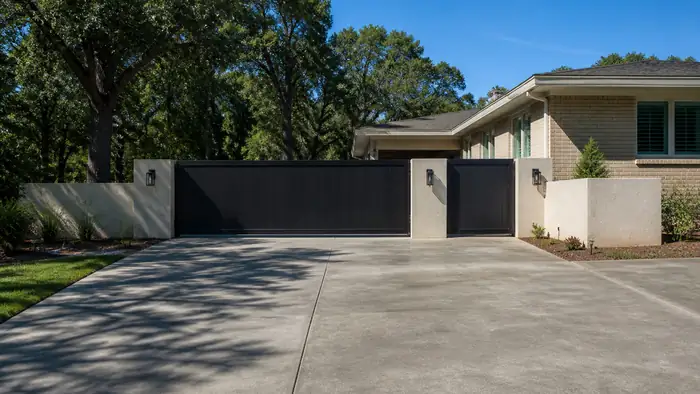
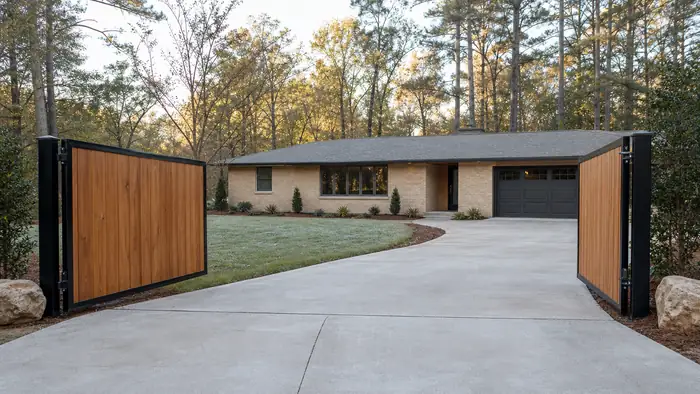
driveway gate installation completed by a local contractor at a buff-brick ranch home in Scottsdale, AZ, in clear late-morning sun.

Driveway Gate Installation

Driveway gates take more abuse than any other part of a fence line: bumpers, wind and daily cycling. We build frames from heavy-wall square steel tube with welded joints, and add a diagonal brace on wide single leaves so the latch end does not sag over time. The finish is a zinc-rich primer under powder coat. Swing or slide, we measure the grade first, because a sloped driveway decides which gate will actually work on your property.

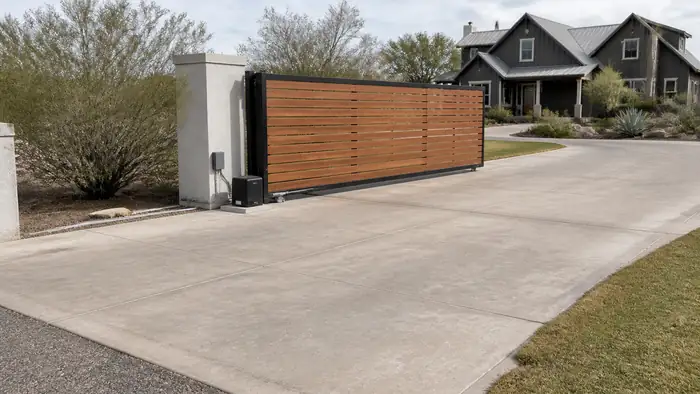
sliding gate installation completed by a local contractor at a charcoal farmhouse-modern home in Scottsdale, AZ, under bright midday cloud.

Sliding Gate Installation

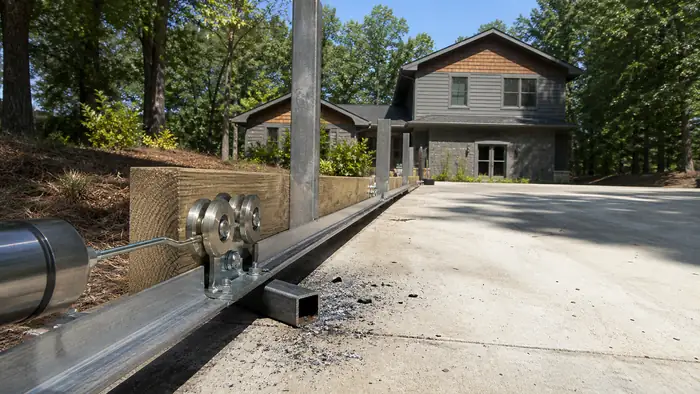
Where a driveway is short or climbs toward the house, a sliding gate is usually the better answer. We run it on a steel track set in a concrete strip, or cantilever it on roller carriages so nothing sits on the ground to collect gravel. The operator drives a steel rack bolted along the bottom rail. Most sliding gate trouble starts at the track, so we pour it level and leave room to keep it clean.

electric gate repair completed by a local contractor at a grey split-level home in Scottsdale, AZ, in early morning light.

Electric Gate Repair

Gates that stop working usually come down to a short list: a photo eye knocked out of alignment, a worn gear in the operator, a stripped rack, a sagging hinge dragging the motor, or a control board hit by a power surge. We test the whole system before replacing anything, because a new motor on a gate that binds just burns out too. We repair residential and commercial operators, and we say plainly when repair no longer makes sense.

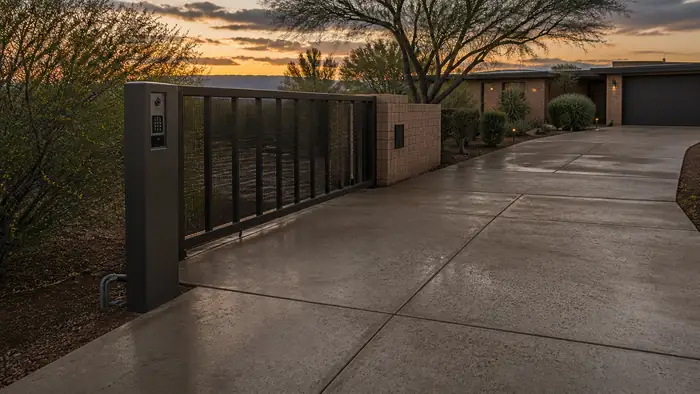
A keypad and intercom stand mounted beside the driveway gate. at a buff-brick ranch home in Scottsdale, AZ, after a rain shower.

Access Control Installation

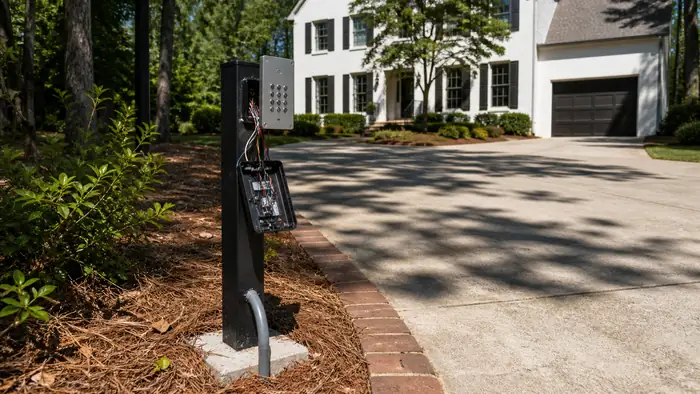
Keypads, remote transmitters, card readers, phone entry and smartphone apps all tie into the same gate operator, so the right choice depends on who needs in and how often. For a household, a keypad and a few remotes usually cover it. Commercial properties tend to need phone entry with individual codes that can be shut off when a tenant leaves. We mount readers on a steel pedestal at driver's window height and run low-voltage wiring in conduit.

Design and Consultation Process Made for Scottsdale

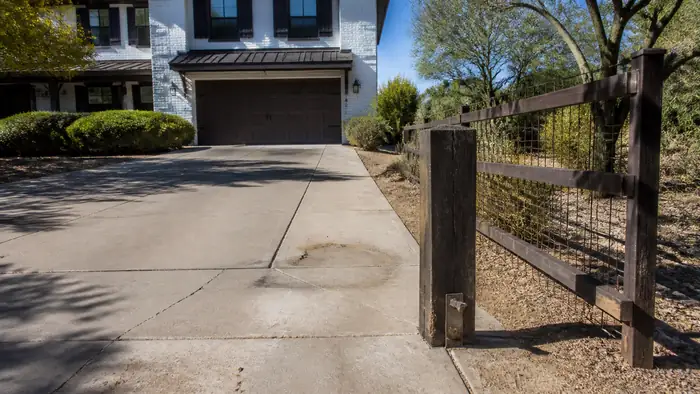
A technician photographs the existing entrance before design work starts. at a painted-white-brick two-story home in Scottsdale, AZ.

Step 1: Site Assessment

We start by walking the property with a tape and a level. We measure the opening, check the grade across the drive, and note where a gate can swing or slide without hitting a curb, a parked car or a planter. We locate buried lines before anything else and work out where power can reach the operator. Slope decides more than people expect. A driveway that falls away from the house can rule out a swing gate entirely, so we settle that here.

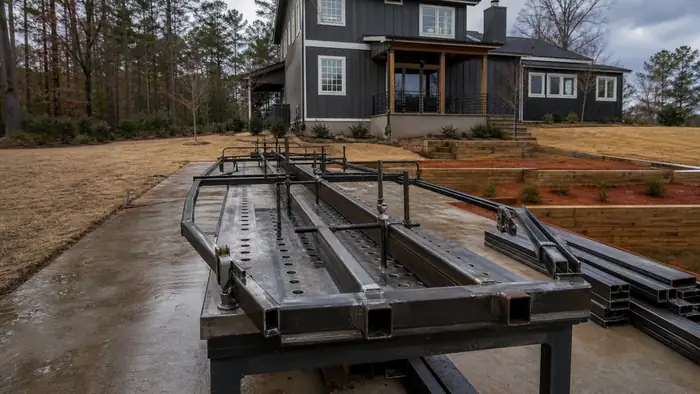
A welder builds a residential gate frame in the fabrication shop. at a charcoal farmhouse-modern home in Scottsdale, AZ, after a rain shower.

Step 2: Design & Fabrication

Once the layout is fixed, we draw the gate to your opening, not to a catalog size. Frames are welded steel tube, with a diagonal brace or truss worked into the design so a wide leaf does not sag at the latch end. Pickets, flat bar or horizontal slats: the infill is your choice, and we match it to the house. Every piece is ground, primed and powder coated after welding, because paint over bare weld seams is where rust starts.

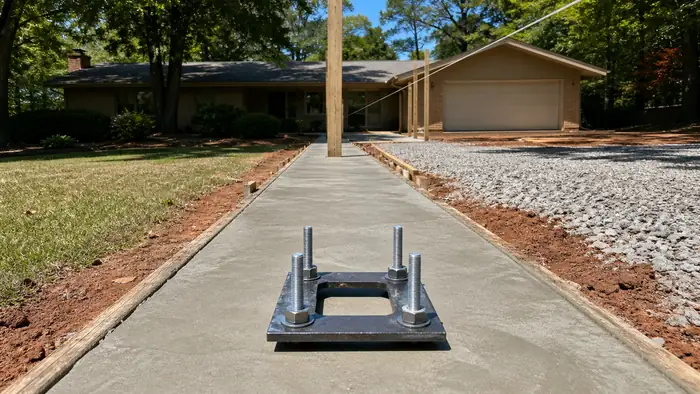
Anchor bolts are set into a fresh concrete footing for a gate post. at a buff-brick ranch home in Scottsdale, AZ, in clear late-morning sun.

Step 3: Foundation & Footings

A gate is only as straight as the post holding it. We dig footings deep and wide enough for the weight and leverage of the leaf, set steel posts in concrete, and plumb them before the mix takes a set. Slide gates get a poured track pad, or a cantilever footing that carries the whole gate off the ground. Most gates that drag or bind years later have a post that shifted. That is why we never rush this stage.

An installer fits rollers onto a residential sliding gate's rail. at a grey split-level home in Scottsdale, AZ, in clear late-morning sun.

Step 4: Installation

Hanging the gate waits until the concrete has fully cured. We mount heavy-duty hinges or rollers, set the leaf, and check it for level across the top rail and for even gaps at the posts. On slide gates we align the rollers and guide posts so the gate tracks without rubbing. Latches and stops get set by hand first. If a gate will not open and close smoothly on its own, a motor only hides the problem until it burns out.

A technician mounts and wires a keypad post at a driveway entrance. at a painted-white-brick two-story home in Scottsdale, AZ, in clear late-morning sun.

Step 5: Automation & Wiring

The operator goes on only after the gate moves freely by hand. We size the motor to the gate's weight and length, whether that means a swing arm, an underground operator or a rack-and-pinion slide unit. Power and low-voltage runs go in conduit, buried and sealed at every box. Then we add the access control you chose: keypad, remote, intercom, phone app, or a vehicle loop that opens the gate on the way out. We handle the permit.

A technician manually cycles a residential swing gate to check clearance. at a buff-brick ranch home in Scottsdale, AZ, in early morning light.

Step 6: Testing

Safety gets the hardest testing of anything we do. Photo eyes, edge sensors and the operator's obstruction reverse are all checked with a real object in the gate's path, not a wave of the hand. We run full cycles, adjust force and speed, and set the open and close limits. We also test the manual release, so the gate still opens by hand when the power is out. Nothing is handed over until every device responds the way it should.

A technician applies touch-up paint to a finished residential gate. at a tan-brick colonial in Scottsdale, AZ, after a rain shower.

Step 7: Final Walkthrough

Before we leave, you run the gate yourself. We go through each remote and keypad code, show you the manual release, and point out where the control board and breaker sit. We explain what routine maintenance looks like: keeping the track clear, checking hinges and rollers, and watching for chips in the powder coat. You keep the operator manuals and a record of the settings we used. If anything about the operation or design feels off, this is the time to say so.

What Decides the Price of Metal Gates & Fences in Tempe

Most of the price on a gate or fence is settled by the ground and the access, well before we cut any steel. You can check nearly all of it yourself with one walk around the property.

What changes the priceWhich wayWhy
Old posts or footings still in the groundCosts moreConcrete from a previous fence has to be broken out before new footings can go in the same spot.
Sprinkler lines or buried cable along the fence lineCosts moreWe locate them and dig by hand nearby, which is slower than running an auger straight down.
A driveway or alley the truck can back intoCosts lessPosts, panels and concrete come off the truck beside the work instead of being carried through a side yard.
Distance from your electrical panel to the gateCosts more with distanceAn electric gate operator needs power, and a longer run means more trench, conduit and wire.
A driveway that slopes across the openingCosts moreA swing gate may not clear the grade, so we build a slide gate or set the hinges to follow the slope.
A wide opening or solid steel infillCosts moreHeavier frames need thicker tube, added bracing and a stronger operator to move them without sagging.
Water that pools where a slide gate track would sitCosts moreWe add drainage or raise the track so the rollers never sit in standing water.
A sound block wall to hang the gate onCosts lessAnchoring into solid masonry can replace a new post and its footing.

When you compare bids, make sure they describe the same job. Check the wall thickness of the frame tube, not just the picket style. Ask how deep the footings go and which operator is specified. Find out whether removal and haul-off, the permit, and trenching for power are in the number or added later. Two bids that look far apart are often quoting different work.

Frequently Asked Questions About Metal Gates & Fences in Tempe

Are metal yard gates secure for residential use?

Yes, when the whole assembly is built for it. A steel or iron gate is only as strong as its hinges, its latch and the posts it hangs from, so we size all three to the gate rather than the other way round. Picket spacing matters too. We keep gaps tight enough that nobody reaches through to the latch, and on electric gates the operator holds the gate shut until someone with access opens it.

How does the permitting process work for gate installations in Tempe, AZ?

We handle the permit. Before anything is fabricated, we look at what the job involves: gate height, where it sits on the property, and whether an electric operator means new wiring. Automation can bring an electrical review into it, and that gets settled before any trenching. If your neighborhood has an HOA, their approval is a separate step, and it is worth asking them early so the design doesn't change halfway through.

How long does powder coating last on metal gate compared to traditional paint?

Longer, and it wears better while it lasts. Powder is sprayed dry onto clean steel and baked, so it cures into a hard, even shell bonded to the metal instead of sitting on top of it. Paint goes on thinner and chips more easily at hinges and latches, which is where rust starts. Paint can be touched up in place. Powder coat is harder to patch invisibly, so we handle finished parts carefully.

How do I know what size to order for my backyard metal gate?

You don't have to work it out alone, because we measure the opening at your Tempe home ourselves before anything is built. What matters is the clear distance between finished posts, less room for hinges and the latch. Think about what has to pass through: a mower, trash bins, a small trailer. Check the swing as well. A gate that opens toward a slope, a step or a planter needs a different hinge side or a sliding design.

How long does a typical custom yard metal gate installation take from measurement to completion in Tempe?

Most of the time goes into steps you never see. After we measure, the design is drawn and approved, the permit is sorted, and the gate is fabricated and powder coated in the shop. The work at your property is the short part: setting posts, letting the footings cure, hanging the gate, then wiring and tuning any automation. The schedule firms up once the design is final, since fabrication depends on how involved it is.

How long does post stabilization take in Tempe?

Long enough for the concrete to carry the gate, and we don't rush it. Posts are set plumb, braced, and left alone while the footing cures. A light pedestrian gate can go up sooner than a heavy steel drive gate with an electric operator pulling on it every day. Hanging weight on green concrete is how posts lean and latches stop lining up. We set footing depth to the gate's weight, not to a standard figure.

Front Yard Gate Materials and Construction Features for Scottsdale Properties

Most front yard gates we build for Scottsdale homes are steel or wrought iron, and the choice comes down to weight, look and how the gate will move. Steel tube frames stay light enough for a swing operator and hold their shape across a wide opening. Solid iron pickets and scrollwork carry more weight, which suits a pedestrian gate or a slide system on a track. Either one gets primer and a powder-coat finish before it reaches the property.

The build starts in the ground. We set posts in concrete deep enough to take the load without leaning, then hang the gate on heavy-duty hinges or a rolling track sized to its weight. For electric gates, the operator, control board and safety sensors go in together, with photo eyes across the opening so the gate stops if anything is in its path. We handle the permit. Access control comes last: keypad, remote, or phone entry.

Most gate trouble traces back to the frame, not the motor. A gate that sags drags on its latch, strains the operator and wears out the hinges early. We weld the frame square, add a diagonal brace where the span calls for it, and match the operator to the gate's weight and length rather than the other way round. On a residential entry, that means a gate that runs quietly and meets its latch squarely.

Get a Free Estimate

Get Free Estimates

Tap to call +1 623-224-2315