+1 623-224-2315
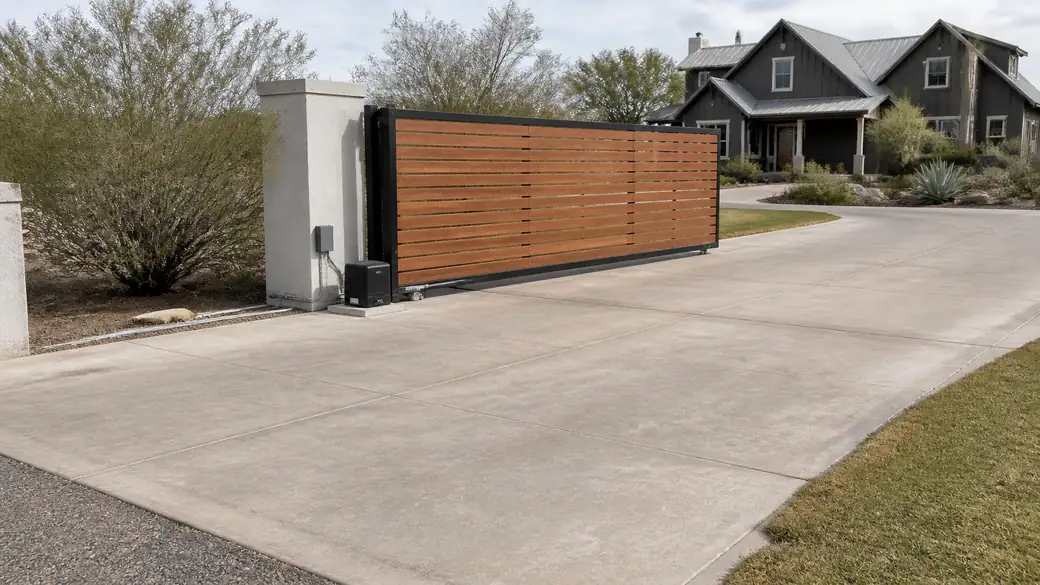
sliding gate installation completed by a local contractor at a charcoal farmhouse-modern home in Scottsdale, AZ, under bright midday cloud.

Sliding Gate Installation in Chandler, Arizona

A sliding gate runs along the fence line instead of swinging into the driveway, so it needs no clear arc of pavement in front of it. That makes it the right choice for short driveways and entries that sit close to the street. We build and install them in steel and iron for residential and commercial properties across Chandler. Each gate rides on a track or a cantilever frame. They can be run by hand, but most people want them electric, with an operator, safety sensors, and access control sized to how the gate gets used day to day.

The work starts with the opening itself. We measure the width, check the ground the gate will travel along, and confirm there is enough run-back space beside the opening for the gate to park when it is open. Then we set footings, mount the track or cantilever rollers, hang the gate, and wire the operator. Nothing is finished until the safety gear works: photo eyes, edge sensors, and a manual release so the gate still opens if the power is out. Keypads, remotes, or a phone app get programmed and tested at the end. We handle the permit. Call for a free estimate.

Call +1 623-224-2315

Get Free Estimates

What We Do in Chandler

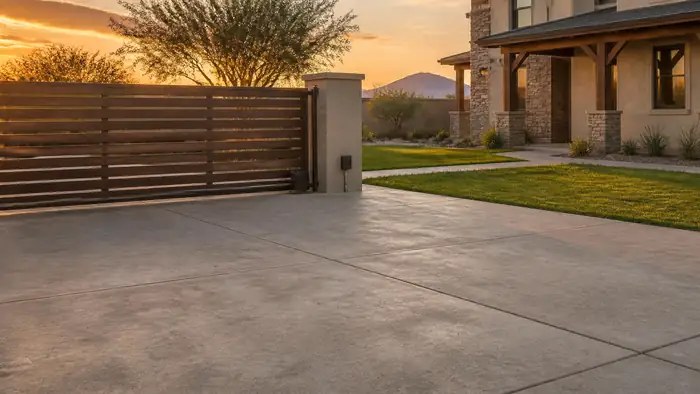
automatic gate installation completed by a local contractor at a stacked-stone and stucco home in Scottsdale, AZ, in late afternoon light.

Automatic Gate Installation

An automatic gate is the gate itself, the operator that moves it, and the controls that tell it when. We size the operator to the real weight and length of the leaf, not the brochure figure. Swing operators mount to steel posts set in concrete footings. Every system gets photo eyes and an obstruction sensor, so the gate reverses before it touches a car or a person. Most early failures come from an undersized operator straining against a heavy iron leaf.
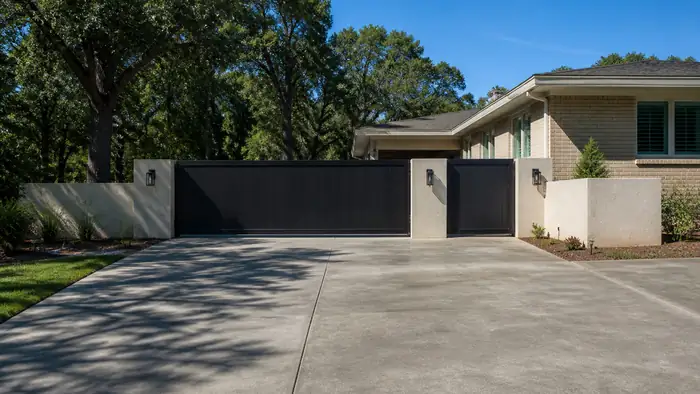
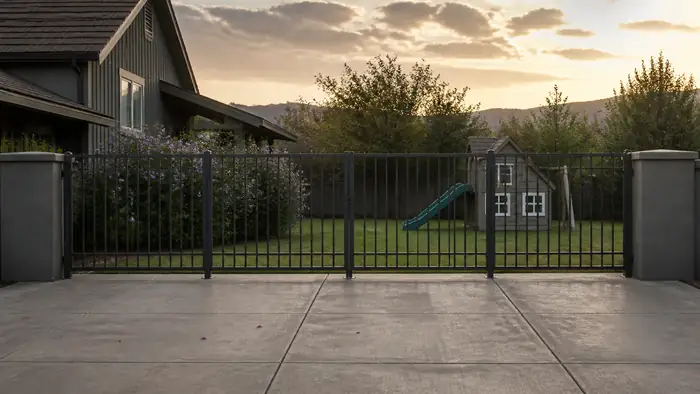
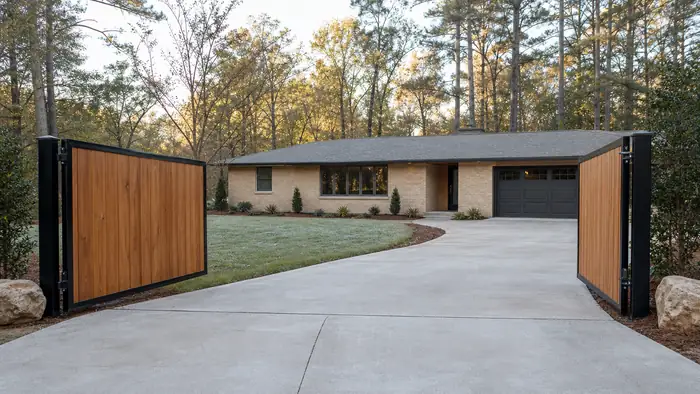
driveway gate installation completed by a local contractor at a buff-brick ranch home in Scottsdale, AZ, in clear late-morning sun.

Driveway Gate Installation

Before any design work, we measure the opening, the grade across it, and the clearance a swinging leaf needs. Driveway gates start as a heavy-wall steel tube frame, with pickets welded through the rails rather than tacked to the face. Posts go deep into concrete footings sized to the gate's weight, because a post that leans makes the gate sag. The finish is a zinc-rich primer under powder coat, since bare welds are where rust starts. Iron scrollwork is available when the house calls for it.

Sliding Gate Installation

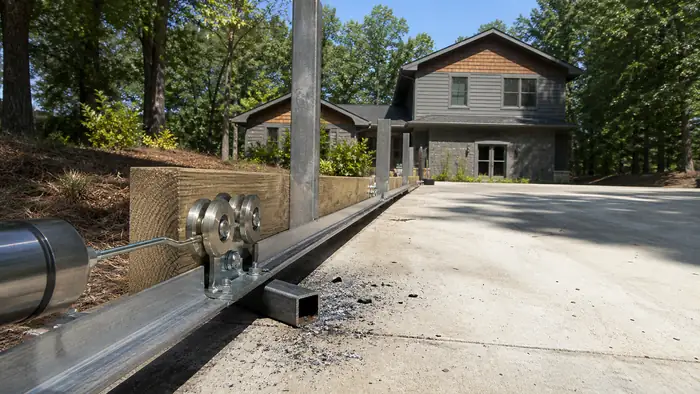
Sliding gates fit where a swinging leaf has no room to open. We build track and cantilever versions. A track gate runs on V-groove wheels over a steel rail set in the concrete. A cantilever gate carries an extra tail section and rides on roller carriages beside the opening, so nothing crosses the driveway. Either way, the gear rack has to sit level along the full run. When it drifts, the operator's drive gear chews the teeth and the gate stalls mid-travel.

electric gate repair completed by a local contractor at a grey split-level home in Scottsdale, AZ, in early morning light.

Electric Gate Repair

Most calls start with a gate that stops halfway, reverses for no reason, or won't move at all. We check the simple causes first: a misaligned photo eye, a tripped limit switch, a dead backup battery, a remote that lost its code. Then the mechanical side: worn hinges, a sagging leaf, a stripped gear rack, a burned-out control board. We work on most common operator brands, and when replacing a part makes more sense than patching it, we say so.

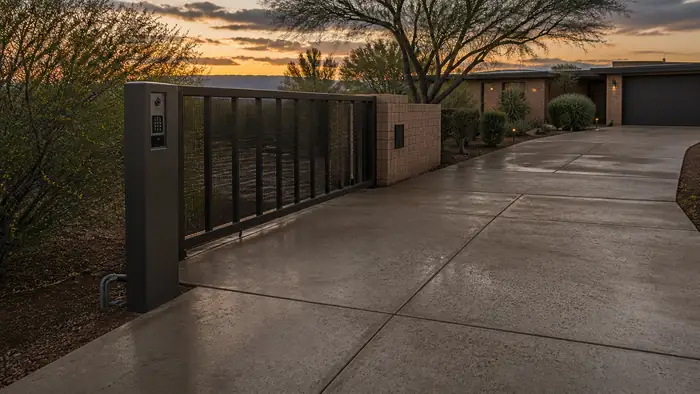
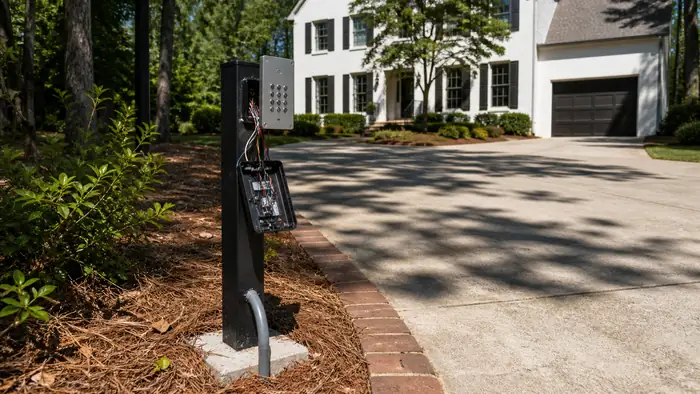
A keypad and intercom stand mounted beside the driveway gate. at a buff-brick ranch home in Scottsdale, AZ, after a rain shower.

Access Control Installation

Access control is how the gate decides who comes in. On residential property that usually means a keypad on a gooseneck post, handheld remotes, and a phone app. Commercial sites add card readers, call boxes that ring a tenant's phone, and entry logs. We set the keypad where a driver can reach it without opening the door, and we cut an exit loop into the drive so cars leaving open the gate on their own. Low-voltage wiring runs in conduit, never buried bare.

Design and Consultation Process Made for Scottsdale

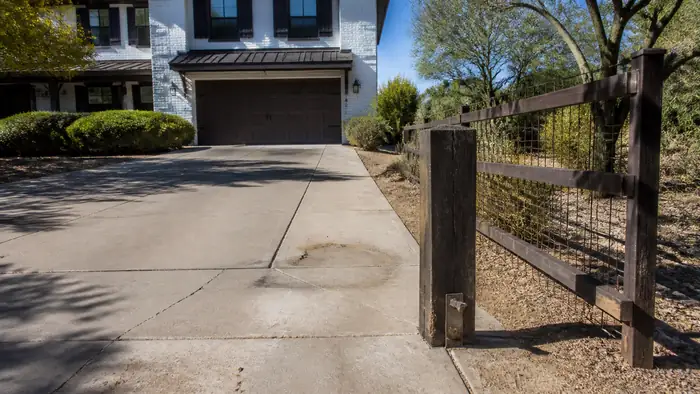
A technician photographs the existing entrance before design work starts. at a painted-white-brick two-story home in Scottsdale, AZ.

Step 1: Site Assessment

We start at the driveway with a tape, a level and a notebook. The questions are practical: how wide is the opening, how much clear run sits beside it for the gate to slide into, and does the grade rise or fall along that run? We look for irrigation lines, buried utilities and where power can come from. A sliding gate needs a straight, open path. If your property doesn't have one, we tell you now, before any steel gets cut.

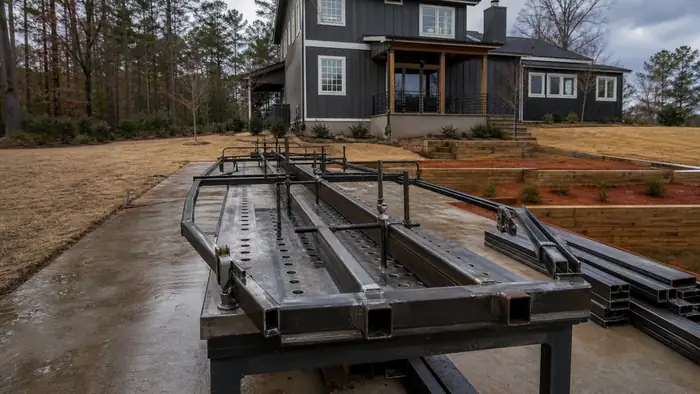
A welder builds a residential gate frame in the fabrication shop. at a charcoal farmhouse-modern home in Scottsdale, AZ, after a rain shower.

Step 2: Design & Fabrication

Drawings come next, sized to the opening we measured. You choose the look: flat bar pickets, horizontal slats, or a scrolled iron pattern that suits the house. Behind the look is the frame, and that is where a gate holds up or doesn't. We build it from steel tube with welded, ground joints and a diagonal brace so it stays square under its own weight. Every piece is cleaned, primed and powder coated, which keeps rust out of the welds.

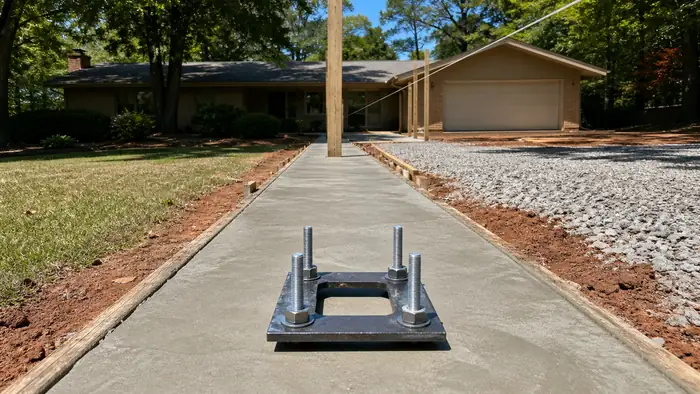
Anchor bolts are set into a fresh concrete footing for a gate post. at a buff-brick ranch home in Scottsdale, AZ, in clear late-morning sun.

Step 3: Foundation & Footings

Concrete is what the whole system stands on. A cantilever gate hangs its weight off the rollers, so the footing beneath them carries a real load and gets reinforced with rebar. A track gate needs a continuous, level beam poured across the opening. Depth depends on what the excavation turns up; we keep digging until we reach ground we trust. The operator gets its own pad. Rushed cure time is why posts lean down the road, so we let it set.

An installer fits rollers onto a residential sliding gate's rail. at a grey split-level home in Scottsdale, AZ, in clear late-morning sun.

Step 4: Installation

Once the concrete has cured, the gate goes up. We set the rollers or the track, hang the panel, and shim until it runs level from one end to the other. Guide rollers at the top keep it from wobbling. The receiver post gets a catch that lines up with the gate exactly, not approximately. Then we slide it by hand, over and over. If it takes more than a steady push to move, something is off, and we fix it before any motor goes on.

A technician mounts and wires a keypad post at a driveway entrance. at a painted-white-brick two-story home in Scottsdale, AZ, in clear late-morning sun.

Step 5: Automation & Wiring

Power runs underground in conduit to the operator pad, and low-voltage lines go to the keypad, the photo eyes and any intercom. We size the operator to the gate's weight and how often it cycles. An undersized motor works for a while, then burns out. The gear rack mounts to the frame with even spacing to the drive pinion. Access control is your call: remotes, a keypad code, a phone app, or a vehicle loop that opens for cars leaving.

A technician manually cycles a residential swing gate to check clearance. at a buff-brick ranch home in Scottsdale, AZ, in early morning light.

Step 6: Testing

A gate that moves on its own has to stop on its own. We test every safety device: photo eyes across the opening, safety edges on the gate's leading end, and the operator's obstruction sensing, which should reverse the gate when it meets resistance. Then we set the open and close limits, the travel speed and any auto-close timer. We run full cycles while watching the rack, the rollers and the response from keypad to motor. Anything that hesitates gets adjusted now.

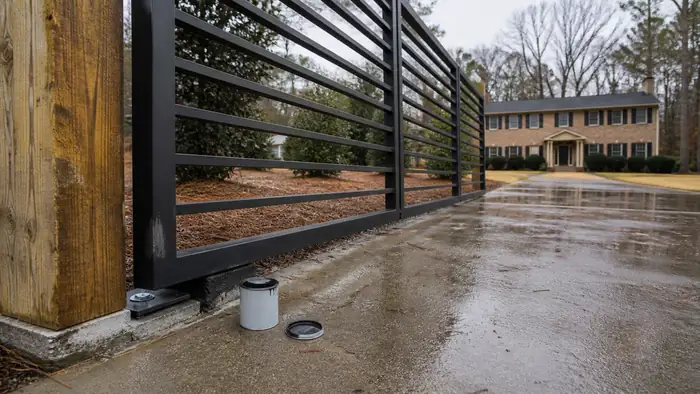
A technician applies touch-up paint to a finished residential gate. at a tan-brick colonial in Scottsdale, AZ, after a rain shower.

Step 7: Final Walkthrough

You run the gate yourself before we leave. We show you the manual release for a power outage, how to add or remove remotes, how to change the keypad code, and where the limit settings live. We also cover routine maintenance: keeping the track clear of debris, a light grease on the rollers, a quick wipe of the photo eyes. You keep the manuals for the operator and the finish. Questions later about operation or repair? Call us.

Frequently Asked Questions About Metal Gates & Fences in Chandler

What emergency gate issues need immediate service in Chandler?

Anything that leaves a property either wide open or shut tight. A gate stuck open exposes the yard or lot until it moves again. A gate stuck closed can trap a car, block a delivery, or keep a fire truck out. Treat these as urgent too: a gate that won't stop or reverse when something is in its path, a track bent after a vehicle strike, and exposed or sparking wiring at the operator. Call and tell us what you see.

In Chandler, how long does a typical backyard metal gate installation take from measurement to completion?

It depends mostly on fabrication. First we measure the opening, check the grade, and note where power can reach the operator if the gate will be automated. Then the gate is built to those numbers, and that takes the longest because nothing comes off a shelf. The permit moves alongside fabrication where one applies. Installation itself (posts, track, gate, wiring, testing) is the short part. Ask for the schedule when you call for an estimate.

Is sheet metal fencing suitable for residential and commercial properties?

Yes. At a house, solid sheet panels give full privacy along a side yard or pool area and hold a straight line without the gaps that open up in wood. On a commercial lot, the same panels screen equipment, dumpsters and storage from the street. The difference between the two is the framing underneath. We size the posts, rails and panel gauge to the length of the run and to how much abuse the fence will take.

How does the permitting process work for gate installations in Chandler, AZ?

We handle the permit. Before anything is built, we measure the site, draw up the gate's size, placement and electrical plan, and submit it. When an inspection is required, we schedule it and meet the inspector on site. If your neighborhood has an HOA with its own rules on height, color or style, we check those early and prepare what the board asks to see. You sign where a signature is needed. The rest of the paperwork is ours.

What finish options are available for a backyard metal gate?

Powder coating is the usual choice. It goes on as a baked finish, holds its color, and comes in black, bronze, grays and a long list of others. Wood-grain powder coat gives the look of cedar on a steel frame. Galvanizing under the powder coat adds a second barrier against rust. Some owners prefer bare steel left to weather into a brown patina. Samples are worth seeing against the house before you choose.

What types of commercial gates do you install in Chandler, AZ?

Cantilever sliding gates are the most requested, since they clear a wide driveway with nothing running across the ground. Around Chandler we also install V-track rolling gates, swing gates for narrower entries, barrier arms for parking lots, and pedestrian gates beside the vehicle entry. Each one can tie into access control: keypads, card readers, remote transmitters, phone entry, or a free-exit loop. Every automated gate we fit gets photo eyes, edge sensors, and an operator that stops and reverses on contact.

Front Yard Gate Materials and Construction Features for Scottsdale Properties

A front yard gate has two jobs: it sets the look of the property from the street, and it has to open and close cleanly every day for years. We build in steel and wrought iron. Steel gives us straight, rigid frames for wide sliding gates and electric systems. Iron suits scrollwork, pickets and custom design where the gate is the first thing guests see. Both get welded joints, not bolted ones, so the frame stays square.

Installation starts below the ground. We set the posts and the track footing in concrete sized to the gate's weight, then hang the frame and check it for level before any automation goes on. For electric gates we mount the operator on its own pad, run the wiring in conduit, and fit safety sensors at the opening so the gate stops and reverses if something is in its path. We handle the permit. The finish goes on last.

Most gate trouble we get called to repair traces back to shortcuts. A gate hung on undersized posts sags, the latch stops lining up, and the motor strains against a frame that drags. Bare steel left without primer rusts from the welds outward. Getting it right means matching the operator to the gate's weight, sealing every seam, and planning access control (keypad, remote or phone entry) around how your household actually uses the driveway. Call for a free estimate.

Get a Free Estimate

Get Free Estimates

Tap to call +1 623-224-2315