+1 623-224-2315
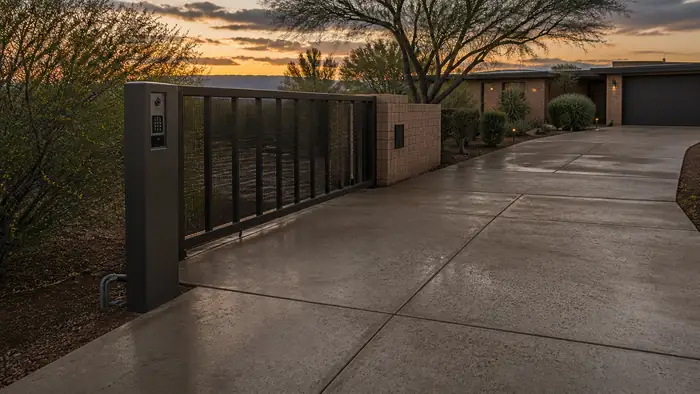
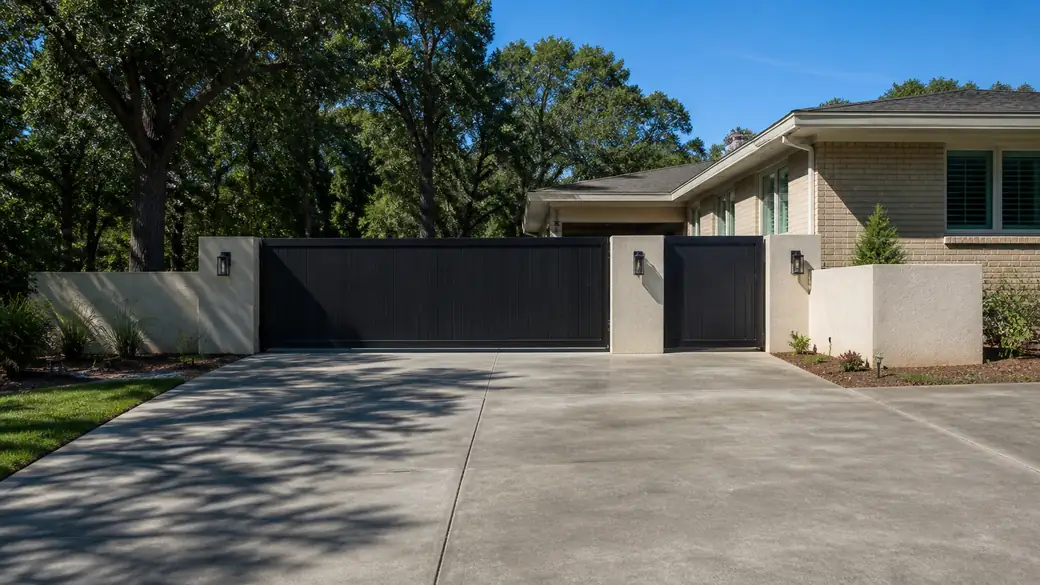
driveway gate installation completed by a local contractor at a buff-brick ranch home in Scottsdale, AZ, in clear late-morning sun.

Driveway Gate Installation in Guadalupe, Arizona

A driveway gate does two jobs at once. It controls who comes onto your property, and it closes off the most open side of the house. We build and install electric gates for homes in Guadalupe, in steel or iron, swinging or sliding, sized to the opening you actually have. Every gate we hang goes on posts and hardware chosen for its weight. The automation is matched to how often the gate runs and who needs access.

The work runs in a set order. We measure the drive, check the slope and side clearance, and mark where power will reach the operator. Posts go in and cure before any weight hangs on them. Then the gate is hung, leveled and swung by hand before the motor is connected. Access control comes last: keypads, remotes, phone entry, or a vehicle loop that opens the gate on the way out. We handle the permit, and we walk you through the operation before we pack up.

Most gate trouble we see traces back to installation, not the gate itself. A post set too shallow lets the leaf sag. A sagging gate drags, strains the motor and stops closing all the way. An operator sized too small for a heavy iron gate wears out early. Skipped safety sensors mean a gate that will close on a car, a pet or a child. We get those details right the first time, because fixing them later means tearing out work that should have lasted.

Call +1 623-224-2315

Get Free Estimates

What We Do in Guadalupe

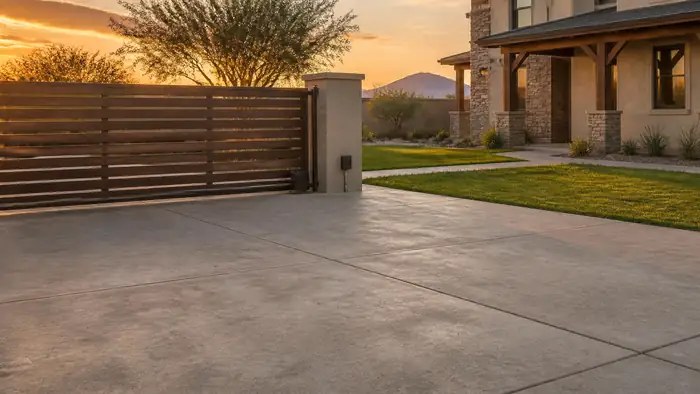
automatic gate installation completed by a local contractor at a stacked-stone and stucco home in Scottsdale, AZ, in late afternoon light.

Automatic Gate Installation

An automatic gate is three parts working together: the gate leaf, the operator that moves it, and the controls that tell it when. We size the operator to the gate's weight and width, not the other way round. Swing arms mount to a steel post set in concrete, never to a stucco pillar that will crack under the load. Every system gets photo-eye safety sensors and an obstruction-reverse setting. Before we leave, we show you the manual release.
Driveway Gate Installation

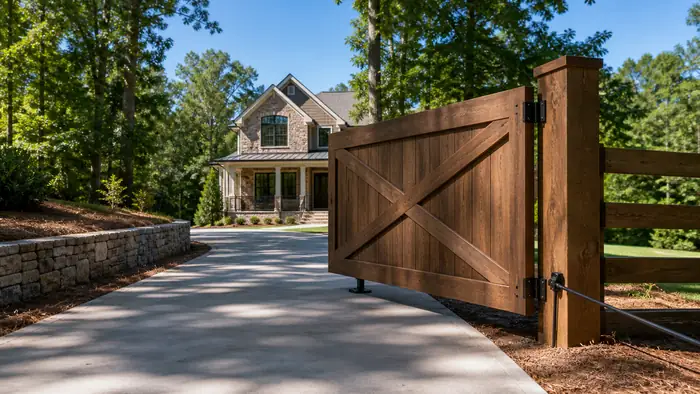
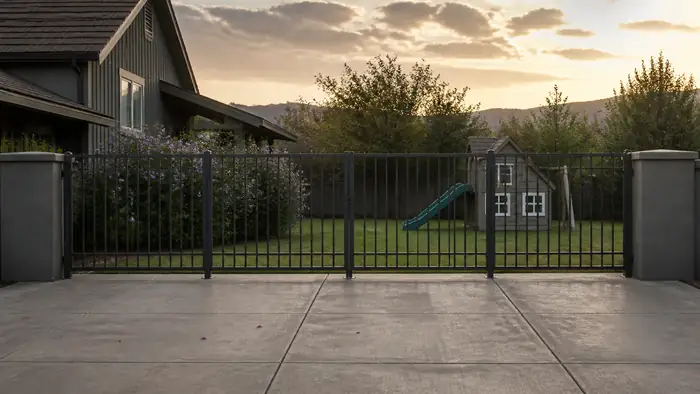
Most driveway gates we build are steel: heavy-wall square tube frames with solid pickets, or wrought iron where the design calls for scrollwork. Wide openings get split into a double swing so no single leaf sags. Hinges are heavy-duty ball-bearing and welded on, not bolted. Every piece is sandblasted, primed and powder-coated, because paint over bare steel is where rust starts. We handle the permit, set the posts, and check the leaf clears the driveway slope before hanging it.

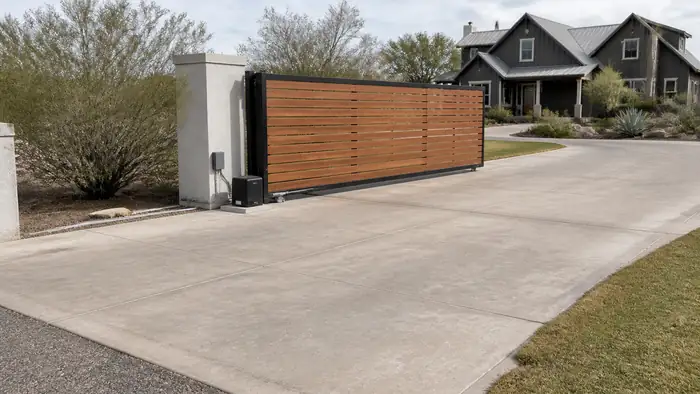
sliding gate installation completed by a local contractor at a charcoal farmhouse-modern home in Scottsdale, AZ, under bright midday cloud.

Sliding Gate Installation

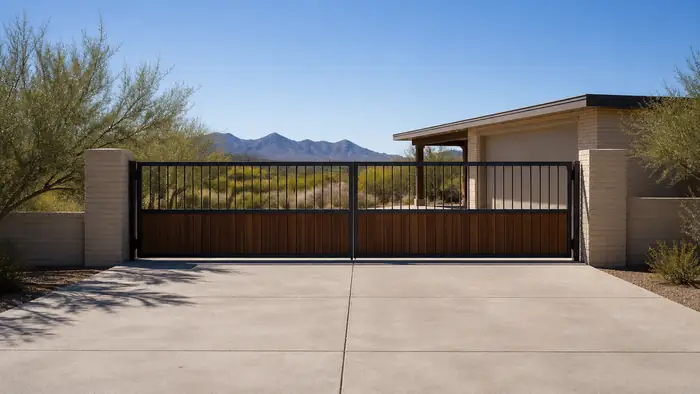
Where a swing gate has no room to open, a slide gate runs along the fence line instead. We build cantilever slides wherever the site allows. The gate rides on enclosed rollers and never touches the driveway, so there is no ground track to fill with gravel or crack. Where a V-track makes more sense, it gets its own concrete. A welded truss stiffens the frame so the tail doesn't droop. The operator drives it by rack or chain.

electric gate repair completed by a local contractor at a grey split-level home in Scottsdale, AZ, in early morning light.

Electric Gate Repair

Gate faults tend to fall into a short list. A gate that stops halfway usually means misaligned photo eyes or a failing limit switch. A leaf that drags has sagged at the hinge or lost a roller. Grinding on a slide gate points to a worn rack gear or a slack chain. Silence usually means the control board, the power supply or a blown fuse. We test before we replace anything, and we work on systems we did not install.

A keypad and intercom stand mounted beside the driveway gate. at a buff-brick ranch home in Scottsdale, AZ, after a rain shower.

Access Control Installation

Access control decides who opens the gate, and how. Options include keypads on a gooseneck post, remote transmitters, telephone entry that rings your phone, card readers for commercial property, and exit loops buried in the drive that open the gate for cars leaving. We run low-voltage wire in conduit and mount the keypad where a driver can reach it from the seat. Codes are set up so you can change them yourself. Emergency override is fitted where the permit requires it.

Why We’re the Best Scottsdale Premier Electric Gates and Electric Gate Contractor in Guadalupe

A driveway gate is two things at once: a piece of steel or iron that has to hang true for years, and an electric system that has to open and close on command every time. We build both. We design the gate, set the posts, mount the operator and wire the access controls, so one team answers for how the whole thing works. That matters because the entry is the first part of your property anyone meets.

The work runs in a set order. We measure the opening and check the slope of the drive, then choose swing or slide based on the room you actually have, not the room a catalog assumes. Posts go in before the gate is hung. Once the operator is mounted, we set the travel limits and the safety sensors, and we run the gate through full cycles with you standing there. You learn the keypad, the remotes and the manual release before we pack up.

Most gate trouble traces back to installation, not to the operator. Posts that are too light let the gate sag. A sagging gate drags, and a dragging gate burns out the motor. Photo eyes mounted at the wrong height miss a child or a car bumper. We size posts and hinges for the real weight of the gate, place the sensors where they protect people, and leave the system set up so routine maintenance stays simple. Call us for a free estimate.

Design and Consultation Process Made for Scottsdale

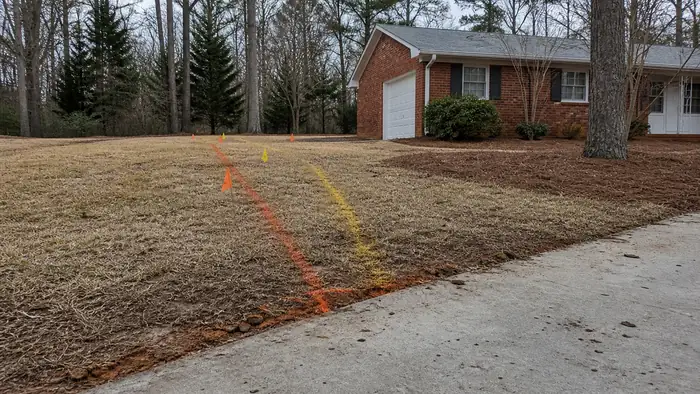
Utility locate flags mark the ground before post holes are dug at a house. at a red-brick ranch home in Scottsdale, AZ, after a rain shower.

Step 1: Site Assessment

Most gate problems start at the site, not the shop. We walk the driveway with you and measure the opening, the slope and the space on either side, because a swing gate needs a clear arc and a slide gate needs a straight run along the fence line. We mark buried lines, drainage paths and the closest point where power can reach. Then we ask how the entry gets used: daily commuting, delivery trucks, a boat trailer on weekends. That answer shapes every choice after it.

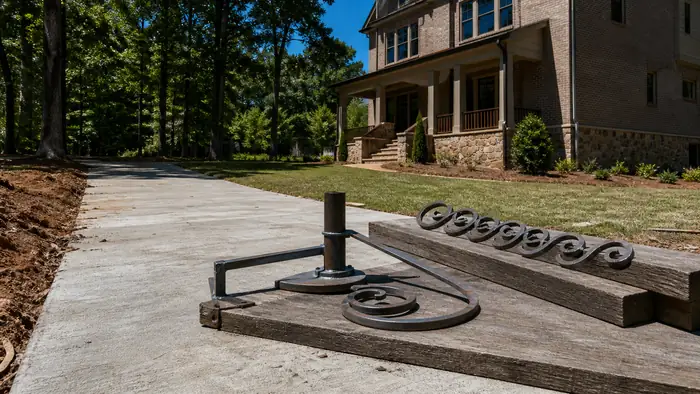
A metalworker forms decorative scrollwork for an ornamental gate. at a brick-and-siding two-story home in Scottsdale, AZ, in clear late-morning sun.

Step 2: Design & Fabrication

Your gate is drawn to the opening, then built in steel or wrought iron to suit the property. Frames are heavy-wall square tube, welded fully at every joint, since stitch welds trap water and rust from the inside out. Long leaves get a diagonal brace or a truss so they do not sag at the latch end. Pickets, scrolls and panels come after the structure is right. The finish is a zinc-rich primer under powder coat, which outlasts spray paint by a wide margin.

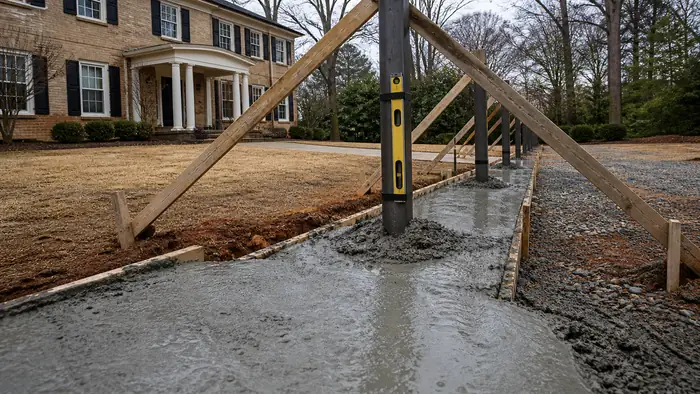
Concrete is poured around a braced gate post at a house. at a tan-brick colonial in Scottsdale, AZ, after a rain shower.

Step 3: Foundation & Footings

Hinge posts carry the whole weight of a swinging leaf, and a weak footing shows up later as a gate that drags or will not latch. Posts go into deep concrete footings sized to the gate's weight and width, with rebar tied in for heavy leaves. Slide gates get a continuous track footing or a cantilever pad, poured level. We let the concrete cure before any load goes on it. Rushing this is how good gates end up failing.

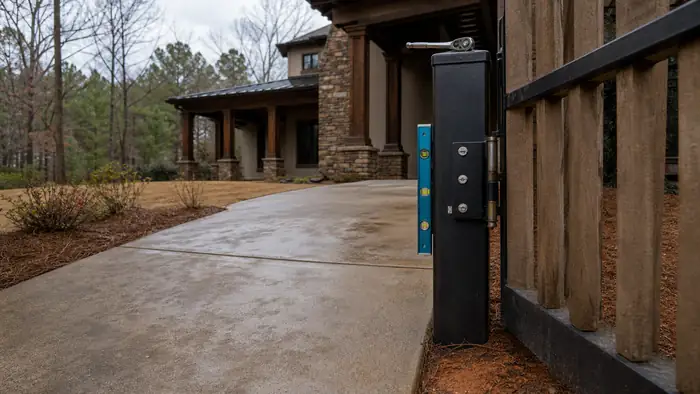
An installer shims a hinge plate to plumb a residential gate post. at a stacked-stone and stucco home in Scottsdale, AZ, after a rain shower.

Step 4: Installation

Hanging the gate is where the careful measuring pays off. Leaves go up on adjustable heavy-duty hinges so we can true them once the posts take the weight. We set the clearance under the gate against the highest point of the driveway, so the bottom rail never scrapes. Slide gates ride on sealed rollers with guide wheels at the top. Latches, gate stops and drop rods are fitted and set. Any cut or weld made on site is cleaned, primed and touched up the same day.

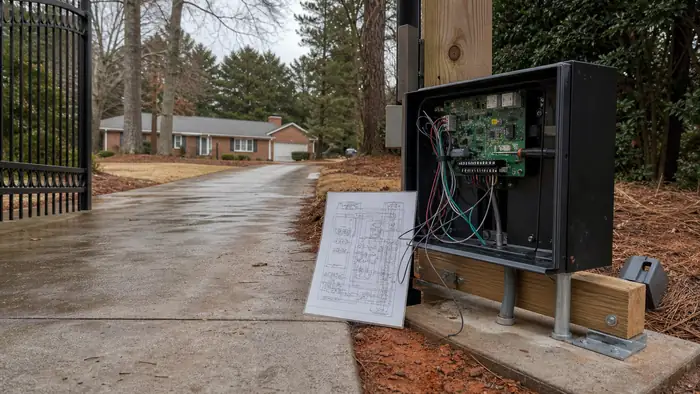
A technician wires a gate operator's control board at a residential post. at a red-brick ranch home in Scottsdale, AZ, after a rain shower.

Step 5: Automation & Wiring

Electric gates live or die on the operator matched to them. A heavy iron leaf on an undersized arm opener burns out the motor. We size the operator to the gate's weight and length, then run power in buried conduit on a dedicated circuit. Low-voltage lines for keypads, intercoms and loop detectors go in separate conduit so they do not pick up interference. Photo eyes and safety edges go on every automated gate, and a battery backup keeps it working through an outage.

A technician tests a photo-eye's obstruction response on a residential gate. at a brick-and-siding two-story home in Scottsdale, AZ.

Step 6: Testing

Before anyone calls the job done, the gate runs through dozens of full cycles. We set the force and reverse sensitivity on the operator so the gate stops and backs off when it meets resistance, then check that with a real obstruction in its path. Photo eyes get tested by breaking the beam mid-travel. We look at the gate fully open and fully closed for sag, bind and latch alignment, and run it on battery power alone. Anything that hesitates gets adjusted now.

A technician hands over the manual and spare remotes to a homeowner. at a buff-brick ranch home in Scottsdale, AZ, in clear late-morning sun.

Step 7: Final Walkthrough

At the end, we go over the finished gate with you at the entry. You learn the manual release, how to reset the operator after a power cut, and how to program new remotes or keypad codes. We show you what maintenance looks like: keeping the track clear, oiling hinges, and touching up chips in the powder coat before rust takes hold. You keep the operator manuals and a record of where the wiring runs, so any later repair starts from a map.

What Decides the Price of Metal Gates & Fences in Guadalupe

Most of the price of a driveway gate is set before any steel is cut. It comes from what is already on your property: what has to come out, where the power is, and how a truck reaches the gate line. Here is what we look at on a Guadalupe driveway, and each of these is something you can walk out and check yourself.

What changes the priceWhich wayWhy
An old gate, fence or posts still standingcosts moreEverything comes out first, footings included, so new posts sit in clean holes.
Concrete or pavers across the gate linecosts moreWe cut the drive to set posts and bury conduit, then patch it. Bare ground skips that step.
Distance from your electrical panel to the gatecosts more the farther it isElectric gates need power at the post. A longer run means more trench and more wire.
Clear truck access to the gate linecosts lessIf we can back up to the posts, a finished gate goes in whole. Tight side yards mean carrying pieces in and welding on site.
Width of the driveway openingcosts more as it widensWider leaves weigh more, which calls for heavier posts, a stronger operator and more bracing.
Slope of the drive at the gatecosts moreA swing gate on a grade needs a different hinge setup, or the ground needs leveling first.
Where water goes when it runs down the drivecosts more if it poolsWater sitting on a slide track or around a post base needs a drain or regrading before installation.
Tube gauge and reinforcement the design calls forcosts moreHeavier steel and added cross bracing keep a tall or ornate iron gate square for years of operation.

When you compare bids, line them up item by item. Check that each one includes removal of the old gate, the trench and wire run from the panel, the operator model, and the steel size for posts and frame. A lower number often leaves one of those out.

Get a Free Estimate

Get Free Estimates

Tap to call +1 623-224-2315