+1 623-224-2315
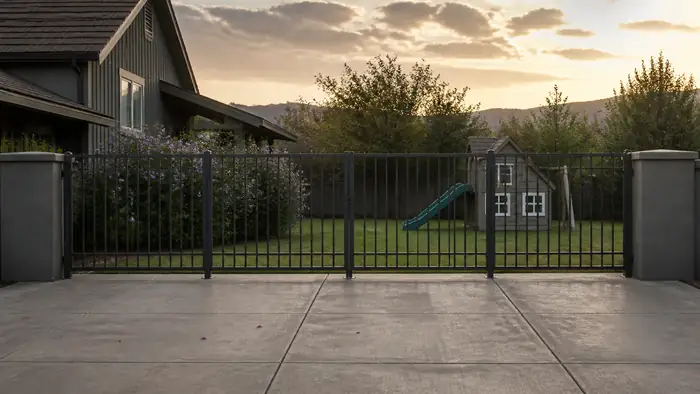
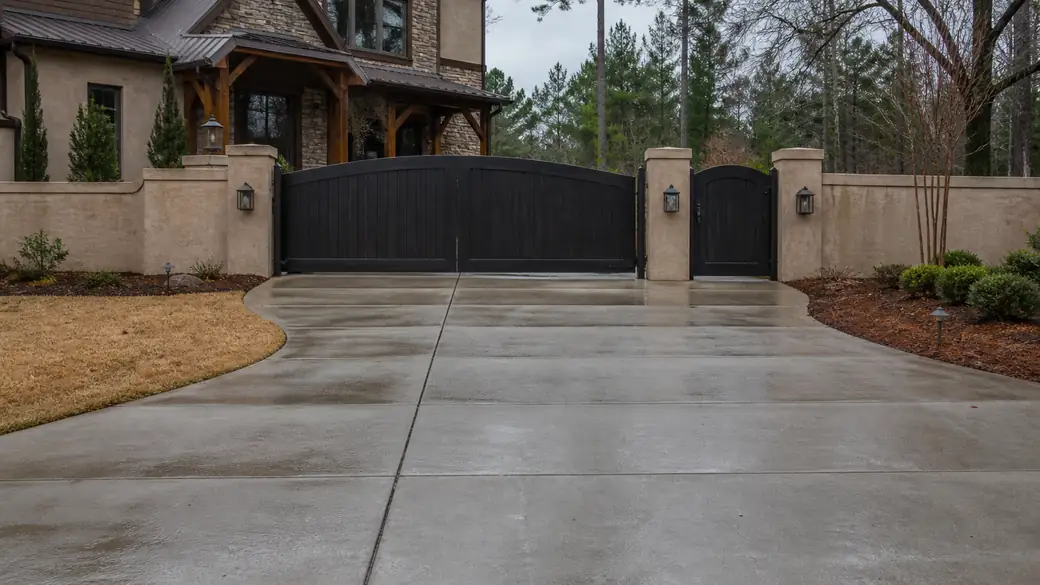
swing gate installation completed by a local contractor at a stacked-stone and stucco home in Scottsdale, AZ, after a rain shower.

Swing Gate Installation in Scottsdale, AZ

A swing gate hangs on hinges and opens in an arc, either as a single leaf or as a pair that meets in the middle. We build and install them in iron and steel, for residential driveways and for commercial entries that need controlled access. Some stay manual. Many go electric, with an operator arm or a buried motor doing the work and a keypad or remote handling access control. The median home in Scottsdale was built in 1990, so we treat existing posts and drives as unknowns until we have looked at them.

What goes wrong with a swing gate is almost always the arc. A leaf that clears a flat drive can drag on a slope, and the ground here rises and falls a long way, with 1,206 feet of local relief within a few miles. It also changes from one block to the next. That is why every site gets graded and tested on its own before we set a single post. Getting the swing right on paper first keeps the hinges true, the leaves level and the operator from straining. Call us for a free estimate.

Call +1 623-224-2315

Get Free Estimates

What Is Included in Swing Gate Installation

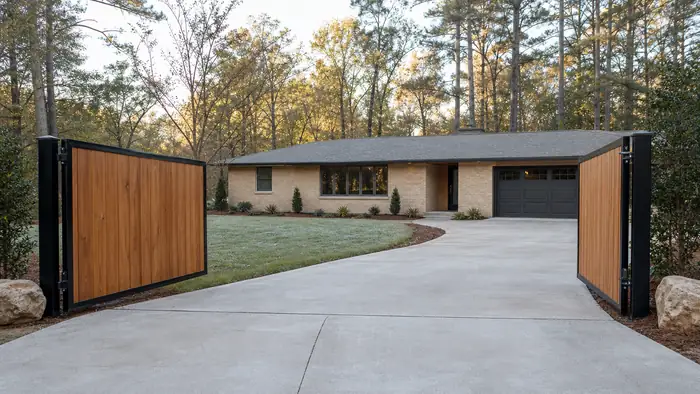
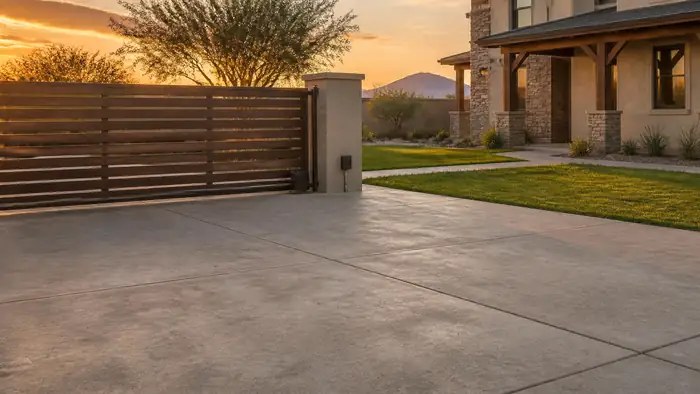
automatic gate installation completed by a local contractor at a stacked-stone and stucco home in Scottsdale, AZ, in late afternoon light.

Automatic Gate Installation

The operator is sized to the gate, not the other way round. A long steel leaf pulls far harder on its hinges than a narrow iron walk gate, so we match the arm or underground operator, control board and battery backup to the real weight and swing of the gate. Low-voltage wiring runs in conduit, never buried bare. Every automatic system gets photo-eye sensors and obstruction reverse set before we leave. A gate that closes on a car is the failure that matters most.
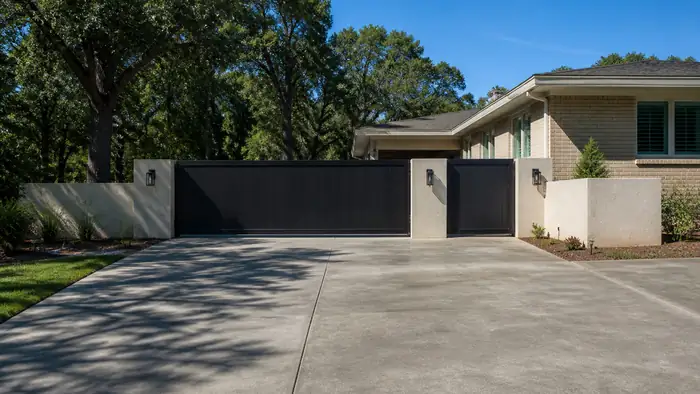
driveway gate installation completed by a local contractor at a buff-brick ranch home in Scottsdale, AZ, in clear late-morning sun.

Driveway Gate Installation

Posts decide whether a driveway gate still latches years from now. We set steel posts deep in concrete footings sized to the leaf, and hang it on heavy-duty hinges rated for the load. Frames are square steel tube with a diagonal brace or truss so the free end does not sag. Much of the ground here slopes, and it changes from one lot to the next, so each site is graded and tested first. Finish is galvanizing or zinc primer under powder coat.

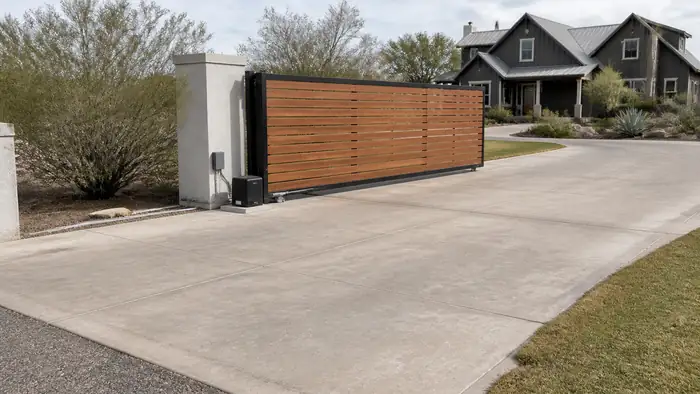
sliding gate installation completed by a local contractor at a charcoal farmhouse-modern home in Scottsdale, AZ, under bright midday cloud.

Sliding Gate Installation

Where a drive is too short or too steep for a leaf to swing, a slide gate is often the better fit. It runs on V-groove wheels along a track set in concrete, or cantilevers off rollers on the post so nothing sits in the drive. The track has to be dead level and kept clear, since grit in the groove is the usual reason a slider jams. We fit top guide rollers, positive stops at both ends, and a rack-and-pinion operator matched to the weight.

electric gate repair completed by a local contractor at a grey split-level home in Scottsdale, AZ, in early morning light.

Electric Gate Repair

Most electric gate faults trace back to a short list. Photo eyes knocked out of line. A dead backup battery. A failed limit switch, a control board burned by a surge, or a worn hinge that lets the gate drag until the operator trips on overload. We test the whole system before replacing parts, because a new motor will not fix a sagging leaf. Every repair ends with force and reverse settings checked so the safety features do their job.

How a Swing Gate Installation Job Runs in Scottsdale

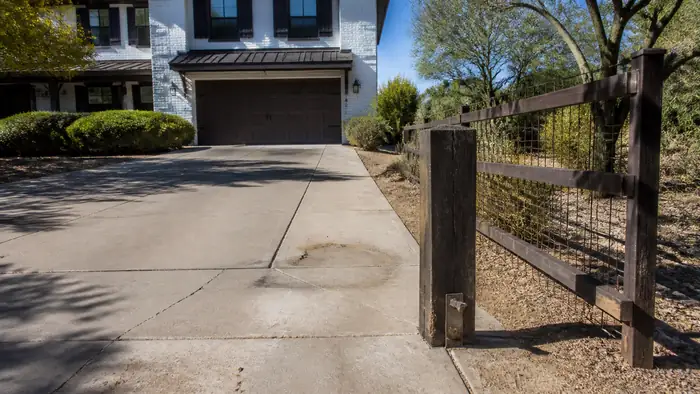
A technician photographs the existing entrance before design work starts. at a painted-white-brick two-story home in Scottsdale, AZ.

Step 1: Site Assessment

We start at the opening with a tape, a level and a string line. Maricopa County has 1,206 feet of local relief within a few miles, but the ground changes from block to block, so every site is graded and tested on its own. We measure the swing arc, the slope under each leaf, and where power can reach. The median home here was built in 1990, so we also check any existing pillars or walls the gate will hang from.

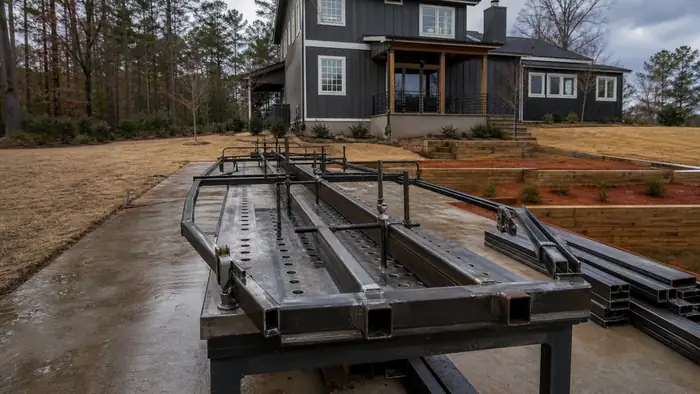
A welder builds a residential gate frame in the fabrication shop. at a charcoal farmhouse-modern home in Scottsdale, AZ, after a rain shower.

Step 2: Design & Fabrication

Drawings come next: leaf width, picket spacing, frame profile and hinge side, all set against the site measurements. Residential swing gates get a welded frame of heavy-wall square steel tube, with solid square pickets or forged iron detailing where the design calls for it. Wide leaves get a diagonal brace or a truss so the latch end doesn't sag. Every gate is sandblasted, primed with a zinc-rich primer and powder coated in the shop, so the finish covers every weld.

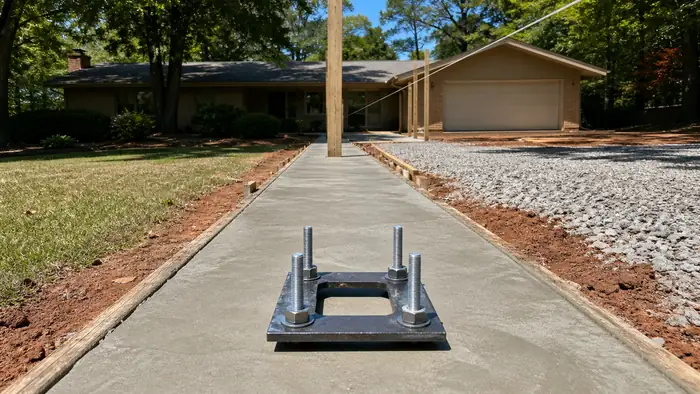
Anchor bolts are set into a fresh concrete footing for a gate post. at a buff-brick ranch home in Scottsdale, AZ, in clear late-morning sun.

Step 3: Foundation & Footings

Posts carry the whole load of a swing gate. Most sagging gates we get called to repair failed here, not at the hinge. We set hinge posts in concrete footings sized to the weight and length of the leaf, with rebar in the larger ones. Where a drive slopes, footings get deeper on the low side. Posts are plumbed and braced while the concrete cures for several days, and nothing hangs on them until it has.

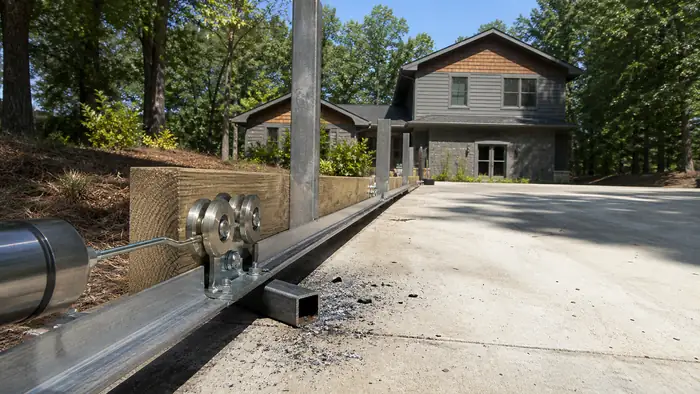
An installer fits rollers onto a residential sliding gate's rail. at a grey split-level home in Scottsdale, AZ, in clear late-morning sun.

Step 4: Installation

Hanging day is mostly about alignment. We mount heavy-duty ball-bearing or adjustable barrel hinges, hang each leaf, then shim until the gap at the latch runs even from top to bottom. On a sloping drive we raise the hinge side or use rising hinges, so the leaf clears the ground through its full arc. A center drop rod and a ground stop keep double gates from drifting past each other. Any scratch from handling gets touched up.

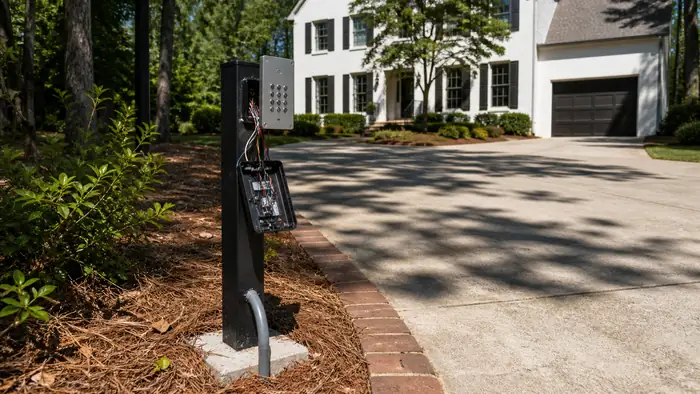
A technician mounts and wires a keypad post at a driveway entrance. at a painted-white-brick two-story home in Scottsdale, AZ, in clear late-morning sun.

Step 5: Automation & Wiring

Electric swing gates run on linear arm operators or articulated arms, chosen by post width and which way the gate opens. We run low-voltage cable in conduit from the control box to each operator, trench it across the drive where needed, and we handle the permit. Access control goes in now: keypad, remote receiver, intercom or a phone-based entry system. Photo eyes and edge sensors are wired in for safety at this stage, not added later.

A technician manually cycles a residential swing gate to check clearance. at a buff-brick ranch home in Scottsdale, AZ, in early morning light.

Step 6: Testing

Once everything is powered, the gate runs through dozens of full cycles. We set the operator's force and obstruction sensitivity so it stops and reverses when it meets resistance, then prove it with a solid object in the path. Photo eyes get checked from both sides. We confirm the manual release works, the leaves close flush without slamming, and the latch catches every time. Anything that drifts gets adjusted before we pack up.

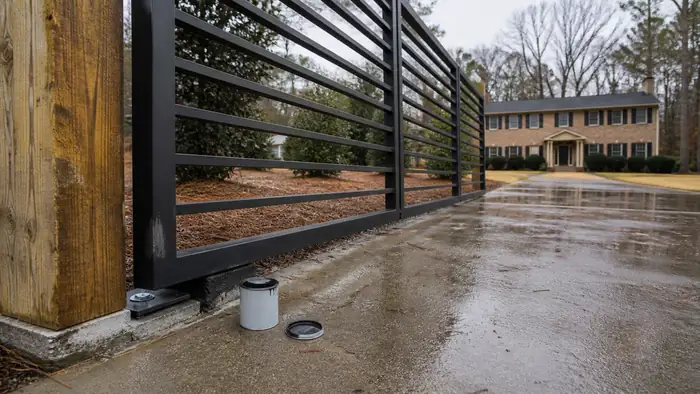
A technician applies touch-up paint to a finished residential gate. at a tan-brick colonial in Scottsdale, AZ, after a rain shower.

Step 7: Final Walkthrough

The last hour on site is yours. We walk the property with you, show you how to program remotes and add keypad codes, and put your hand on the manual release so you can open the gate during a power outage. We point out the hinge grease points and the few things worth checking every few months. You keep the operator manuals and your access settings in writing. For maintenance or repair down the road, call us.

Questions About Swing Gate Installation

How is a swing gate operator selected for a metal swing gate installation?

We start with the gate. Leaf weight, leaf length and how many times a day it opens all set the size of the operator, and a heavy steel leaf needs a unit rated for that load rather than one built for a light panel. Next comes the post and the room behind it, which decides between an arm operator on the post face and a buried unit. Controls follow: keypad, remotes, phone access and battery backup.

What is the process for installing a custom swing gate in Scottsdale?

It begins on your property with a tape measure. We record the opening, the grade across it, where power can reach, and how the gate should sit against the house. From those numbers we draw the design, settle the material and have the leaves built to fit. Posts go in and cure before anything hangs on them. We handle the permit, then mount the operator, set the limits and test every safety device.

What type of metal gate is typically used in a residential or commercial swing gate installation in Scottsdale?

Steel does most of the work. For residential entries in Scottsdale we usually build tube steel frames with steel pickets, because the gate has to suit the house as much as it has to hold. Commercial gates run heavier: thicker wall tube, more bracing, and hardware made for many cycles a day. Aluminum comes up for lighter pedestrian gates. Ornamental iron still earns its place where the design calls for scrollwork.

What is the difference between a single leaf and double leaf metal swing gate installation?

A single leaf is one panel on one hinge post. It needs one operator and suits narrower openings. Double leaf splits the opening into two panels that meet in the middle, so each leaf is shorter, lighter and needs less room to swing. That means two operators, two hinge posts, a center stop, and careful setup so both leaves close in step and latch together. On a wide driveway, double is often the better fit.

What happens if the swing arc of a metal gate is not properly assessed before installation?

The gate hits something. A leaf drags on rising ground, strikes a parked car, or opens into a walkway or planter. Around Scottsdale this matters more than people expect. Maricopa County is steep, hilly country with 1,206 feet of local relief within a few miles, and the ground changes from block to block. So we grade and check each site on its own, then set swing direction and stops before a single leaf is built.

Which metal side gate options and finishes hold up best to Scottsdale's weather, corrosion, and daily use?

Powder coat over galvanized steel is the pairing we trust most on side gates. The zinc layer protects the steel underneath, and the powder coat stands up to handling, sprinkler overspray and the odd scrape better than brushed paint. Aluminum does not rust, which makes it a sound choice for a gate that sees little force. Bare or painted iron suits some houses but asks for more upkeep. Stainless hinges and latches keep any of them swinging freely.

Metal Gates & Fences Systems and Materials for Scottsdale

Most of the swing gates we build are steel or wrought iron, hung on posts set in concrete and driven by an electric operator sized to the leaf. Steel gives a clean, modern line and takes a custom design well. Iron suits heavier ornamental work. We fit either an arm operator on the post or an underground unit below the drive. Every system gets safety sensors, a manual release and access control that fits how the household comes and goes: remotes, a keypad, or a phone.

Ground matters as much as the gate. Maricopa County has 1206 feet of relief within a few miles, and the pitch of a drive can change from one block to the next. A swing leaf has to clear that slope through its full arc, so we grade and test every site before choosing hinges, post depth and operator. The median home here was built in 1990, and original pillars are not always fit to carry a heavy electric gate. When they fall short, we set new steel posts instead.

Get a Free Estimate

Get Free Estimates

Tap to call +1 623-224-2315