+1 623-224-2315
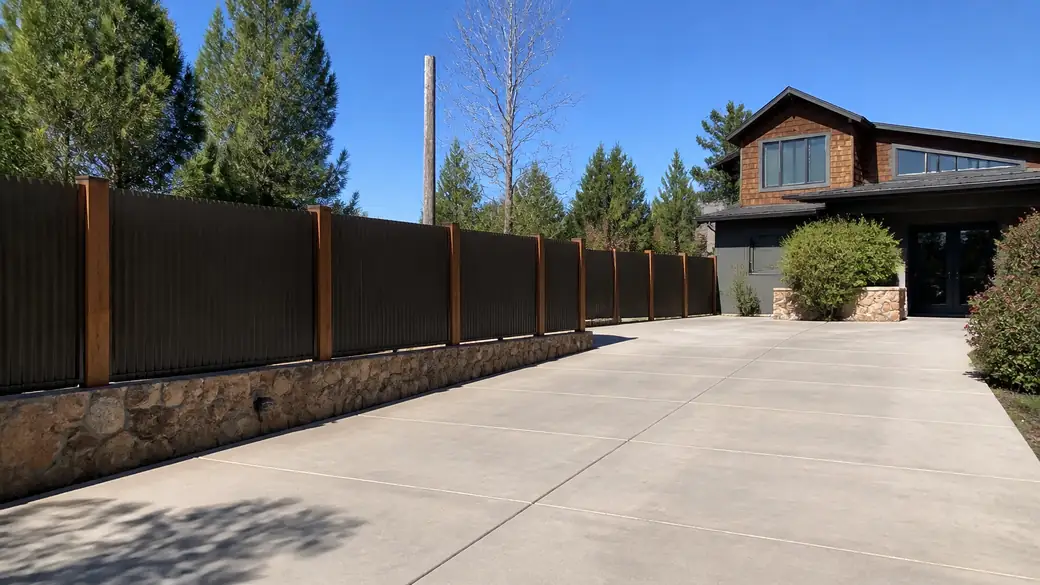
corrugated metal fence installation completed by a local contractor at a grey split-level home in Scottsdale, AZ, in clear late-morning sun.

Corrugated Metal Fence Installation in Scottsdale, AZ

A corrugated metal fence is ribbed steel sheet fastened to a frame of posts and rails. The ribs give a thin panel its stiffness, so a long run stands straight without carrying much weight. We build them for homes and for commercial property that wants a solid, private screen. Around half the homes in Scottsdale date from 1990 or earlier, and an aging fence line is often where the job starts. The new panels can replace it outright or tie in beside what stays. They can also run up to an electric gate at the drive, so the entry reads as one piece.

Most trouble with these fences starts in the ground, not the metal. Maricopa County is steep, hilly country, with 1,206 feet of local relief within a few miles, and it changes from block to block. Set a run of panels without reading that slope and you get gaps under the bottom rail, racked frames and posts leaning out of line. So we grade and test every site on its own before a post goes in. On a slope we step the panels or rake them to follow the ground. Call for a free estimate.

Call +1 623-224-2315

Get Free Estimates

What Is Included in Corrugated Metal Fence Installation

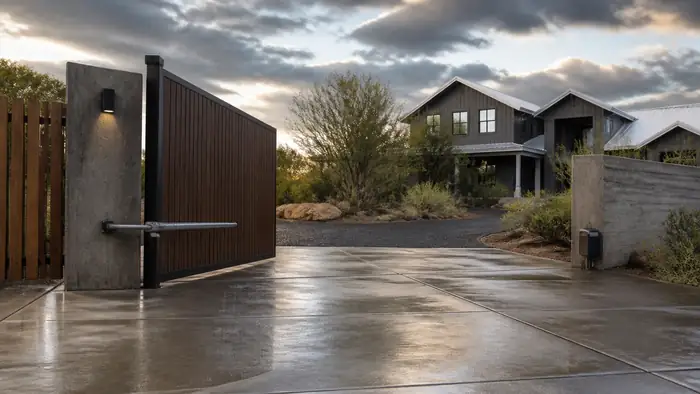
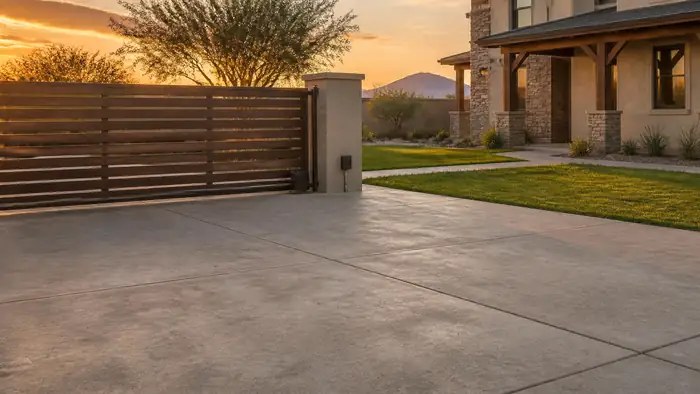
automatic gate installation completed by a local contractor at a stacked-stone and stucco home in Scottsdale, AZ, in late afternoon light.

Automatic Gate Installation

An automatic gate is a gate, an operator and a set of controls that all have to agree. We size the operator to the gate's actual weight and length, not the brochure figure, and bolt it to a post or pad set in concrete. Power and low-voltage wiring run in conduit below grade. Every system gets photo eyes and a reversing setting, tested against an obstruction before we pack up. Keypads, remotes and phone access are set up and walked through with you.
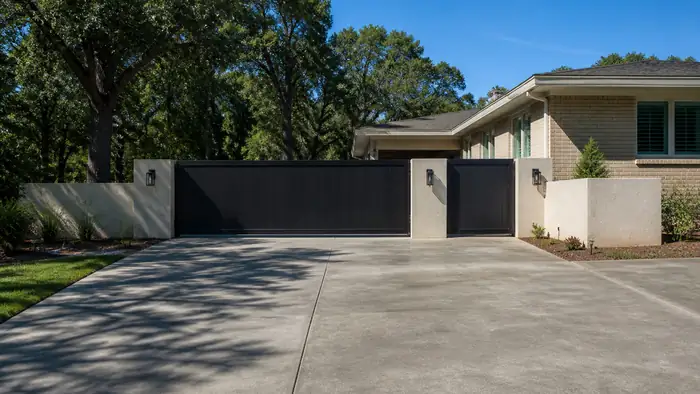
driveway gate installation completed by a local contractor at a buff-brick ranch home in Scottsdale, AZ, in clear late-morning sun.

Driveway Gate Installation

Most driveway gates we build start as a welded steel frame in square tube, infilled with iron pickets or corrugated panel to match the fence line. A diagonal brace keeps the leaf from sagging at the latch end. The finish is a zinc-rich primer under powder coat, because bare steel rusts from the welds out. Existing masonry pillars get checked before anything hangs on them. If one cannot carry the load, we set a steel post in concrete beside it.

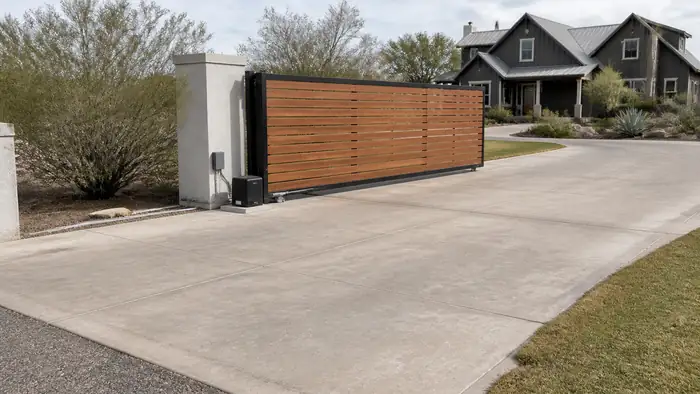
sliding gate installation completed by a local contractor at a charcoal farmhouse-modern home in Scottsdale, AZ, under bright midday cloud.

Sliding Gate Installation

Sliding gates suit short driveways and sloped entries where a swing leaf would hit the ground partway open. The gate either rides V-groove wheels on a steel track set in a concrete grade beam, or hangs cantilevered on rollers with no track on the ground at all. Maricopa County has 1206 feet of local relief, and the grade changes from one lot to the next, so we shoot levels at every site before choosing. Debris in the track and worn rollers cause most failures.

electric gate repair completed by a local contractor at a grey split-level home in Scottsdale, AZ, in early morning light.

Electric Gate Repair

Repair starts with one question: is the fault mechanical or electrical? A gate that drags, binds or drops at the latch end has a hinge, wheel or post problem, and a new operator will not fix it. A gate that stalls, reverses for no reason or ignores the remote usually points elsewhere. Misaligned photo eyes, a tired battery backup, a burnt limit switch or a failing control board are the usual suspects. We replace what is worn and reset force and limits.

Why Scottsdale Chooses Scottsdale Premier Electric Gates

The median home in Scottsdale was built in 1990, so the fence line on a given property might be original or might be several repairs deep. We start by looking at what is already standing: posts, footings, walls and any gate on the line. Then we design the corrugated steel fence and the gate as one job. If you want electric access later, the posts and framing are set for it from the start. Nothing gets bolted on as an afterthought.

Ground matters just as much. Maricopa County has 1,206 feet of local relief within a few miles, and it changes from block to block, so we grade and test every site on its own before a post goes in. On a sloped yard we step the panels to follow the grade instead of forcing a level top line across it. A gate on uneven ground needs a clean swing or slide path and the right operator. We work that out before installation. Call us for a free estimate.

How a Corrugated Metal Fence Installation Job Runs in Scottsdale

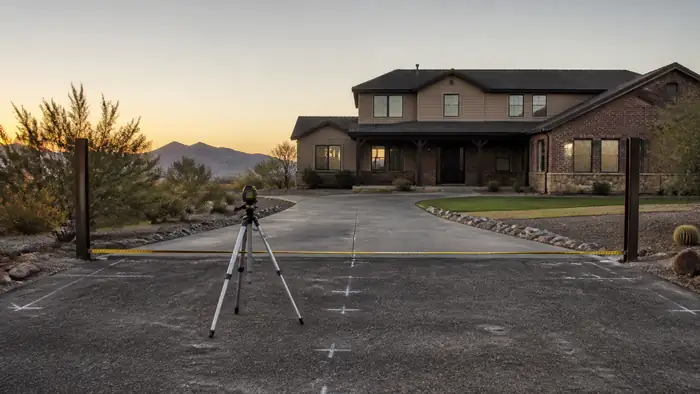
A technician measures the driveway opening at a home before gate work begins. at a brick-and-siding two-story home in Scottsdale, AZ.

Step 1: Site Assessment

We walk the fence line with a tape and a level before anything gets drawn. The ground here can change from one block to the next, so every site is graded and checked on its own: where it falls away, where water runs after a hard rain, where a sprinkler line or buried cable crosses. We mark utilities, note the gate opening and whether it should swing or slide, and find where power can reach an operator. We handle the permit from there.

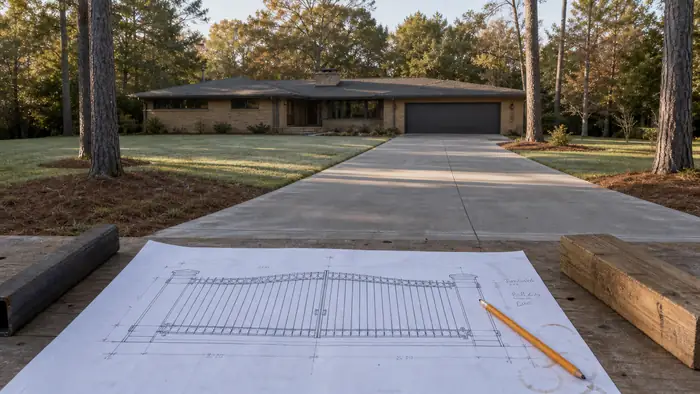
A shop drawing for a residential gate is reviewed before cutting begins. at a buff-brick ranch home in Scottsdale, AZ, in early morning light.

Step 2: Design & Fabrication

Corrugated panels come in bare steel, galvanized, or weathering steel that rusts to a stable brown, and that choice drives the rest of the design. We lay out post spacing, rail height and panel orientation, then cut and weld the gate frame from square tube with a diagonal brace so it holds its shape. Welds get ground and primed. The frame is sized to the operator, because a heavy gate on an undersized motor is how automated gates wear out early.

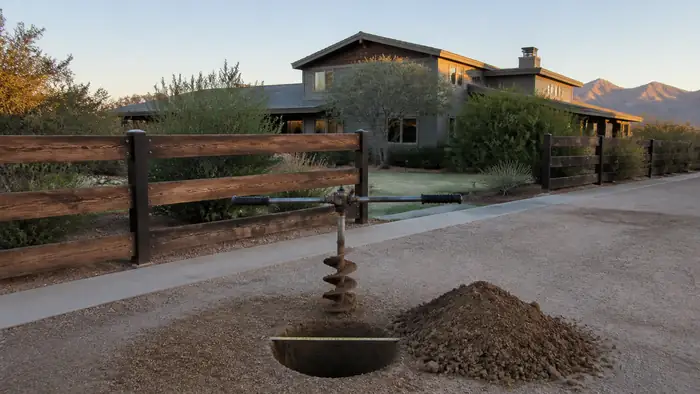
A mechanical auger bores a post hole at a residential gate site. at a grey split-level home in Scottsdale, AZ, in early morning light.

Step 3: Foundation & Footings

Every post sits in concrete, dug to a depth set by the post height and the load it carries, and belled at the bottom so it resists lift. Gate posts get the deepest, widest footings on the job. A gate catching wind pries at its post every time it moves, and a shallow footing shows it within months. On a sloped lot we step the footings with the grade instead of fighting it. Slide gates get a poured track pad, level end to end.

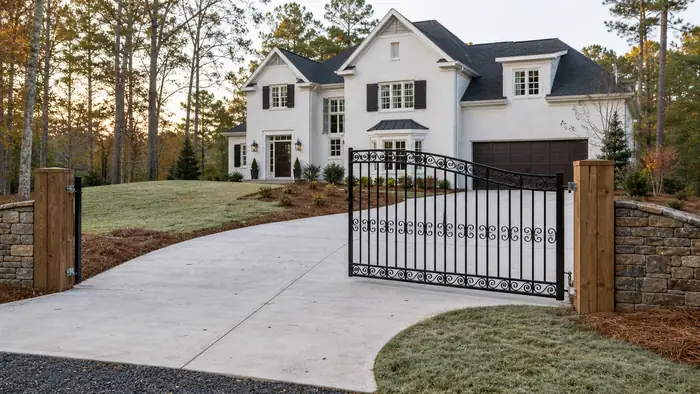
A crew hangs a wrought iron gate leaf onto its hinges at a home. at a painted-white-brick two-story home in Scottsdale, AZ, in early morning light.

Step 4: Installation

With the concrete cured, we set steel rails between the posts and hang the corrugated sheets with hex-head self-tapping screws and sealing washers, fastened where the panel sits flat against the rail. Overtightened screws dimple the steel and let water in. Loose ones rattle. On slopes we either rack the panels to follow the ground or step them in level runs, and cut edges get a cap so nothing sharp is exposed. The gate is hung last and swung by hand first.

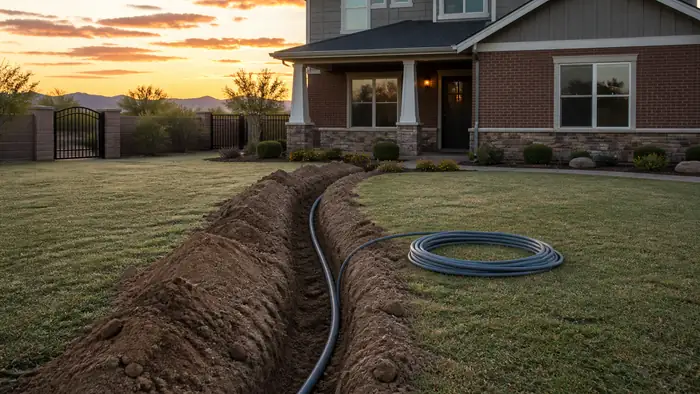
Conduit is laid in a trench from the house to a gate operator. at a brick-and-siding two-story home in Scottsdale, AZ, in early morning light.

Step 5: Automation & Wiring

An electric gate needs its own circuit, run in buried conduit to the operator pad. We mount the operator, either a swing arm or a slide unit driving a gear rack welded to the frame, then set travel limits and force. Photo-eye safety sensors go across the opening, and an edge sensor goes wherever the gate could pinch. Access control follows: keypad, remotes, intercom or phone app, wired through a surge protector so a power spike does not take out the control board.

A technician tests a remote control while a residential gate cycles. at a charcoal farmhouse-modern home in Scottsdale, AZ, after a rain shower.

Step 6: Testing

Nothing is finished until the gate has run repeated full cycles without a hitch. We block the photo eyes mid-travel to confirm it reverses, push against it to check that the force setting stops it, and cut power to make sure the manual release works. We check that the gear rack meshes along the whole run and that a swing gate clears the grade at every point of its arc. Any panel that rattles gets its screws tightened now, not later.

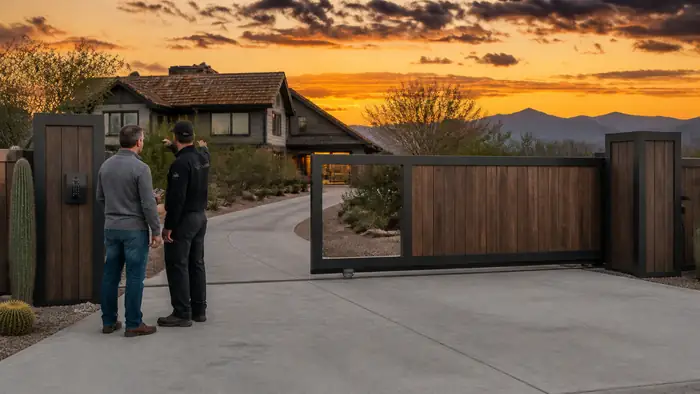
A technician demonstrates the finished gate's operation to the homeowner. at a grey split-level home in Scottsdale, AZ, in early morning light.

Step 7: Final Walkthrough

You walk the fence line with us and run the gate yourself. We show you the manual release, how to add a remote or change the keypad code, and where the operator's settings live. Maintenance is simple and we go through it: keep the track clear, check hinges and screws now and then, and lubricate moving parts on the schedule in the operator's manual. The site gets cleared of offcuts and loose screws, and the property is left clean.

Corrugated Metal Fence Installation Pricing in Scottsdale, AZ

Two fences of the same length can price very differently, and most of the reasons are visible from your own yard. Walk the line before you call. Look at what is already standing, what is buried, and how a truck would reach the work. Ground in Scottsdale can change from one block to the next, so we grade and check every site on its own before anything is set.

What changes the priceWhich wayWhy
An old fence or block wall on the linecosts moreIt comes out first, footings included, and the debris has to be hauled off the property.
Buried concrete from old postscosts moreWe either break it out or shift the post spacing around it, and both take time at the auger.
A slope along the runcosts morePanels are stepped or racked, so each post is set and cut to its own height.
A narrow side yard with no wide gatecosts morePosts, concrete and panels get carried in by hand instead of driven to the line.
Heavier panel gauge and a full steel framecosts moreThicker corrugated sheet and extra rails keep the panels flat and hard to dent.
Water that runs across the fence linecosts moreWe hold the panels off grade or leave a drainage gap so steel is not sitting in wet ground.
A gate in the run, especially an electric onecosts moreGate posts are heavier and set deeper, and an electric operator needs power brought to it.
A clear, level line with open accesscosts lessNothing to remove and nothing to step, so the installation runs straight through.

Holding two bids side by side? Check that each one names the panel gauge, the post material and spacing, and the footing depth. See whether removing the old fence is in the number or left out. Ask how each one handles the slope and the permit (we handle the permit). A bid that skips these is usually pricing a different fence.

Questions About Corrugated Metal Fence Installation

What hardware is used to attach corrugated metal panels to fence posts?

We fasten the panels to horizontal steel rails, not straight to the posts, using self-drilling hex-head screws with bonded neoprene washers. The washer seals each hole and stops the sheet from rattling in wind. Screws run along every rail at close spacing so the edges can't lift. The rails bolt or weld to square steel posts, and every cut edge gets treated before the panel goes up.

In Scottsdale, how long does a standard corrugated metal fence installation usually take from measurement to completion?

It depends on three things: the length of the run, the number of gates, and what the ground does along the line. Measurement comes first, then material, then posts. Concrete has to cure before any weight goes on those posts. Rails and panels follow. A straight residential run with one walk gate moves quickly. Add an electric gate, a slope or a masonry tie-in, and the schedule stretches to fit.

How is a metal gate securely attached to a brick or masonry wall as part of a fence installation in Scottsdale, AZ?

Before drilling anything, we find out what the wall is made of. Solid brick and grouted block take heavy wedge anchors or threaded rod set in epoxy. Hollow block gets its cells grouted first, so the anchors have something to grip. A steel mounting plate spreads the load across the wall. For a heavy swing gate or an electric gate, we often set a separate steel post beside the wall, so the masonry never carries the gate's weight.

What types of properties are best suited for corrugated metal fence installation?

Any property that needs privacy and a clean line without much maintenance. On Scottsdale lots it works for side yards, backyard perimeters, pool equipment screens and RV or trailer parking. Commercial sites use it to hide storage, dumpsters and service areas. Because it hangs on a steel frame, it pairs easily with iron or steel gates. It suits owners who want a solid, private barrier without building a masonry wall.

Can corrugated metal fence installation be done on sloped or uneven ground?

Yes. Maricopa County is steep, hilly terrain, and it changes from block to block, so we grade and test every site on its own before work starts. On a gentle grade we rake the rails to follow the ground. Steeper runs get stepped sections instead, each one level, with post heights adjusted to match. The gaps under stepped sections get closed with trimmed sheet or a steel kick plate.

How much does corrugated metal fence installation typically cost in Scottsdale, and what factors affect pricing?

We price each fence after measuring the site, because the number moves with the details. Linear footage matters most, followed by height and the gauge of the steel. Gates add to it. An electric gate with automation, access control and safety sensors adds more. Slope, rock, removal of an old fence and masonry tie-ins all change the labor. Call for a free estimate on your property.

Get a Free Estimate

Get Free Estimates

Tap to call +1 623-224-2315